Get Full Government Meeting Transcripts, Videos, & Alerts Forever!
Get email alerts on the Appropriations topic
No spam. Unsubscribe anytime.
Governor's "keeping promises" budget proposes education boosts, transportation and water funding and holds $100M for tax relief
Summary
Division of Financial Management Administrator Lori Wolfe presented the governor's executive budget to the Joint Finance and Appropriation Committee on Jan. 8, outlining a structurally balanced plan that includes $151 million in recommended enhancements, record rainy-day reserves and a $100 million allocation held for tax relief.
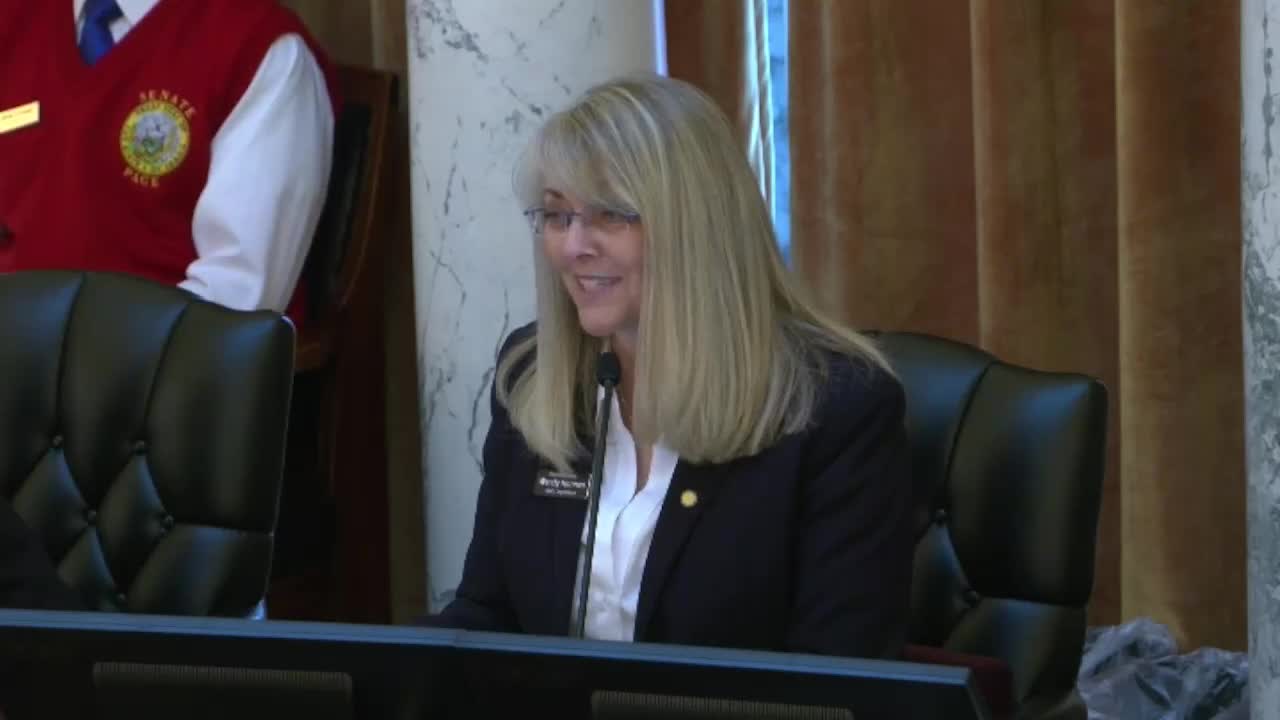
BOISE — Division of Financial Management Administrator Lori Wolfe told the Joint Finance and Appropriation Committee on Jan. 8 that the governor’s executive budget is a “keeping promises” budget that balances new investments with conservative revenue estimates.
Wolfe said the proposal leaves a healthy ending balance in both fiscal 2025 and 2026, directs transfers into the Budget Stabilization Fund and the Public Education Stabilization Fund, and holds $100 million for tax relief while recommending $151 million in agency enhancements for fiscal 2026.
The nut graf: The governor’s proposal prioritizes education, workforce training, transportation and water and fire management while keeping the general fund structurally balanced and increasing reserves. Wolfe emphasized a conservative revenue approach and said the administration aimed to protect long-term fiscal stability while funding targeted investments.
Top-level figures and balances
Wolfe told committee members the administration used a conservative revenue forecast in assembling the budget. Total general fund revenue for fiscal 2026 is shown on the budget summary at about $6.2 billion and the administration projects an ending general fund balance of roughly $227 million for FY26 after recommended appropriations and transfers. The state would also transfer $59 million to the Budget Stabilization Fund and $50 million to the Public Education Stabilization Fund under the plan.
Wolfe highlighted that reserves are unusually large by historical standards: the administration reports a revert reserve of about $1.4 billion (roughly 22 percent of the budget), which she said places Idaho within recommended reserve targets for financially healthy states.
Education and workforce priorities
The governor recommended roughly $150 million in additional funding for K-12 public schools in FY26, including about $83 million for teacher pay and nearly $30 million for teacher health insurance costs. The budget also sets aside $50 million for education-choice initiatives contingent on passage of a policy bill and includes funding for rural school facilities and literacy and mental-health measures.
To expand workforce training capacity, the governor proposed $25 million: $15 million one-time for infrastructure grants administered by the State Board of Education (block grants to colleges and programs that demonstrate employer match) and $10 million ongoing to support career and technical education operations.
Transportation and infrastructure
Wolfe said the administration recommends a $50 million general fund appropriation to the transportation expansion and congestion mitigation fund administered by the Idaho Transportation Department. The presentation noted that earlier Transportation Expansion and Congestion Mitigation (TECUM) funding leveraged substantial bonding for projects, and the additional $50 million would support another approximately $800 million in bonding capacity for high-value expansion projects.
Natural resources, water and fire funding
The budget includes supplemental and ongoing funding for wildfire response and water projects. Wolfe said the administration recommends a $60 million supplemental in FY25 to backfill the fire suppression account for costs incurred during the most recent fire season and $40 million ongoing in FY26 for the fire suppression account to establish a steadier funding base. The package also includes $5 million for aviation and fire detection improvements and $30 million ongoing to the Idaho Water Resource Board for prioritized recharge and other water projects.
Public safety, cybersecurity and health
The governor’s proposal includes a $10 million general fund allocation for statewide IT security and infrastructure to help modernize and replace aging systems identified as critical or high priority by the state’s IT office. The budget also includes funding for continued public-safety initiatives such as the fentanyl interdiction program and targeted corrections and contraband mitigation efforts.
State public defense
Wolfe briefed the committee on the state public defense transition and related costs. She said the administration recommends a $5.4 million supplemental for FY25 and a $16.8 million one-time increase for FY26 in response to implementation costs and a December Idaho Supreme Court decision affecting costs the state must cover. The administration’s total FY26 recommendation to support state public defense is shown at about $83 million; Wolfe said some policy decisions remain about how the public defense fund will be structured and financed.
Housing and other items
The governor proposes a $15 million one-time transfer to the workforce housing fund to support affordable or workforce housing projects, with statute-directed priorities for rural areas.
Administration posture and next steps
Wolfe said the proposal is “structurally balanced” and intended to preserve rainy-day funds while making targeted investments in education, workforce and public infrastructure. She told the committee the budget team used a conservative revenue baseline and left room for transfer to reserve funds. Committee members asked for additional detail and follow-up materials on several topics Wolfe cited, including the disposition of GEER/ARPA-era education funds previously used for workforce grants and the administration’s calculations on fire-suppression cost averages.
Wolfe: “As you heard from Governor Little yesterday, this is his ‘keeping promises’ budget,” she told the committee, adding that the administration sought to be conservative on revenue while funding priority items.
Wolfe and staff said they will provide follow-up detail to JFAC members on requests including historic GEER usage, the composition of the population forecast adjustments shown in the budget book and IT replacement priorities identified by the state IT office.
Ending
The committee did not take formal action during the presentation; Wolfe’s briefing was followed by member questions and a pledge to provide additional documentation. JFAC will review agency presentations and the budget book in the coming weeks as the committee moves into maintenance and enhancement hearings.