Get Full Government Meeting Transcripts, Videos, & Alerts Forever!
Get email alerts on the Book Banning Censorship topic
No spam. Unsubscribe anytime.
Parents and authors clash with district after 'Young Palestinian Speak' moved from middle‑school shelves
Summary
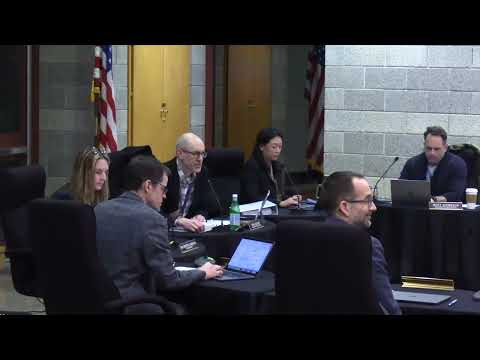
A decision made last year to move Young Palestinian Speak from the middle‑school library to Horace Greeley High School drew sustained public comment and outside letters at the board’s Jan. 14 meeting.
A decision made last year to move Young Palestinian Speak: Living Under Occupation from the middle‑school library to Horace Greeley High School drew sustained public comment and outside letters at the Chappaqua Central School District Board of Education meeting Jan. 14.
Multiple parents, authors and civil‑liberties groups told the board the move amounted to censorship and asked the district to return the book to middle‑school circulation. Speakers referenced a June 2024 letter from the book’s authors and guidance from PEN America, which categorizes the removal of a title for intended readers as a ban.
“Restricting access constitutes a ban,” said a parent quoting PEN America’s guidance during public comment. Another parent, Alia Kumsani, told the board the title is age‑appropriate for middle‑school readers and urged the district to reinstate it: “Removing it is not just about one book. It sends a message that certain voices and stories are unwelcome here.”
Other commenters read letters from the authors, who said they wrote the book for ages roughly 10–16 and that their reporting included on‑the‑ground visits to Palestine. Advocacy groups and authors, including PEN America and a coalition of writers and organizations, submitted a joint letter asking the district to reverse the decision.
Superintendent Dr. Ackerman responded to the public comments by outlining the district’s review process. She said a team of middle‑school faculty read the title under Board Policy 4005 and concluded the text “presents a viewpoint that requires a foundational understanding of author intent and perspective” and historical context that middle‑school students are less likely to have than high‑school students. That faculty recommendation led to the decision to move the title to the high‑school library.
Dr. Ackerman also said she held six meetings with parents in April to discuss the complaint process and the book; she described the decision as driven by faculty judgment rather than an administrative or board vote.
Dr. Ackerman provided circulation context: the book was in the district collection since 2018 and had not been checked out at the middle‑school level until last year; while in the high‑school library it had been checked out once. She said the district followed its policies and that the matter was decided at the faculty level under existing review procedures.
Ending
Speakers asked the board to revisit the decision and to adopt clearer procedures to protect student access during complaint reviews; the board did not take a vote Jan. 14. The superintendent pledged to continue responding to correspondence and to let the community know next steps if the board requests further review.