Get Full Government Meeting Transcripts, Videos, & Alerts Forever!
Get email alerts on the Zoning Tattoo Studios topic
No spam. Unsubscribe anytime.
Navasota planning commission weighs allowing tattoo studios in downtown under administrative rules
Summary
At a workshop the Navasota Planning Commission discussed whether to amend the zoning ordinance to let tattoo studios operate administratively in the Central Business District while keeping conditional or specific-use review in other zones; staff will draft an amendment and return for public hearings.
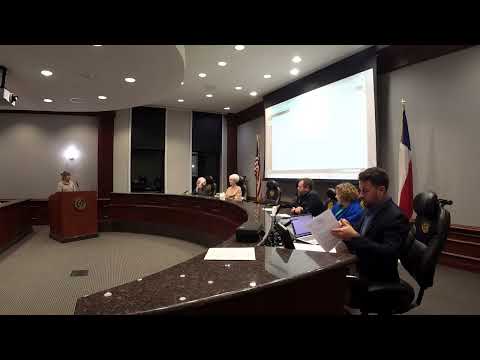
The Navasota Planning Commission on Tuesday held a workshop to consider whether tattoo studios should be added to the city's zoning code as permitted, conditional or specific uses, focusing on allowing them administratively in the Central Business District (B-1) while preserving more review elsewhere.
Planning staff told commissioners that tattoo studios are not currently listed as either a permitted or conditional use in the city's zoning ordinance; applicants who want to open a studio must apply for a specific-use permit that requires Planning & Zoning recommendation and City Council approval. "If there is a desire to change the rules, we would come back with a public hearing and a formal recommendation," a staff member said during the discussion.
The discussion followed staff research into how nearby cities treat tattoo studios. Staff reported that Bryan allows tattoo studios in several commercial and industrial districts and places limits on proximity and some square-footage and signage details; other municipalities consider tattooing a "personal service shop" and handle it administratively. Commissioners and members of the public debated whether Navasota should adopt a similar approach, add a dedicated "tattoo studio" use with tailored restrictions, or continue to require specific-use permits.
Tiffany, a resident and small-business owner who said she operates a studio inside a shared retail space, described her clients and business model and urged the commission not to apply unnecessarily large floor-area or spacing requirements. "My goal is to have a nice classy establishment that is going to bring in people from outside of Navasota into Navasota," Tiffany said, describing work that includes cosmetic and restorative procedures as well as traditional tattooing.
Commissioners raised several recurring concerns: how to handle hours of operation and signage in downtown suites, how to avoid storefronts that conflict with neighboring businesses or residential uses above downtown suites, and how a specific-use permit can affect the resale or transferability of a studio when an owner retires. Staff and commissioners discussed the practical differences between a conditional use tied to a property (which survives a sale) and a specific-use permit tied to an owner (which generally does not transfer when ownership changes).
A number of commissioners expressed openness to a hybrid approach: amend the zoning code to permit tattoo studios administratively in the Central Business District with specific limitations (for example, on signage, hours or visibility), and retain conditional or specific-use review in other districts where placement could affect residents or larger retail centers. One commissioner summarized that Planning & Zoning could "entertain an amendment that will allow them administratively in [the] Central Business District" with special regulations and that staff should draft language.
Staff told commissioners they would prepare a draft amendment for the commission's consideration and return it for a public hearing and formal recommendation to City Council. The amendment process will include public notice and a public hearing as part of any ordinance change, staff said.
The commission took no formal vote at the workshop; the discussion was explicitly advisory and intended to provide direction to staff on whether and how to draft an ordinance amendment. The item will return to Planning & Zoning with proposed code language and with notice for a subsequent public hearing.