Get Full Government Meeting Transcripts, Videos, & Alerts Forever!
Get email alerts on the Enrollment Facilities topic
No spam. Unsubscribe anytime.
Chappaqua consultant recommends against redrawing elementary boundaries or switching to a Princeton 5–6/7–8 model
Summary
Consultant Ross Haber told the Chappaqua Central School District Board of Education that five‑year enrollment projections and facility utilization do not justify elementary redistricting or reconfiguring middle schools into a 5–6 and 7–8 “Princeton plan.” He cited travel time, transportation cost and limited demographic change as primary reasons.
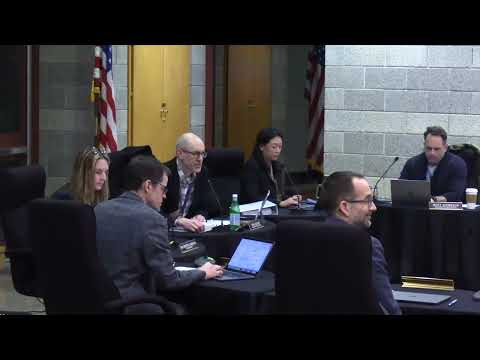
A consultant hired by the Chappaqua Central School District presented a districtwide enrollment and facilities analysis Jan. 14 and concluded the data do not support redrawing elementary attendance lines or reconfiguring the middle schools into a 5–6 and 7–8 pairing.
Dr. Ackerman, the district superintendent, introduced Ross Haber, who said his assignment included five‑year enrollment projections, utilization studies and a feasibility review of a “Princeton plan” pairing the middle schools. Haber told the board he used district BEDS reports, geocoded student addresses and cohort survival and moving‑average methods to make projections.
“In my opinion and based upon the data, I don't believe that redistricting elementary schools is warranted now or in the future,” Haber said, summarizing his review of enrollment and facility capacity. He projected district enrollment to fall slightly from 3,514 this year to 3,455 in five years and called the trend “stable.”
Haber said projected changes did not create imbalances that would require boundary changes at the elementary level. He also recommended against reconfiguring middle schools into separate 5–6 and 7–8 campuses, citing three main obstacles: increased transportation expense, significantly longer bus travel times (including crossings of the Sawmill River Parkway), and the practical and social effects of an extra school transition for students. “The amount of travel time and the expense of transportation” made the plan infeasible, he said.
Board members asked detailed questions about new housing, methodology and interim measures to address class size differences between the two middle schools. Haber said he could run supplemental analyses that count bedrooms in planned developments but that typical yields from one‑bedroom apartments would have a “minor impact” on five‑year enrollment. He also told the board he did not analyze faculty assignments or the district’s stipend decisions as part of this study.
Haber reviewed utilization tables for both middle schools and the elementary schools, noting some fluctuation in homeroom averages but concluding that both middle schools have available instructional rooms and the district has flexibility in space to absorb projected enrollments. He said the district’s enrollment of about 4,106 students in 2010–11 indicates existing facilities have previously served a higher population, and that the current decline has created program space rather than a capacity shortfall.
The presentation prompted follow‑up work requests: board members asked Haber and staff to add granular counts of bedrooms and unit yields for in‑progress developments, and to provide more context about how facility flexibility might change if enrollment reverses. Dr. Ackerman said the strategic planning committee will review Haber’s slides and consider next steps in a future meeting.
The board did not take formal action on redistricting or on school reconfiguration at the Jan. 14 meeting.
Ending
Haber left the board with a recommendation to monitor year‑to‑year changes and to preserve flexibility: if a clear, multi‑year shift in enrollment emerges the district could revisit redistricting or reconfiguration, but his five‑year projection and facility analysis did not produce that trigger.