Get Full Government Meeting Transcripts, Videos, & Alerts Forever!
Get email alerts on the Public Safety topic
No spam. Unsubscribe anytime.
Finance committee approves five-year extension with Axon Enterprise for police body cameras, tasers
Summary
The Green Bay Finance Committee approved a proposed five-year contract extension with Axon Enterprise Inc. to continue the city’s police body-worn camera and electronic control device program, increasing projected costs and adding optional services the city says could offset some new expenses.
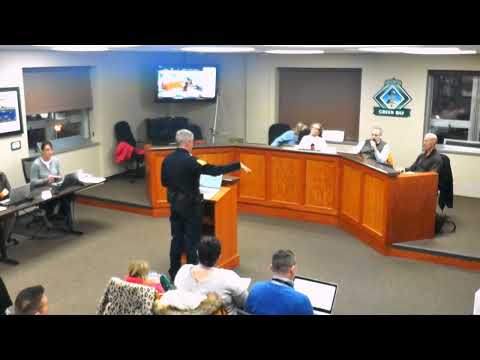
The Green Bay Finance Committee on Jan. 14 approved a proposed five-year extension with Axon Enterprise Inc. to continue the city’s police body-worn camera and electronic-control-device (taser) program, a contract staff said would cover calendar years 2026–2030 and carry a total listed cost of $4,125,000.
Committee members said the contract’s price is higher than the current annual payment and pressed staff on what the city would get for the increased cost and whether the package could produce savings elsewhere in the budget.
Police staff and procurement staff told the committee that the increase stems partly from a vendor price rise and partly from adding optional features. "The costs are going up for two reasons: one is that just the costs are going up because they charge more for the service that we use. The other is that we're adding some things that they can give us where we think we can offset a little bit of the cost with savings in other places," said the Police Chief (name not stated). The chief and procurement manager said add-ons include automated transcription of video/audio and an option to integrate automated license-plate reader (ALPR) functionality with in-car cameras.
Staff described a path to offset the new contract costs by repurposing existing positions and phasing out older services. City staff said automated transcription could reduce or reclassify a current transcriptionist position—estimated savings of roughly $70,000 annually—into public-records work, where the city says it is currently understaffed. Staff also said the city’s existing pole-mounted ALPR system currently costs about $106,000 per year and that the Axon package could replace some of that functionality by equipping patrol cars, changing how license-plate data are collected and used for real-time alerts and investigations.
Committee members sought clarity on levy impacts. Staff said the city paid about $620,000 for the 2025 contract and that the new package would raise the annual cost to about $825,000 — roughly a $200,000 increase in levy-supported spending for the year shown on the proposal. Staff cautioned that the proposal’s future-year pricing used an estimate (a roughly 7.5% compounded annual increase noted in paperwork) and that members should expect price changes over time.
Procurement manager Tom Olitsky was on the call to address procurement questions; an Axon representative identified as "Rick" participated in the discussion and described operational differences between fixed (pole-mounted) and mobile (car-mounted) ALPR systems. "With pole mounted plate reader cameras, those are in the same place all the time and we know exactly what time this car went by this location. What in practice car-mounted ALPR gives you is you'll still get a lot of that data ... because you never know where a police car is going to be in the community," the Axon representative said.
Committee members discussed procurement competition and transition costs. Staff said the previous selection process had evaluated alternatives and that switching vendors now would carry substantial transition costs. The committee also discussed whether grants are available to help pay for the program; staff said no current grants were identified for maintaining an existing, citywide program.
After discussion, a committee member moved to approve the contract extension and another member seconded the motion. The committee approved the contract extension by voice vote with no recorded roll-call tally.
The committee did not set a schedule for implementing optional add-ons; staff said they would present details about specific add-ons, anticipated savings and the timing of equipment replacement if the contract is executed.