Get Full Government Meeting Transcripts, Videos, & Alerts Forever!
Get email alerts on the Audit topic
No spam. Unsubscribe anytime.
Sheboygan Area School District gets unmodified audit opinion; auditors cite repeat findings on transportation records and vendor checks
Summary
Auditors from CLA delivered an unmodified opinion on the district’s 2023-24 financial statements but reported repeat findings on pupil transportation attendance records and required vendor suspension/debarment checks; the district used $4.5 million of general fund reserves for capital projects.
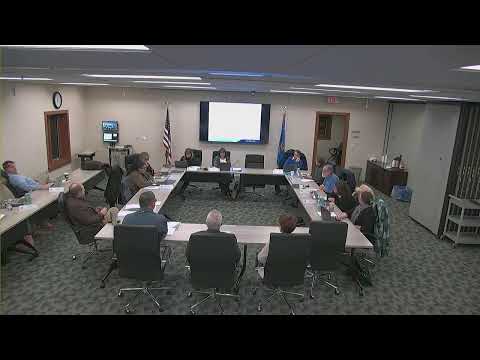
Auditors from CLA told the Sheboygan Area School District Committee of the Whole that the district’s 2023-24 financial statements received an unmodified opinion, but the audit reported repeat findings on pupil transportation records and required federal vendor suspension and debarment checks.
The auditors’ unmodified opinion means, in their view, the statements are complete and presented in accordance with professional standards. Brian, an auditor with CLA, said, “That is the highest level of assurance that you can receive.” The audit also included two repeat compliance findings and a repeat internal-control disclosure related to preparation of the financial statements.
Why this matters: the district’s financial statements show the district receives substantial federal and state aid—auditors said roughly $17,000,000 in federal funds and about $105,000,000 in state funds are included in the statements—and those programs are subject to compliance testing. CLA told the board that the programs auditors tested represented about $10,000,000 (roughly 58%) of federal funds tested and about $95,700,000 (about 90–91%) of state funds.
On compliance findings, the audit listed two repeat items. The first compliance finding flagged by CLA concerned suspension and debarment checks for vendors. Brian explained the rule auditors tested: when a district spends federal funds in excess of $25,000 with a single vendor, the district must verify the vendor is not suspended or debarred before contracting. The auditors said the issue was primarily a timing problem in the 2023 testing cycle: contracts had been issued before the district completed the pre-contract verification steps auditors test. Brian said auditors “go to a federal website and verify that they are, in fact, not suspended or debarred.”
The second compliance finding involved pupil transportation. CLA reported auditors could not verify bus attendance records for nine students that the district’s routing software had listed as transported. The district adjusted its DPI (Department of Public Instruction) report to remove those nine students and resubmitted the report. Brian said the district is testing a bus card-swipe system so “we have an actual record of every day,” which auditors said will help both compliance and safety. The district’s transportation supervisor, Christopher Faust, left during the year for a position in Illinois; auditors said that staff change delayed the swipe-card rollout while replacements were recruited and testing conducted.
The audit letter to the board also included an internal-control disclosure that CLA characterized as a repeat condition: the auditors assisted in preparation of the financial statements. Brian described this as a common disclosure for organizations of the district’s size and said the firm and district follow steps—draft sharing, adjustment discussion, and certification to the DPI—to align the statements prior to issuance.
Financial highlights presented to the board included fund-balance and long-term liability figures. CLA reported the district’s combined fund-balance categories totaled about $57.1 million at the end of 2023 and roughly $55.0 million at the end of 2024 after the district used approximately $2.2 million of fund balance in 2024. Brian said part of that use reflected a $4,500,000 transfer from the general fund into capital projects (Fund 46), which raised Fund 46’s long-term capital projects balance from about $7.6 million to about $12.3 million.
Auditors also reported the unassigned fund balance fell from about $33.0 million in 2020 to just over $28.0 million at the end of 2024. CLA calculated the district’s unassigned fund balance as 18.8% at year-end 2024, which falls within the board policy range of 15%–20% for unassigned reserves. On long-term debt, auditors reported outstanding principal of roughly $27.5 million at the end of 2023 and that the district repaid about $6.5 million during the 2024 fiscal year, leaving about $21.0 million outstanding at June 30, 2024.
The audit presentation also reviewed post-employment benefit funding. CLA said the most recent actuarial study valued the district’s health-insurance-related liability at about $1.9 million and that the district had approximately $2.0 million in Fund 73 set aside to address that liability. Brian told the board the district has been “very proactive in addressing” other post-employment obligations.
Auditors briefed the board on recently implemented and upcoming accounting standards from the Governmental Accounting Standards Board (GASB). Brian said the district implemented GASB Statement No. 100 for the 2024 audit and that Statement No. 101 will be required for the June 30, 2025 audits; CLA said it will work with the district to implement the new standards.
Board members thanked long-time finance employee Wendy Backus, who the board said is retiring at the end of the month. Wendy said, “I just wanna thank Bridal and Mark for supporting me through the last and dealing with me and putting up with me for the last several years.”
After the audit presentation the board approved the meeting agenda and later moved into a closed session under Wisconsin state statute for discussions including employment and competitive-bid topics. The motion to adjourn to closed session referenced Wisconsin state statute section 19.851 c e (as read on the record) and passed on a roll-call vote of recorded “ayes.”