Get Full Government Meeting Transcripts, Videos, & Alerts Forever!
Get email alerts on the Computer Science Education topic
No spam. Unsubscribe anytime.
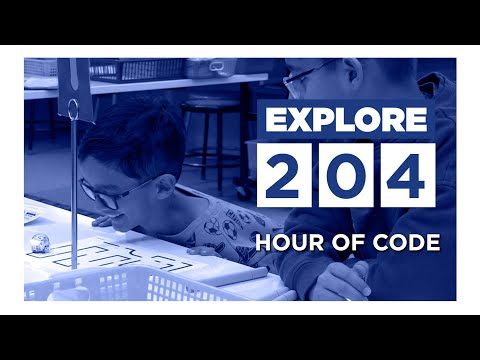
Hour of Code showcased at Indian Prairie CUSD 204; parent volunteers urge district technology investment
Summary
During Hour of Code activities in an Indian Prairie CUSD 204 elementary library, volunteers and students described hands‑on "unplugged" coding exercises and a parent volunteer urged the district to increase investment in technology to support computer science learning.
Volunteers, students and a parent at an Indian Prairie CUSD 204 Hour of Code event described a week of hands‑on, “unplugged” coding activities and urged the district to invest more in technology to support students’ computer science skills.
A commenter (speaker 1) described the initiative’s purpose: "Hour of Code has been around for a while. It was started as a way to celebrate, computer science week to get kids excited about computers and coding and kinda get a taste, dip their toes into computer science." The speaker said organizers have emphasized offline activities this year: "we've been focusing on, like, unplugged kind of activities off the Chromebook, which has been kind of a nice change."
Students and volunteers recounted specific activities used during the week. A speaker identified as student (speaker 4) described a sequencing exercise: "we had to, like, pick up cups and turn them a certain angle or degree, and it was like we were like robots. We worked on a robot to move in different directions. Words don't go into the bot. You have to use code. You can't say, like, but, go straight. It won't listen. You have to put a code into it." Another speaker listed classroom resources: "The activities that we did in the library for Hour of Code included the Ozobot, code your friends with the cup stacking, Pioneer bracelets, the Dash robot, and so much more." (speaker 1).
A parent and volunteer (speaker 6) said the students’ reactions made the program worthwhile: "They finally figured out the solution. They get all happy, excited, you know. That makes me happy as a parent and as a volunteer." The same speaker urged broader district support for technology: "I would love really to see our district invest in our code and anything that has to do with technology because that's really the future for our kids."
Other commenters framed Hour of Code as an early step toward computer science careers and general problem‑solving skills. One speaker (speaker 7) said the district is "starting to develop our students to be the next innovators" and that elementary exposure "will begin to put their brains in that creativity mode to develop a passion for technology." Another (speaker 8) emphasized critical thinking: "it's critical thinking. These are all things that are gonna help them down the road no matter what they choose to do. Really, the hour of code is just helping the kids realize that in order to accomplish any goal, you have to think about what that goal is, think about the steps that it's gonna take to get there, plan for it, and then execute."
The remarks in the transcript were statements of experience and preference from participants; the transcript does not record any formal district response or decision about funding or next steps.
The Hour of Code content described in these remarks focused on hands‑on activities (Ozobot, Dash robot, cup‑stacking coding exercises, Pioneer bracelets), student engagement, and a call from a parent volunteer for increased district investment in technology to support computer science education at the elementary level.