Get Full Government Meeting Transcripts, Videos, & Alerts Forever!
Get email alerts on the Postsecondary Education & Workforce topic
No spam. Unsubscribe anytime.
Bill would add organized labor representatives to community, technical and regional university boards
Summary
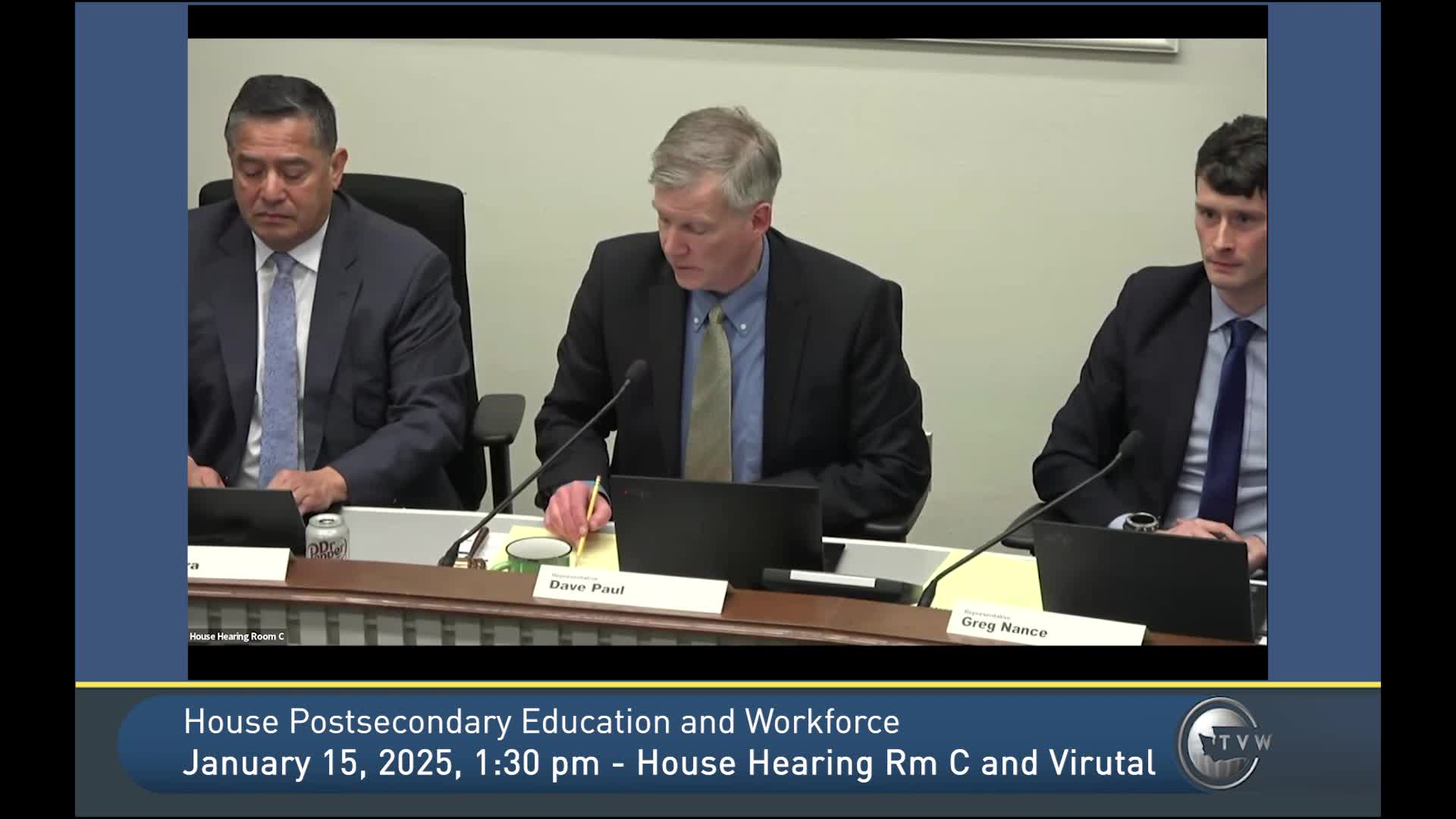
The committee heard testimony on House Bill 1036, a bill that would require boards for community and technical college districts and regional universities to include at least one organized-labor trustee.
The committee considered House Bill 1036, which would require that boards of trustees for community and technical college districts and regional universities include at least one member representing organized labor.
Sponsor Representative Lillian Ortiz-Self told the committee the change would bring labor perspectives on apprenticeships, workforce programs and program design to local college governance. Supporters — including faculty unions, community-college faculty, and student representatives — said adding organized-labor trustees would make governing boards more representative of the students and workers colleges serve.
Why it matters: witnesses said many community colleges provide vocational and workforce programs (welding, culinary, automotive, health-care certificates) that feed students to unionized workforces. Supporters argued that including an organized-labor trustee would strengthen partnerships and program alignment with local employers.
Key points raised in testimony - Staff briefing: Saranda Ross noted current law already requires labor representation for districts that include technical colleges and explained the bill expands that requirement to all community and technical college districts and regional universities. - Sponsor: Representative Lillian Ortiz-Self (21st Legislative District) said the change is intended to ensure labor has "a seat at the table" as colleges expand apprenticeship and workforce opportunities. - Unions and faculty: Symone Bo of the Washington Education Association and Bill Lyon of United Faculty of Washington State supported the bill and recommended specifying "organized labor" to ensure the appointee represents unionized workers. Bill Lyon said adding labor would broaden ideological and experiential diversity on boards. - Institutional clarification and safeguards: Steve DuPont of Central Washington University asked for a technical amendment to ensure parity across statutes including a prohibition that no trustee be an employee of the college system, which would avoid conflicts of interest if a labor appointee were employed by the institution. Jake Vigdor (University of Washington faculty representative) described the expectation that trustees act for the public interest rather than representing narrow constituencies.
Process and next steps - Supporters asked that the governor retain appointment discretion and suggested the State Board for Community and Technical Colleges could clarify implementation by rule if needed. - Committee staff noted the bill does not add new seats but designates that an existing appointment should be filled by an organized labor representative if one is not already appointed.
Ending: The committee concluded public testimony and discussed scheduling with staff; a technical amendment to add a no-employee safeguard was proposed by Central Washington University staff and supported in principle by union witnesses.