Get Full Government Meeting Transcripts, Videos, & Alerts Forever!
Get email alerts on the Postsecondary Education & Workforce topic
No spam. Unsubscribe anytime.
Committee hears bill to adopt cosmetology licensure compact to ease portability for licensees
Summary
Lawmakers heard testimony on House Bill 1023 to adopt the Cosmetology Licensure Compact, a multistate agreement proponents say would speed licensure portability for military spouses and traveling practitioners; supporters said it enhances information sharing, while trade groups raised implementation and sanitation concerns.
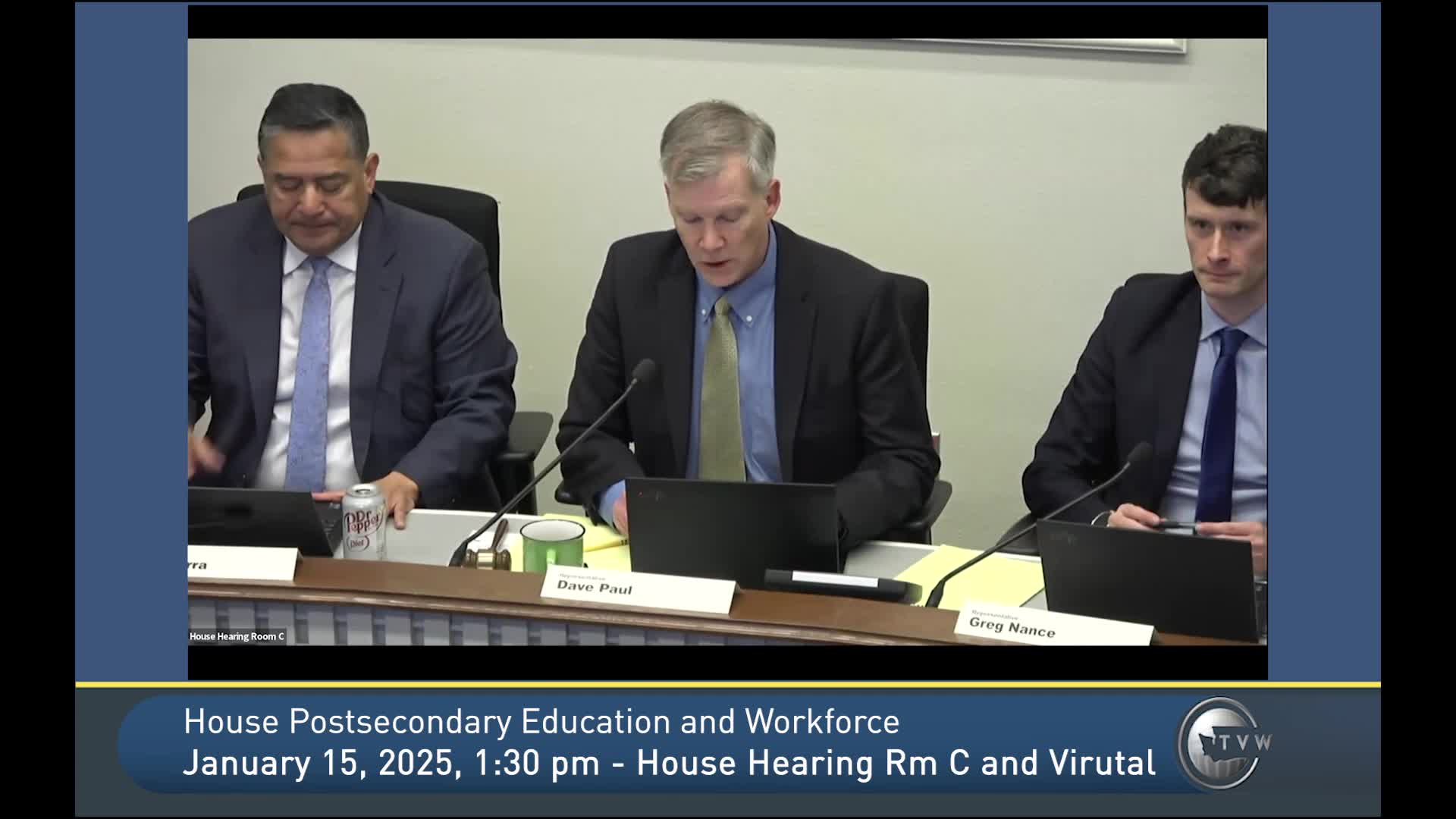
The House Postsecondary Education & Workforce Committee held a public hearing on House Bill 1023, which would enact the Cosmetology Licensure Compact and allow cosmetologists licensed in one member state to obtain a multistate authorization to practice in other member states without obtaining separate licenses.
Committee staff and witnesses said the compact would become effective only after a threshold number of states adopt it, typically seven, and would be governed by a Compact Commission made up of delegates from member states. The compact requires participating states to license cosmetologists, enforce minimum licensing standards, run background checks, and contribute licensee data to a shared system to support investigations and discipline.
Why it matters: supporters, including the Department of Defense and the bill sponsor, said the compact would shorten the time it takes military spouses and other mobile workers to return to work after a move. Opponents and some industry groups warned the compact could strain Department of Licensing administrative systems and raised questions about uniform sanitation and practice standards among member states.
Key features and testimony - Staff briefing: Saranda Ross, counsel to the committee, summarized HB 1023’s elements: multistate license privilege, compact commission administration, minimum requirements for participation, and the compact’s disciplinary and data-sharing provisions. - Sponsor: Representative Cindy Ryu (32nd Legislative District) said the bill would help military spouses who relocate frequently and allow them to begin working sooner. "If we reside within a compact, then we have that database that we can share with one another. So, it's actually better consumer protection, in my opinion," Ryu said. - Department of Defense: Tammy Perrault, who represents DOD on military family quality-of-life issues, said Washington belongs to 11 of the 17 occupational licensure compacts and that compacts are a long-term solution for the roughly 34% of military spouses who need occupational licenses. Perrault said she is aware of only one state (New Hampshire) that has left a compact. - Industry voices: Darcy Harrison, vice president of Cosmetologists of Washington United and a Seattle hairstylist, said the group supports some goals of the compact but questioned implementation readiness in Washington. "The safety and sanitation standards between states are not universal," Harrison said, and noted state licensing systems are already strained by IT and staffing issues. - Subject-matter experts: Keith Buckout of the Council of State Governments (CSG) described the compact as preserving state authority over licensing and said Washington would keep fee authority and the ability to act against a multistate authorization practiced in Washington. CSG staff noted anticipated costs were limited to modest IT or travel expenses.
Concerns and requests for follow-up - Several committee members asked about mechanisms for adverse-action reporting and enforcement when one state disciplines a licensee; staff and witnesses said adverse actions are shared through the compact data system and that only a licensee’s home state can revoke the underlying license, while remote states can limit compact privileges within their borders. - Industry groups requested more data on current reciprocity and military-exemption processing in Washington, and expressed concern about DOL’s capacity to implement a new data connection while troubleshooting existing systems.
Process notes and next steps - Committee staff reminded members that amendment deadlines apply for any proposed changes to compact language; sponsors urged that mechanical clarifications be addressed by rule rather than by changing the compact model text, which could prevent Washington from participating if altered. - The committee heard six in-person and several remote testifiers on HB 1023 and recorded seven non-testifiers as pro for the bill on the public sign-in.
Ending: At the hearing’s close there was no formal vote on HB 1023; the bill recording and future executive action were discussed by staff and the sponsor. Staff asked members to submit proposed substitutes or amendments by the published deadlines before any executive session.