Get Full Government Meeting Transcripts, Videos, & Alerts Forever!
Get email alerts on the Religion In Schools topic
No spam. Unsubscribe anytime.
Kern County public commenters split as ACLU counsel and scholar tell board posting Ten Commandments in classrooms would be unlawful
Summary
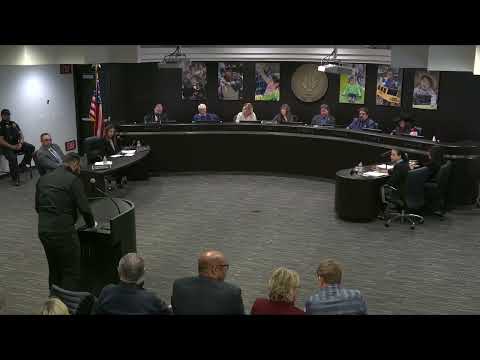
The Kern County Board of Education heard more than an hour of public comment on a proposal to post the Ten Commandments in public school classrooms.
The Kern County Board of Education heard more than an hour of public comment on a proposal, advanced by community members, to post the Ten Commandments in public school classrooms. Public remarks ranged from personal testimony in favor of posting the document as a historical or moral text to legal and historical presentations saying such a policy would amount to government endorsement of religion.
Why it matters: The board faces competing claims about local authority, constitutional limits and community values. Legal experts told trustees that mandating displays would likely violate California law and trigger lawsuits that could cost the county significant attorney fees; backers said the text has cultural and historical value and would teach civics and morals.
During public comment, several speakers framed the proposal as a defense of traditional values. David Sponholtz said the commandments are an “important historic document” and would not have harmed him in school. Sheila Lake, a longtime educator, tied the suggestion to her view that the commandments are “moral law” and said posting them would not force students to adopt a faith.
Other commenters strongly opposed the plan. Jagmeet Singh told the board the proposal conflicted with the First Amendment and called it “treason” for a public body to require religious items in publicly funded schools. Abhneet Sandhu said posting the Ten Commandments would “alienate and create division among students.” Reverend Nancy Bacon, who identified herself as an ordained Christian pastor, said, “I love the Bible. I love the 10 Commandments… But I do not want somebody else forcing their faith on my children.”
The board also heard two legal and academic presentations. Peter Eliasberg, chief counsel of the ACLU of Southern California, told trustees the Ten Commandments are “religious precepts” and said there are several independent provisions in the California Constitution—the no-preference clause, the no-aid clause and Article IX, section 8—that bar the kind of schoolroom display under consideration. Eliasberg cited the U.S. Supreme Court's 1980 decision in Stone v. Graham and a November 2024 federal district court ruling that struck down a Louisiana law requiring classroom postings; he said those precedents and the California provisions make a policy vulnerable to challenge and would likely lead to litigation and attorneys’ fees the county could be ordered to pay.
Dr. Nancy Meyer, a professor of classics and Hebrew Bible at California State University, Long Beach, told trustees the Ten Commandments are a specifically Judeo‑Christian text with items unique to monotheism and aspects that, if taught without context, would amount to religious instruction. “If it is not taught from its context, it is being taught theologically,” she said, adding that the commandments include provisions about slavery and property that require contextual explanation.
Student representative Violetta Marisol Morales, who spoke as a young person in the audience and later gave a formal closing comment, urged the board to view the commandments as historical material that can inform values discussions. “These commandments aren't evil. They're about living in harmony with others,” Morales said, while also urging better use of funds and attention to academic needs.
Trustees did not vote on any policy to mandate displays. Board members counseled that the matter could return to the agenda for formal action in the future and acknowledged the strong community divide. The board set public‑comment time limits for the evening (17 speakers were recorded for the item and trustees agreed to two minutes per speaker) and moved on to other agenda items without adopting a posting requirement.
What comes next: Eliasberg told the board he would submit a written letter laying out the constitutional arguments in more detail. Multiple public commenters and trustees acknowledged the topic may be raised again; Eliasberg and Dr. Meyer both warned that any effort to require Ten Commandments postings in classrooms would be met by litigation and would likely fail under California law.
Quotes used in this article are taken verbatim from the public record of the December 17, 2024 Kern County Board of Education meeting.