Get Full Government Meeting Transcripts, Videos, & Alerts Forever!
Get email alerts on the Wildlife Conservation And Tribal Water topic
No spam. Unsubscribe anytime.
Senate Energy Committee exchange highlights state-led wildlife recovery and pledge on tribal water settlements
Summary
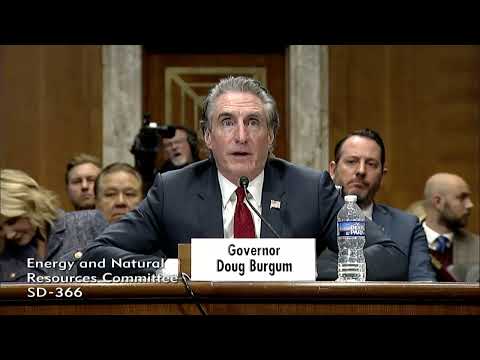
At a Senate Energy and Natural Resources Committee hearing, Senator Heinrich pressed a gubernatorial nominee on state-led strategies to avoid Endangered Species Act listings and on implementing tribal water settlements in western basins.
At a Senate Energy and Natural Resources Committee hearing, Senator Heinrich pressed a gubernatorial nominee on state-led strategies to avoid Endangered Species Act listings and on implementing tribal water settlements in western basins.
The nominee, addressed in the transcript as "Governor," said state conservation work is the best way to keep species off federal lists and pledged to continue the department's work on resolving and implementing tribal water settlements. "Absolutely, Senator Heinrich. I think that, again, [a] super sound principle there, which is to do the work to keep it off of ... any kind of federal designation. Working collaboratively with the states," the nominee said. Later, when asked about tribal water settlements, the nominee replied, "You've got my commitment to work on those important issues."
Senator Heinrich framed the approach as proactive, citing the Recovering America's Wildlife Act as an example of a bipartisan bill intended to help states recover species before federal listing. "Senator Tillis and nine of his Republican colleagues and I have a highly bipartisan bill called the Recovering America's Wildlife Act that helps states do exactly that," Senator Heinrich said, and noted that North Dakota's former Game and Fish director, Terry Steinwandt, was among the bill's architects. Heinrich also tied state conservation to broader Western water disputes, saying tribal water settlements are "incredibly important for water certainty in the West," and referenced the Colorado Basin and Rio Grande Basin as areas of conflict.
The nominee emphasized working with state game and fish officials, saying those state-level wildlife professionals often have deep, long-standing careers in wildlife management and local stewardship. The nominee also referenced cooperative work on abandoned mine cleanup with an Idaho colleague and added a brief comment on wind power policy, saying onshore wind is subject to multiple-use rules on public lands and cannot be unilaterally denied if it is legally permitted.
Committee discussion mixed policy framing and implementation questions. Senator Heinrich asked for a commitment to both resolving legal claims tied to tribal water settlements and implementing existing settlements; the nominee gave an affirmative commitment. The exchange did not include formal votes or motions recorded in the transcript excerpt.
The conversation tied state conservation efforts, federal law, and western water certainty together: proponents in the hearing argued the Recovering America's Wildlife Act and state-federal collaboration could reduce listings under the Endangered Species Act, while tribal water settlements remain a separate but related source of legal and management work for the department.
No formal committee action or vote on legislation was recorded in the provided transcript excerpt.