Get Full Government Meeting Transcripts, Videos, & Alerts Forever!
Get email alerts on the Vision2030 topic
No spam. Unsubscribe anytime.
Board reviews Vision 2030 advocacy framework; staff recommend supporting resolution
Summary
District presenters summarized Vision 2030—an ISBE/partner blueprint advocating future-focused learning, shared accountability and predictable funding—and recommended the board consider a formal resolution in support at an upcoming meeting.
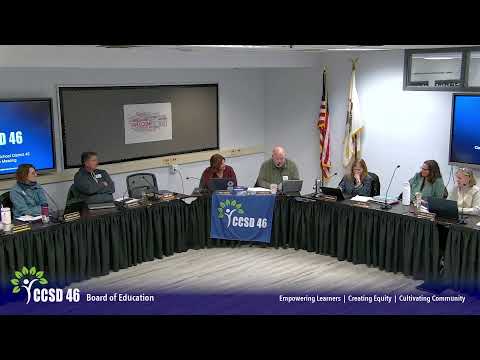
Grayslake CCSD 46 board members received an overview of Vision 2030, a statewide education advocacy framework, during the Jan. 15 meeting and were asked to consider a board resolution backing the initiative.
The presentation described Vision 2030 as a collaborative product of state education organizations intended to promote three priorities: future-focused learning, shared accountability and predictable funding. "Future-focused learning means giving students a head start on post secondary success," the presentation materials read.
Why it matters: Vision 2030 frames a set of legislative and policy priorities that would affect funding formulas, state assessments and local flexibility for curriculum and career-pathway programs. District staff told the board they support the vision and recommended the board discuss a resolution to express that support.
Key points presented: The Vision 2030 materials propose reforms including a more timely and useful assessment system (to complement IAR), measures that emphasize both growth and proficiency, and predictable funding that preserves the integrity of Illinois's Evidence Based Funding (EBF) formula. Presenters highlighted policy options such as protecting the EBF minimum appropriation, exploring capital and life-safety funding mechanisms, and examining pension reforms for teacher retirement tiers.
Board discussion: Board members raised questions and comments during the discussion. One member asked whether Vision 2030 is intended as a legislative advocacy framework; presenters confirmed that it is. Another board member asked staff to clarify which district programs already align with the vision (staff cited ongoing high-school partnerships, career-exploration events and existing curriculum innovation), and several trustees asked for cost and funding detail before committing. One trustee suggested Vision 2030 should more explicitly propose inflation-indexing for the EBF appropriation.
Next steps: Presenters told the board they will return a formal resolution for consideration at a future meeting and will provide any requested detail; the board indicated they would place the resolution on a near-term agenda for action.
Ending: District staff said they endorse Vision 2030 and will supply additional documentation and a formal resolution for the board's next meeting.