Get Full Government Meeting Transcripts, Videos, & Alerts Forever!
Get email alerts on the Sewer Project Funding topic
No spam. Unsubscribe anytime.
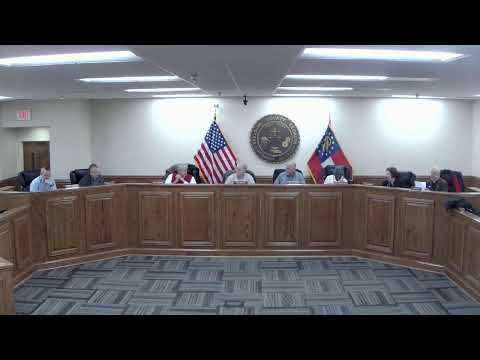
Water authority directs manager to request county funding for AKB sewer project; discusses sludge handling and permits
Summary
The Spalding County Water Authority voted to direct the general manager to submit a formal funding request to the Spalding County Board of Commissioners to support the AKB sewer project.
The Spalding County Water Authority voted to direct the authority’s general manager to submit a formal letter to the Spalding County Board of Commissioners asking for funding support for the AKB sewer project.
Board members said the request follows committee consensus that the county commission should help support ongoing management and operational expenses tied to the sewer project and related infrastructure.
The motion matters because the authority has been developing the AKB sewer plant plan while exploring funding pathways including GIFA financing, bonds with a municipal underwriter and potential developer contributions. Clay Davis, chair of the joint planning and finance committee, told the board the general manager will provide additional funding information at the next committee meeting.
In the general manager’s report, staff gave a detailed update on permitting and solids handling for the proposed plant. Consultants are preparing responses to state comments; staff said they expect to submit responses within about 20 days and anticipate receiving an NPDES (National Pollutant Discharge Elimination System) permit within 45–60 days so the plant can be permitted for discharge.
Board and staff discussed options for managing sludge from the plant once operational. Options under consideration included land application, hauling dewatered solids to a landfill, using a dryer at the City of Griffin’s Shoal Creek wastewater plant, and installing on-site dewatering equipment (screw press, centrifuge or similar). Staff said dewatering equipment for a plant of this size would likely be a substantial capital investment (the consultant estimate discussed was roughly $500,000–$600,000) plus ongoing operation costs; staff also described a cheaper dewatering box as an alternative that could be considered during value engineering.
Staff reported outreach to Synagro, which estimated 9–12 months to permit off-site application fields, and said one potential local option is delivering dewatered sludge to the City of Griffin’s new dryer if Griffin agrees. Board members noted evolving landfill requirements that increasingly require drier solids and that land-application markets can be limited by property-owner willingness and regulatory constraints.
On funding, staff said they have a scheduled meeting with GIFA and have consulted a bond underwriter (Raymond James) to develop financing scenarios. The general manager said a combination of GIFA financing, municipal bonds and developer contributions could be presented to the board as options at the February meeting.
The board approved the motion directing the general manager to submit the funding request letter to the Board of Commissioners. The motion was moved and seconded and recorded as approved by the authority.
The meeting also included financial context for the project: staff reported ARPA funds allocated to the AKB Sewer Project with a remaining balance of $1,556,641 and noted a GDOT reimbursement of $260,726 had been booked earlier for waterline relocations.
Board members said further detailed financial analysis and project-level engineering will be provided in follow-up meetings before the authority commits to major capital expenditures.
Evidence in the meeting transcript shows the sewer project discussion began in the joint planning/finance committee report and concluded with the formal motion directing the general manager to submit the funding request.