Get Full Government Meeting Transcripts, Videos, & Alerts Forever!
Get email alerts on the Housing Affordability topic
No spam. Unsubscribe anytime.
Housing committee: high rent burden, missing‑middle focus; HCDC voted to update inclusionary housing rules
Summary
A member of the Housing and Community Development Committee summarized the committee’s prolonged focus on housing cost burden and missing‑middle housing and said HCDC voted 4‑1 in October to recommend repeal and replacement of the Inclusionary Housing Ordinance to raise baseline affordable unit requirements and incentivize on‑site units.
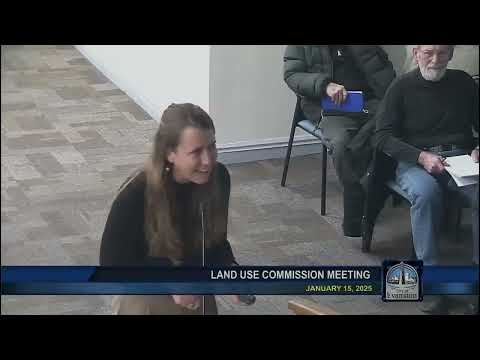
Chloe Thurston, speaking as a member of the Housing and Community Development Committee (HCDC), summarized the committee’s recurring discussions of housing affordability and policy and reported a prior HCDC recommendation on the Inclusionary Housing Ordinance.
Thurston said HCDC has been engaged on Envision Evanston since March 2024 and has repeatedly discussed housing cost burden and missing‑middle housing. She told the commission that rent burden (households spending more than about 30% of income on housing) is particularly acute for renters and that "rent burden rates are just under 50% among renters in Evanston." Thurston also described a range of views among committee members about how comp‑plan goals interact with zoning change and community impacts.
Most salient to the commission, Thurston reported that HCDC voted 4‑1 in October to recommend that City Council repeal and replace the city’s Inclusionary Housing Ordinance (IHO). The proposed update, she said, would "raise some of the baseline requirements for affordable housing allotments for covered developments," incentivize creation of on‑site affordable housing units rather than in‑lieu payments and provide developers more flexibility in meeting requirements while encouraging a mix of unit sizes.
HCDC did not issue a unanimous, collective statement on the overall comprehensive plan; the committee instead provided a record of recurring questions and concerns, including: - How to reconcile competing priorities in the plan (environmental goals, affordability, neighborhood character) and whether the plan should rank or prioritize those goals. - Requests for more metrics, data and comparative analysis (for example, how Evanston compares to similarly dense communities and how much additional housing of each type is needed). - Concern about the pace of reform: some committee members urged careful analysis because zoning is not frequently changed and has long‑term consequences.
Why it matters: HCDC’s recommendation to update the inclusionary housing ordinance is explicitly tied to zoning and comp‑plan outcomes; Thurston said the IHO update would not take effect until the comp plan and zoning ordinance are finalized, noting that staff and council must align the pieces.
Ending: Thurston said HCDC will return to housing questions as staff advances the strategic housing plan and the comp plan; commissioners asked staff to look into comparative density and vacancy data and to coordinate with HCDC on implementation questions.