Get Full Government Meeting Transcripts, Videos, & Alerts Forever!
Get email alerts on the Over Criminalization topic
No spam. Unsubscribe anytime.
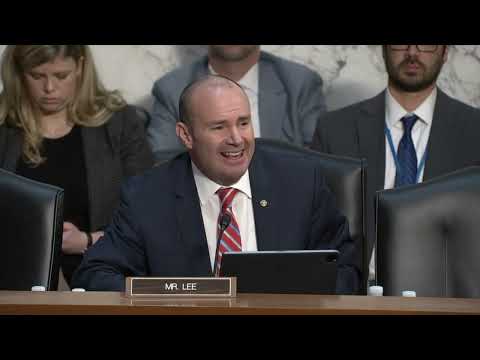
Witness at committee hearing warns of federal 'over-criminalization' via regulations
Summary
A speaker at a Senate committee exchange said the number of federal crimes created through regulations is "unknown and unknowable," flagged frequent regulatory criminal penalties in the Code of Federal Regulations, and urged cooperation on reforms if a nominee is confirmed.
A commenter at a Senate committee exchange raised concerns about what they called "over-criminalization," saying the number of federal crimes imposed through regulations is "unknown and unknowable." The commenter urged changes that would limit criminal penalties in regulations and clarify mental-state requirements for offenses.
The commenter said the committee contacted the Congressional Research Service for a count of federal crimes created by regulation and that the CRS reported the answer as effectively unknowable. "The answer that came back was to the effect that, the the answer is unknown and unknowable, which federal regulations impose criminal penalties," the commenter said.
The speaker warned that agencies often use delegated lawmaking authority to add criminal elements to regulations published in the Federal Register and the Code of Federal Regulations. "Incorporating elements of a criminal offense into a criminal regulation, which, you know, we add to the Code of Federal Regulations at a clip of around 100,000 pages a year, give or take, depending on which parts of the Federal Register that you add to the CFR at the end of each year, seems highly problematic, to me for multiple reasons," the commenter said.
The commenter cited constitutional and due-process concerns. They referenced Article I, Section 7 of the U.S. Constitution to argue that Congress should enact criminal law through the legislative process and warned that regulations sometimes omit or leave ambiguous the required mens rea, or criminal intent. "Oftentimes when this happens, you end up with an either absent or, hugely, ambiguous mens rea," the commenter said, adding that those defects "lead to huge problems, for defendants and for the liberty interests of the American people."
At the close of the remarks, the commenter asked that, "if confirmed," the person addressing the panel work with committee members on the issue and share any thoughts. The transcript records the exchange ending with the commenter saying, "Yes, Senator."
The discussion in the transcript is presented as a statement to the committee and a request for future cooperation; no committee action or formal vote on the topic is recorded in the provided text.