
Travis County details new supportive-services contracts for older adults and people with disabilities
Get AI-powered insights, summaries, and transcripts
Subscribe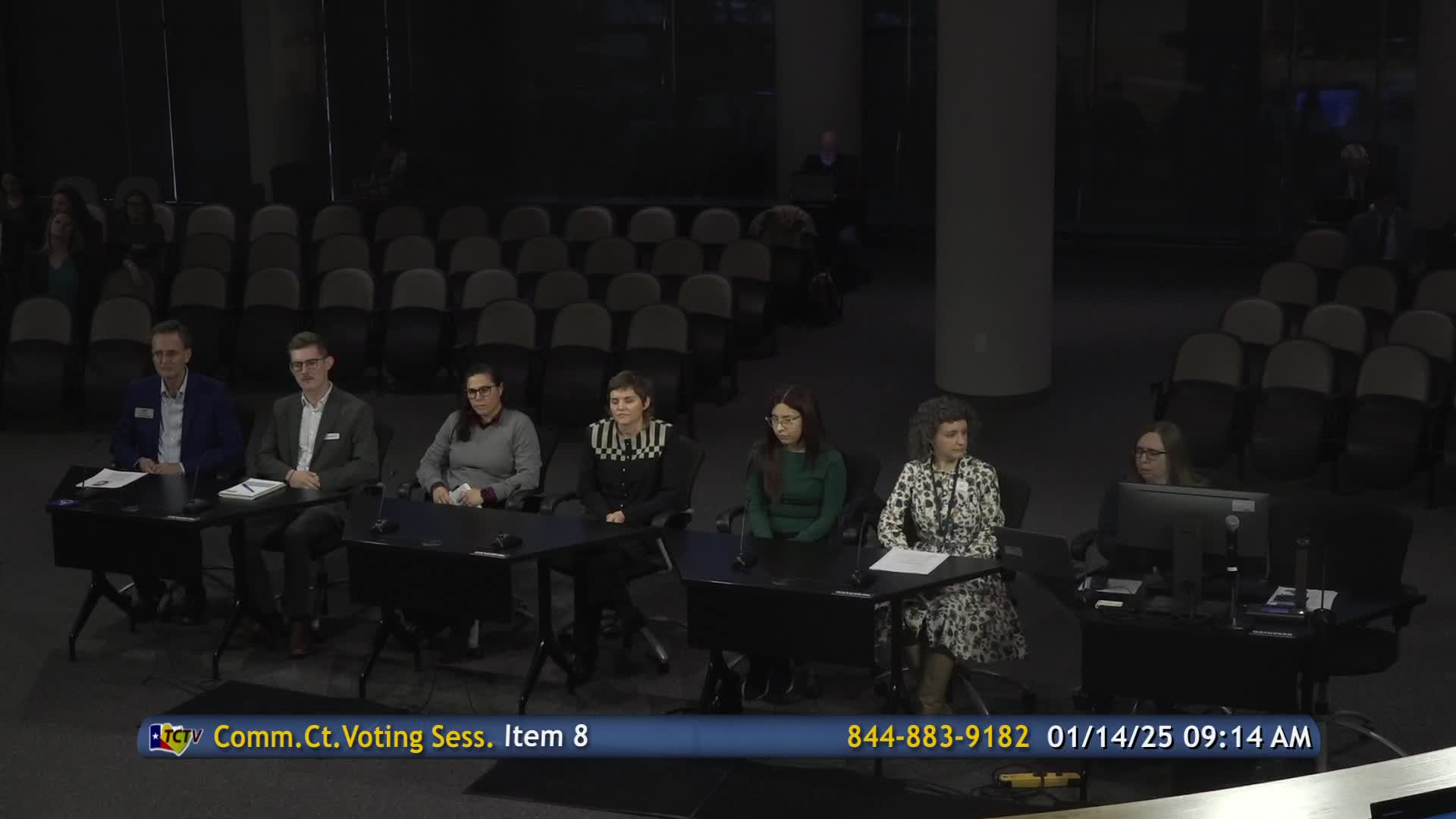
Summary
Health and Human Services presented new fiscal-year 2025 contracts for supportive services aimed at older adults and people with disabilities, describing program scopes, partner agencies, performance measures and data-collection plans; commissioners asked about eligibility and equity in outreach.
Travis County Health and Human Services on Tuesday updated the Commissioners Court on a new portfolio of supportive-services contracts aimed at helping low-income older adults (55+) and people of any age with disabilities remain independent and engaged in the community.
The county’s division director for research and planning, Cori Darling, said the contracts are new for fiscal year 2025 and include an option for up to four renewals through fiscal year 2029. The contracts fund a range of services — guardianship and alternatives to guardianship, home-delivered and congregate meals, case management, respite for families, wellness and fitness programming, audiology services and assistive devices — delivered by local nonprofit partners.
Darling said the county organized social-service investments into nine issue areas and began a multi-year procurement cycle in 2023. Erin McManus, planner in research and planning, told the court that each contract has unique quarterly performance measures and that HHS also requires demographic and ZIP-code reporting so the county can see who is served and where. HHS will also collect “roll-up” measures that aggregate outcomes across contracts to measure impacts on independent living, connected care and community engagement.
Program leads from each contracted nonprofit described services and reporting commitments. The Arc of the Capital Area will administer guardianship and case-management services for people with intellectual and developmental disabilities and a juvenile justice–focused component serving youth ages 10–19; Meals on Wheels Central Texas will provide home-delivered meals five days a week and congregate meals at county community centers and connect clients to additional supports; Any Baby Can will deliver case management, group respite and assistive devices for children under 21 with special health care needs; Easterseals Central Texas will provide audiology services and an accessible fitness program; and Foundation Communities will offer affordable housing with wraparound supports for adults 55+ with disabilities.
Commissioners asked detailed questions about eligibility and equity. One commissioner asked how the county accounts for clients who are financially dependent on higher‑income family members — for example young adults with disabilities who live with parents whose incomes exceed the program eligibility threshold. McManus said eligibility nuances can be complex and that HHS works with contractors to align agency criteria with county criteria and other funding sources; she said staff would follow up with more detail.
Commissioners also pressed contractors on outreach to historically hard-to-serve neighborhoods east of I-35, asking whether boards and senior leadership reflect those communities and how performance measures show equitable reach. Contractors said they prioritize community-based service delivery, resident representation on boards, and partnerships with local groups; Meals on Wheels’ director of community advocacy, Richard Bondi, said staff would supply precise demographic percentages on clients served.
Darling said the solicitation and contracting process can take up to about a year and that two early‑childhood contracts presented at the December 17 court were included in the funding roll-up. She closed by noting the portfolio mixes long-standing partners and one new contractor and by inviting follow-up questions.
The presentation was informational; there was no court vote on the contracts during the session.