Get Full Government Meeting Transcripts, Videos, & Alerts Forever!
Get email alerts on the Public Safety topic
No spam. Unsubscribe anytime.
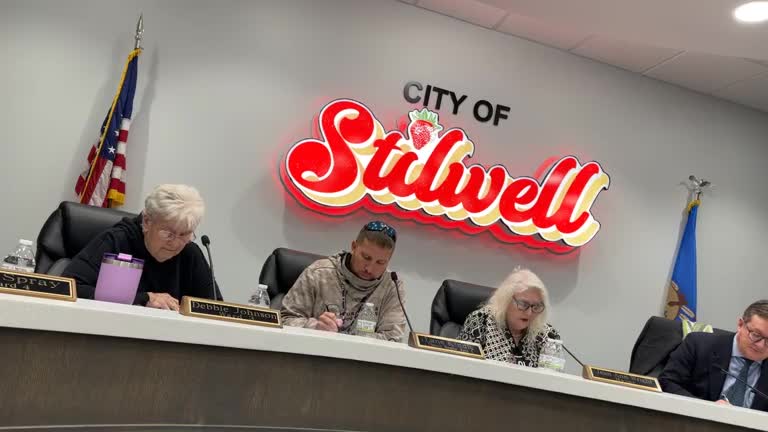
Stilwell council tables overhaul of volunteer fire department bylaws after hours of public comment
Summary
The Stilwell City Council postponed a vote on Ordinance 440, which would revise rules governing the volunteer fire department, after extended public testimony raised concerns about qualifications, communication and liability. The council voted to table the item to allow a negotiating committee and further talks with fire volunteers.
The Stilwell City Council on Tuesday tabled Ordinance 440, a proposed update to the city's volunteer fire-department bylaws, after more than two hours of public comment and debate about qualifications, chain of command and liability.
The ordinance, introduced earlier on the agenda as Item 19, would revise rules governing the volunteer fire department and repeal several earlier city ordinances. Councilmember Lane Tindall moved to table the measure; Councilmember Debbie Coy seconded. The motion carried on a unanimous voice vote: Coy, Barrett Harris, Debbie Coy, David Johnson and Jim Sprague voted yes; the mayor confirmed the motion was carried.
Why it matters: The proposed changes would shift governance of the department and create a paid chief position, a step council members said is intended to improve accountability for city-owned equipment and reduce legal exposure. Speakers at the meeting said the changes could also affect volunteer recruitment and local mutual-aid arrangements.
Community members and fire volunteers filled the public-comment period. Heath Jones, who identified himself as representing the Bell Fire Department, told the council he opposed certain parts of the new bylaws that would prioritize Firefighter I/II certification over years of service. "I don't necessarily agree with the bylaws as far as you took out years of service," Jones said, arguing that experience mattered more than a training certificate for some longtime volunteers.
Multiple rural residents described confusion over how mutual aid and dispatch currently work. One resident said 911 calls placed from parts of the county route through multiple dispatch centers and that rural departments sometimes have no daytime responders; that, they said, can delay requests for Stilwell assistance. City officials and others repeatedly said Stilwell will respond when formally requested, but that the city cannot unilaterally assume responsibility for calls when rural departments do not request aid.
Several volunteer leaders and department members asked for time to adapt to any new rules and for a seat at the table to shape policy. "Let us have our election and choose who goes in these positions and then show y'all what we can do," one volunteer told the council. Charlie (listed in public remarks as assistant chief) said he and other department officers had not been fully informed about the proposed changes and asked the council for clearer communication and an opportunity to participate in drafting the final text.
Council members said the proposed ordinance aimed to bring the department into closer alignment with city oversight because the department uses city-owned vehicles and equipment. "This department is an arm of the city," one council member said during debate, "and we find ourselves in this bad spot because the fire department has not followed their own policies."
After extensive back-and-forth the council agreed to form a negotiating group: city representatives will meet informally with officers and volunteers to try to resolve differences and produce recommended language. Acting on a motion by Tindall, seconded by Coy, the council voted to table Ordinance 440 and directed city staff to schedule the follow-up meetings.
What happens next: The council said it will reconvene the discussion after the negotiating group meets; several speakers urged a 30- to 60-day period for talks before any final vote. Councilmembers emphasized that failure to fix communication and governance issues could leave the city exposed to liability.
Notes: No final changes to the bylaws were adopted at the meeting. The council also confirmed several personnel hires and approved unrelated routine items earlier in the agenda; those votes were recorded separately.
Ending: Council members encouraged volunteers and rural departments to participate in the negotiating process and said they wanted an outcome that preserves volunteer response while providing clearer city oversight of equipment and policy.