Get AI Briefings, Transcripts & Alerts on Local & National Government Meetings — Forever.
Senate committee backs bill requiring 2/3 vote for local tax and fee increases after heated debate
Loading...
Summary
The Senate Committee on Government recommended SB 1013, which would require a two-thirds vote for cities, towns and counties to impose new taxes or fees, after a 4-3 vote following extended testimony from municipal and county representatives and public witnesses.
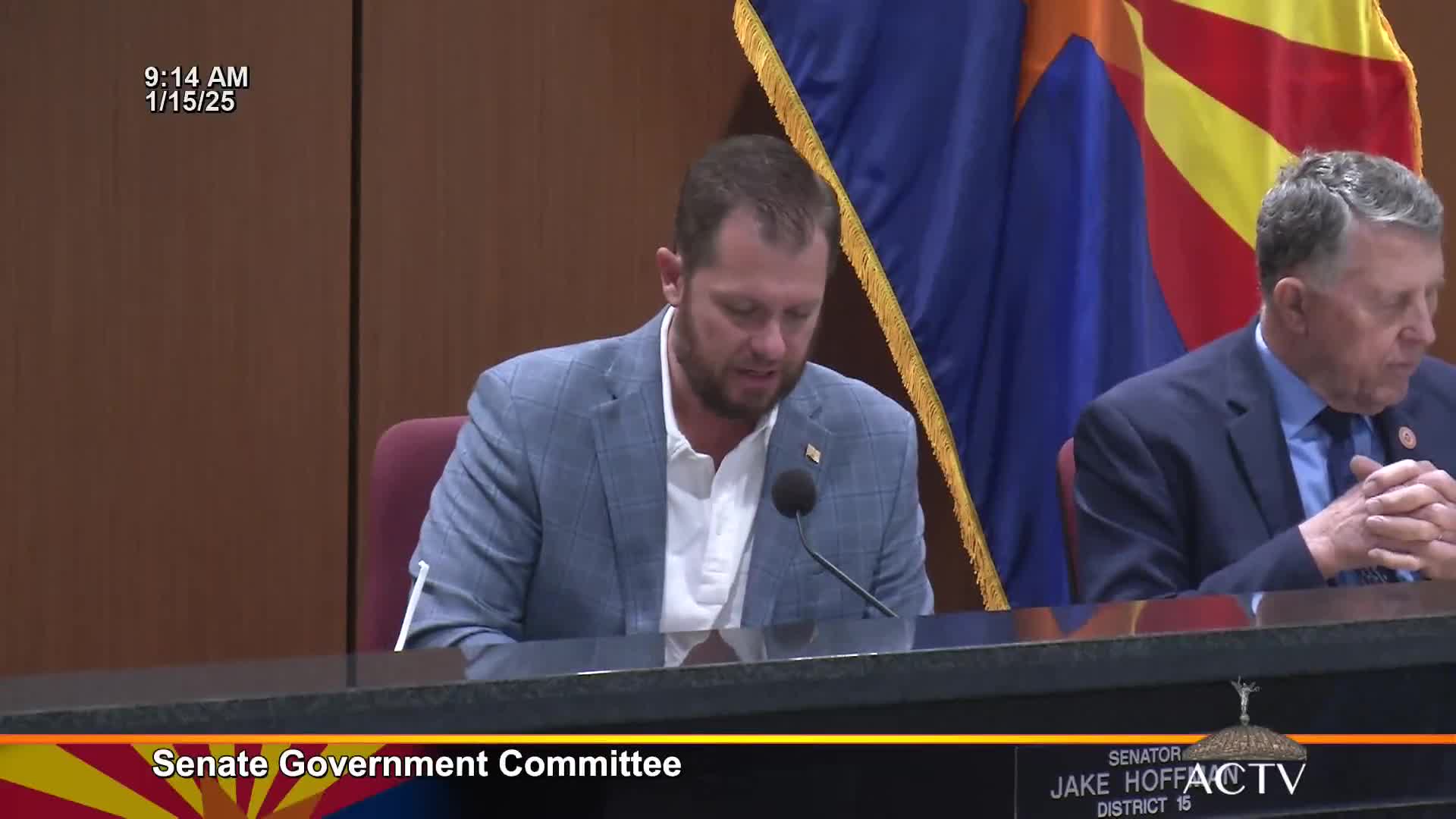
The Arizona Senate Committee on Government on Wednesday gave SB 1013 a due-pass recommendation after a 4-3 vote, advancing a measure that would require a two-thirds vote before cities, towns or counties may impose new taxes, fees or fines.
Sponsor testimony and proponents framed the bill as a protection for taxpayers. President Peterson, the bill sponsor, described it as “a matter of policy” and said he had “heard concerns, complaints from my constituents that, their councils are raising taxes, raising fees, and, especially in this era of inflation.” He said the measure applies the state’s higher voting standard to local governments so that “when you're talking about the force of government taking away property from somebody and spending it, then there should be greater protections.”
The measure drew sustained opposition from municipal and county representatives. Nick Ponder, representing the League of Arizona Cities and Towns and several municipalities, said the bill was inappropriate for the Legislature to bind local communities and warned it would limit locally accountable budget choices. Jacob Emnett, speaking for the County Supervisors Association, told the committee counties already face limits and state-driven cost pressures, including more than $1 billion annually in costs tied to state mandates such as the Arizona long-term care system and the courts. Emnett said those state-driven costs reduce local flexibility.
Local elected officials and residents also testified on both sides. Alan Skilcorn, who identified himself as a local elected official and taxpayer, urged passage, saying “Tax hikes hurt the little guy.” Opponents said the bill would disproportionately burden smaller and rural communities that may have fewer options to raise revenue and which face state-imposed cost shifts.
Committee members pressed both policy and practical questions. Supporters argued it gives protections to local minorities and prevents what one sponsor called the use of enterprise funds as a “hidden tax.” Opponents said local governments already face constitutional levy and expenditure limits, state mandates and close political accountability, and they warned the two-thirds requirement could empower a single member of a small board to block necessary action.
After final remarks the vice chair moved the committee recommendation. The roll call in committee produced four ayes and three nos; the committee record shows a due-pass recommendation for SB 1013.
The bill now moves to additional legislative processing. Committee members and testifiers repeatedly noted the proposal does not prohibit local governments from passing budgets or increasing taxes; it raises the voting threshold required to do so.
Votes at the committee meeting were recorded as 4 ayes, 3 nos. The transcript records several individual explanations: Senator David Farnsworth said he voted yes and cited frustration with decisions in Mesa; Senator John Kavanaugh and Senator Wendy Rogers spoke in favor and indicated yes votes; Senators Priya Sundarashan, Cindy Mason and Senator Eva Diaz are recorded among those opposing the measure and explaining concerns about local capacity and the bill's effects.