Get Full Government Meeting Transcripts, Videos, & Alerts Forever!
Get email alerts on the Administrative Finality topic
No spam. Unsubscribe anytime.
Justices consider whether SOAH order was final in Carlson challenge to comptroller proceedings
Summary
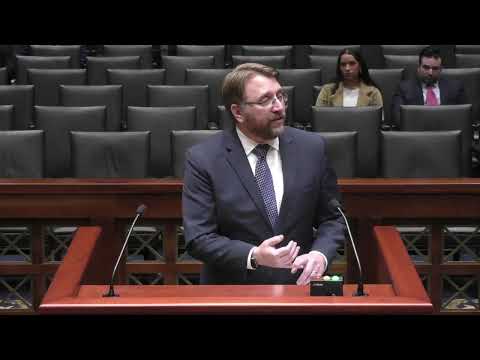
The Supreme Court heard argument in 240081, Henry Carlson (relator), over whether a SOAH administrative law judge’s order was final — and therefore subject to rehearing and judicial review — or whether the comptroller must adopt or modify the ALJ’s findings and then sign a separate, final comptroller order.
The Supreme Court of Texas heard argument in 240081, Henry Carlson (relator), a mandamus petition that asks whether an order issued by a State Office of Administrative Hearings (SOAH) administrative law judge (ALJ) was final and appealable for purposes of administrative‑procedure review of a contested case referred by the comptroller.
Relators contend the ALJ’s order was not a final agency action because (1) SOAH lacks authority to issue a final, appealable order for the comptroller in this type of contested case, (2) the ALJ’s document lacked the separately stated findings of fact and conclusions of law required by Tex. Gov’t Code §2001.141(b), and (3) the comptroller retained authority to modify or adopt any ALJ proposal for decision. Relators urged the court that because the order was not final they were deprived of the statutory path to rehearing and judicial review and therefore should be allowed mandamus relief.
Relators’ counsel argued the SOAH general counsel advised that cases referred by the comptroller are "proposal for decision" matters and that the ALJ’s document therefore was not a final comptroller order. "It's uncontested that under section 2001.141 agency finality is required in order for a party to seek rehearing and ultimately judicial review," counsel said, noting the order lacked enumerated findings and conclusions the APA requires.
The comptroller defended the outcome as consistent with SOAH rules and the Administrative Procedure Act. Respondent counsel said SOAH ALJs may dismiss matters for lack of jurisdiction or otherwise remove a matter from SOAH’s docket under the applicable rule (title 1 Tex. Admin. Code §155.503(d)(1)), and the comptroller argued that where SOAH has determined lack of jurisdiction the dismissal functions as a final disposition for purposes of the referring agency’s review. The comptroller also asserted that relators failed to timely ask for rehearing or to invoke the administratively available steps that, in the comptroller’s view, would have preserved any challenge.
Justices probed the statutory and rule text extensively. They focused on the definition of an "order" and a "decision" under the APA, whether a SOAH ALJ’s jurisdictional dismissal is a self‑executing final order or instead only a predecisional proposal that the comptroller must adopt or modify and then sign, and whether relators had procedural remedies they did not pursue. Several justices asked whether the court should accept the relators’ contention that the ALJ’s document "was never final" because it lacked the separate findings and conclusions the APA requires.
Relators urged the court to adopt a narrow rule: an ALJ’s order that does not contain separately stated findings and conclusions as required by Tex. Gov’t Code §2001.141(b) is not final and therefore cannot be invoked as the basis for exhaustion or to deny rehearing. Respondent counsel countered that rule would create impractical consequences and that the SOAH rule governing dismissals for lack of jurisdiction contemplates dismissal from SOAH’s docket in appropriate cases.
The court also discussed standing and whether the relators had presented a redressable injury tied to the comptroller rather than only to third‑party acts. Counsel for the comptroller raised the related policy concern that permitting late reversal of tax or administrative decisions could undermine agency decision‑making and create uncertainty for third‑party actors who relied on those dispositions.
After extensive questioning the court submitted the case.