Get Full Government Meeting Transcripts, Videos, & Alerts Forever!
Get email alerts on the Education Student Life topic
No spam. Unsubscribe anytime.
Middle school students, staff spotlight programs and praise new no-devices rule
Summary
Students and staff from Steamboat Springs Middle School described academic and social programs and told the school board the district's new “no devices” rule has increased engagement and reduced distractions.
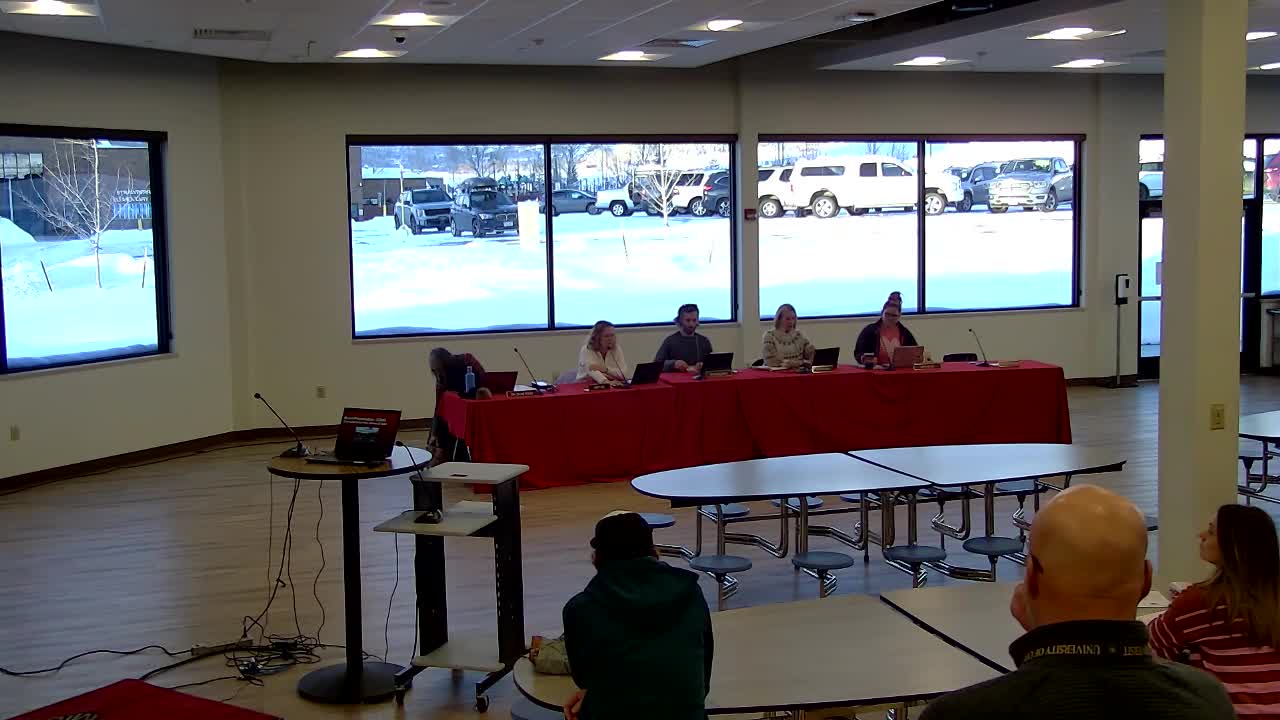
Steamboat Springs Middle School students and staff presented program highlights to the Steamboat Springs School District No. Re 2 Board of Education on Jan. 13, and several students described how the school’s recently tightened personal-device rule changed daily life.
The presentations, during the board’s reports and communications segment, included a SAFE Club update, leadership-club projects, multilingual student testimonials and student voices on the district’s revised device policy. Board members and district leaders said the student accounts offered direct evidence of the policy’s effects in classrooms and common areas.
Student presenters described club activities, school projects and the effects of removing personal devices from student pockets and classrooms. “I think it makes us more interested in other people and what they're doing in their lives,” said Piper Keenan, a Steamboat Springs Middle School student, describing the new “no devices” rule. Keenan also said the policy helps prevent morning cyberbullying and improves peer engagement.
Student Ethan Summers, who takes a high-school math class in the morning and attends the middle school afterward, said the contrast with a school that allows devices is clear: “the middle school … a lot of the kids are a lot more engaged answering questions that the teachers are talking about.” Ethan told the board the rule cut his own screen time and made the school day easier to navigate.
Teachers and administrators who provided written testimonials and on-stage remarks said the change reduced stress at the start of the day and made classrooms calmer. “Less stress, seems calmer,” said an unnamed teacher quoted in the district presentation materials; in oral remarks, Dr. Celine Wicks, the superintendent, said staff reports and teacher testimonials were included in the presentation for the board to review.
The student presentations also highlighted other school activities: the Student Alliance for Equity (SAFE) club—which said it expanded from a GSA to address a broader range of equity topics—has organized schoolwide events such as a bullying-awareness day, created “safe space” pinwheels, partnered with local organizations for learning, and sponsored a food drive for Lift Up. Leadership-club students proposed a mural project (estimated materials cost about $400) and a memorial garden that would use boulders and plaques to honor two former students.
Multilingual students and teachers described newcomer supports and extracurricular opportunities such as skiing trips and seasonal equipment rentals that staff said help students connect to the community. “I want to learn English because it's an opportunity in life,” said Manasa Maniego, an eighth-grade student who introduced himself to the board and described the support he received after arriving in September.
Board members praised the student speakers and staff, noting that firsthand accounts help trustees understand day-to-day conditions in schools. “It's great when students come up to us and speak to their experiences,” said board member Kevin Callahan. Several trustees asked presenters follow-up questions and thanked staff for bringing students to the meeting.
The board did not take any formal action on the device policy at the Jan. 13 meeting; trustees said they will receive teacher testimonials and a later update on Jan. 27 and May 5 to assess how the policy is working at other grade levels.
The presentation concluded with student awards and a public round of thanks to middle school staff and volunteers.