Get Full Government Meeting Transcripts, Videos, & Alerts Forever!
Get email alerts on the Open Meetings And Charter Scope topic
No spam. Unsubscribe anytime.
Law director, outside counsel brief commission on sunshine law, charter powers and review priorities
Summary
Sunbury’s law director and outside counsel reviewed open-meeting and public-record requirements and outlined the scope of charter topics the commission will examine, including mayoral and council powers, vacancies and board terms.
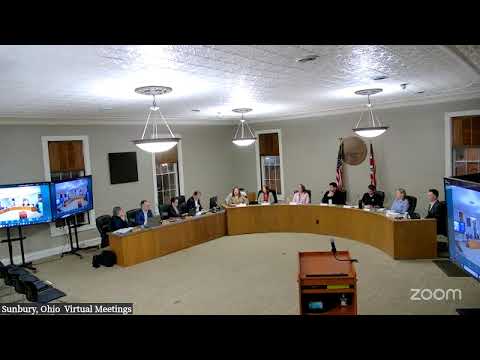
David Bridal, Sunbury law director, reviewed the Ohio open-meetings (sunshine) law and public-records obligations for commission members, and warned that prearranged discussions among a majority of commissioners outside a public meeting are prohibited and that emails and text messages about public business can be subject to public-records requests.
Bridal told the commission: “Sunshine laws basically say that what we do has to be open to the public,” and explained practical implications such as avoiding majority discussions by email or in-person outside posted meetings and the public-records exposure of communications about commission business.
Rebecca (Becky) Princehorn, the commission’s consultant from Bricker & Grama, put the charter-review calendar and scope in context. Princehorn explained the distinction between a charter municipality and a statutory city, saying the charter functions as “the constitution for our city” and noting that some default rules under the Ohio Revised Code would apply if the city took no charter-based approach.
Princehorn and city officials identified initial priority review topics: powers and relationships among the mayor, city council and city administrator; terms and candidacy requirements for boards and commissions; procedures for filling vacancies; and rotating terms on commissions such as the planning commission, which commissioners flagged as a potential source of instability if many seats turn over at once.
Commissioners asked for materials explaining where Sunbury’s charter deviates from statutory defaults. Princehorn offered to provide background materials on municipal charters and noted areas where state law preemption limits local authority.
Bridal and staff also advised commissioners on the public nature of commission records and the potential for executive sessions under limited circumstances. Commissioners were encouraged to route procedural or legal questions to Bridal and to avoid group texts or emails that could constitute a prearranged majority discussion.