Get Full Government Meeting Transcripts, Videos, & Alerts Forever!
Get email alerts on the School Climate topic
No spam. Unsubscribe anytime.
District outlines programs to lower suspensions, expand reentry supports and train staff
Summary
The Milwaukee Board of School Directors’ Committee on Parent and Community Engagement received an update on efforts to reduce suspensions, expand reentry supports and train staff in restorative and equity-focused practices.
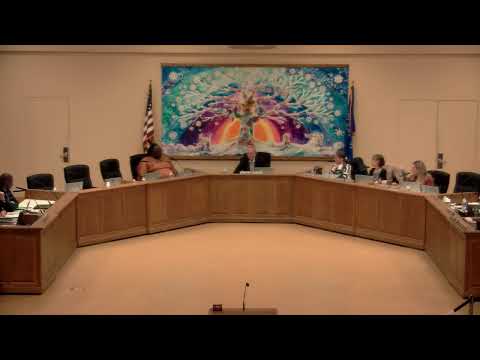
The Milwaukee Board of School Directors’ Committee on Parent and Community Engagement received an update from district discipline staff on programs the district is using to strengthen school climate, reduce suspensions and support student reentry.
John Jagman, district discipline manager, told the committee the district is aligning several initiatives — a Department of Justice grant called Project STEPS (Students Talking Equity and Prevention Systems), peer mentoring (Link Crew), a UW–Madison research “peer learning” platform, and professional development such as Courageous Conversations about Race — to support ninth graders and other students at schools identified as having the greatest needs.
Jagman described a “team of aligned needs” (TAN) approach that places multidisciplinary teams into identified schools for weekly, sustained support. He listed partner programs and services planned for the coming three years, including Link Crew expansion, peer mediation and programming from the Marquette Peace Center and Sky Schools, and a CPI training series called “reframing behaviors” for staff. Jagman said one element of reentry work is a school social worker assigned as a reentry coordinator who uses a Stanford-derived approach called “lifting the bar” to create individualized reentry plans for students returning from behavior reassignment or youth corrections.
Principal Matthew (Matt) Fuller of James Madison High School described on-the-ground practices that contributed to lower suspension rates at his school. Fuller said Madison has 556 students enrolled and that the school’s suspension rate is down 33% year to date. He credited shared leadership, weekly student voice meetings and coordinated family events, and said the school uses ESSA 3 funding for specific supports such as college tours and ACT preparation.
Jagman said data show that 85 of 161 traditional schools have lowered suspensions this year. He highlighted several school-level practices associated with lower suspension rates: consistent messaging on five components of school climate, adjusting classroom locations to minimize student movement, spacing lunch periods to reduce congestion, weekly student check-ins, and a 2-by-10 intervention (two minutes of positive conversation for 10 days) to build relationships.
The committee heard from two virtual public commenters. Michelle Hilbert, who identified herself as a member of Are We, Aspiring Anti-Racist White Educators, urged the district to communicate evidence of staff mindset shifts and to make clearer how budget choices support system changes. Larry Hoffman of the MICA Education Task Force noted the recurrence of suspensions for some students and asked the committee to draw conclusions from the district’s suspension-by-race data.
Board members thanked staff for the cross-departmental approach. Several directors said they appreciated the recurring follow-up slides and asked for continued transparency about program outcomes and funding.
This item was an informational update; no votes or formal actions were taken.