Get Full Government Meeting Transcripts, Videos, & Alerts Forever!
Get email alerts on the Homelessness Oversight topic
No spam. Unsubscribe anytime.
Council asks staff for options to strengthen community participation in homelessness oversight
Summary
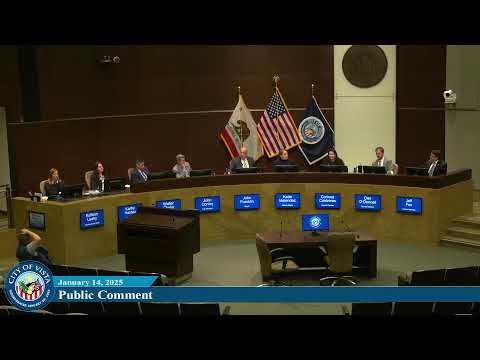
After debate about oversight and staff workload, the council directed staff to return with options to increase community participation — including nonvoting seats, an advisory commission or other models — to advise on the city’s strategic plan to address homelessness.
Deputy Mayor Melendez introduced a proposal to broaden the city’s standing committee on homelessness and to add community members with lived experience, service providers and stakeholders in a nonvoting advisory role.
Melendez said the intent is to bring additional perspectives — including people with lived experience of homelessness, representatives of nonprofits and business owners — into a regular review process for the city’s strategic plan to address homelessness. "I believe the oversight of our council is extremely important... I really do believe in that public participation to give us perspectives that we may not have ordinarily had," she said.
The proposal prompted robust council discussion. Some council members objected to delegating oversight of major contracts and large grants to an advisory body, citing risks of conflicts of interest and the need for elected officials to retain final accountability. Others supported additional community involvement and argued a structured advisory body could provide helpful, routine scrutiny and feedback for staff in between full-council action.
City attorney guidance noted that service providers on an advisory body could create conflict-of-interest constraints: a member who participated in drafting specifications or advising the city on a program might be legally precluded from later bidding for that city contract under Government Code 1090. Councilmembers also discussed timing and meeting logistics, with some suggesting evening meetings to boost public participation.
Councilmember Contreras proposed and the council approved directing staff to develop options for how community participation might be structured — including commission or committee models, rules of engagement, conflict-of-interest safeguards, and appointment procedures — and to return with recommendations. The motion was seconded and passed; staff will return with a menu of approaches for council consideration and a timeline for implementation.
Ending: Staff will prepare options for the council showing different models for community involvement (nonvoting seats, advisory commission or other formats), proposed rules and conflict-of-interest safeguards, and recommended meeting logistics for council consideration.