Get Full Government Meeting Transcripts, Videos, & Alerts Forever!
Get email alerts on the Taxes And Revenue topic
No spam. Unsubscribe anytime.
Finance committee reviews tax collection schedule, revenue reports and grant transparency; adopts minutes
Summary
Town finance members discussed a move to twice‑a‑year supplemental tax bills, monthly revenue and expenditure statements, grant reporting gaps, election spending and a model showing how a two‑bill tax schedule could reduce interest income. The committee approved the Sept. 18 minutes and adjourned.
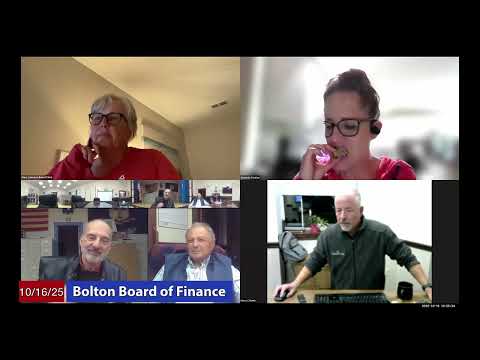
Bolton finance committee and selectmen reviewed tax collection changes, quarterly revenue statements and internal reporting practices at a virtual meeting, and they adopted the Sept. 18 meeting minutes.
Committee members discussed the tax-collection schedule change to send supplemental motor-vehicle and personal-property bills twice a year rather than once, municipal revenue and expense reports as of Sept. 30, a projected blip in election-related spending and concerns that grant expenditures are not reported in a single, roll‑up monthly report for the public.
Why it matters: The timing of tax collections affects the town’s interest income. Committee members heard a spreadsheet-based model showing that, under last year’s collection pattern and a 4% yield assumption, the town would have received roughly $458,000 in interest on those revenues; switching to two billing periods in that model would reduce interest income by about $225,000.
Tax collection and revenue details
- Supplemental schedule: Town staff said motor-vehicle and personal-property supplemental tax bills will be mailed twice a year (July and December/January) rather than once. The change is intended to spread collections and, staff said, could increase opportunities to collect more promptly on newly taxable items (for example, newly purchased vehicles).
- Tax-collection mechanics: Tax collector Laurie Bushnell explained that about 90% of taxes arrive in the first month after bills are sent, with the remainder trickling in across the year. Committee members asked whether splitting collections would reduce interest revenue and were told the net effect depends on timing and yields.
- Revenue and expenditures: Staff reviewed unaudited fiscal-year figures as of Sept. 30. Officials flagged expected election-related spending this fall and noted a potential recount process: meeting discussion referenced the state’s recount triggers (roughly a 0.5% margin or a difference of about 20 votes can prompt a recount in municipal contests).
Grant reporting and transparency
Committee members raised concerns that grant revenues are deposited into the general fund but that expenditures tied to grants are not presented as a simple, consolidated line on the monthly reports the committee receives. CFO Jill Collins said grant spending is tracked for each grant and that the finance office can produce grant-specific reports on request, but she also acknowledged the current reporting tools do not produce an easy, single roll-up in the regular packet and that producing one would take staff time.
Modeling the tax-billing change
Committee member Ross Lally presented a spreadsheet model built from last year’s monthly reports to show how a move to two tax-billing cycles would change interest income under a 4% yield assumption. Using last year’s cash-flow pattern, the model estimated:
- Interest from last year’s revenue pattern at 4%: about $458,000. - Estimated loss if the town had collected those revenues in two bills instead of one (same overall volume, different timing): approximately $225,000.
Staff and committee members discussed the model’s limitations — it used last year’s pattern and did not include every grant timing nuance — and agreed it is a useful starting point for public discussions about convenience vs. cost.
Votes and formal actions
- Motion to adopt minutes of the Sept. 18 regular meeting: moved by Robert Morris and seconded by Tyler Egnor. The motion passed unanimously by the three voting members present.
- Motion to adjourn: passed by members present.
Ending
Committee members asked staff to follow up on several items: provide clearer documentation on the supplemental tax schedule and its expected revenue timing, explore whether a consolidated grants‑expenditure roll-up can be produced monthly or quarterly, and plan a follow-up meeting with bank representatives during the budget season. Members said the reporting improvements would help answer public questions about how grant money and tax revenue move through the general fund.