Get Full Government Meeting Transcripts, Videos, & Alerts Forever!
Get email alerts on the Hotel Storage Camping Ordinance topic
No spam. Unsubscribe anytime.
Planning commission rejects proposed rules limiting hotel stays, storage-unit residency and camping; staff urged to do more outreach
Summary
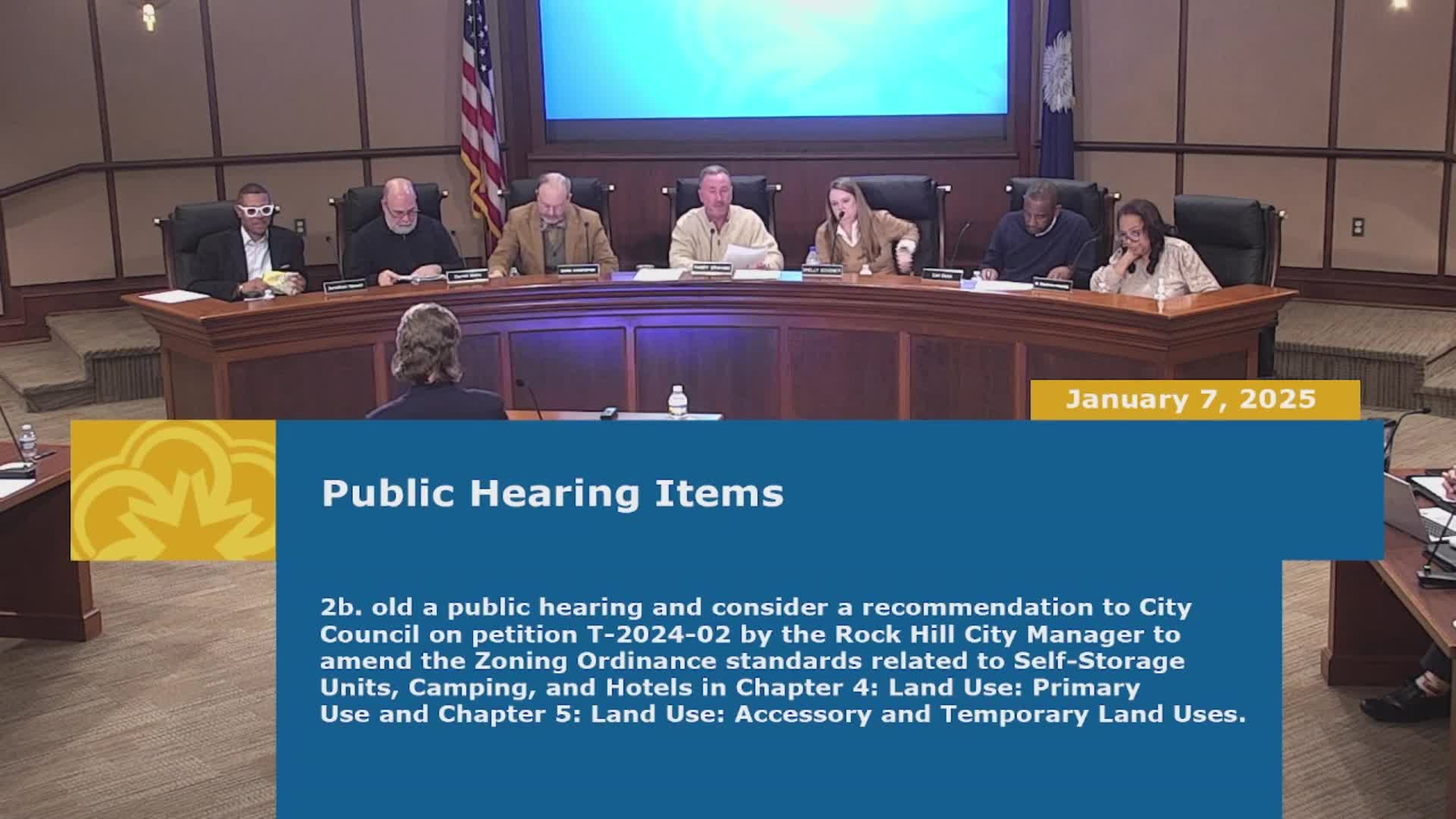
Facing objections from hotel operators, housing service providers and commissioners, the Rock Hill Planning Commission voted to recommend denial of a broad package of zoning amendments aimed at limiting long-term stays in hotels, prohibiting living in self-storage and restricting camping on private property.
The Rock Hill Planning Commission on Tuesday voted to recommend denial of a proposed zoning amendment package that would have tightened rules governing hotel stays, self-storage occupancy and camping on private property.
Planning staff presented the package as an effort to prevent commercial uses not designed for habitation from becoming de facto permanent housing. “The intent of this is really to ensure that commercial land uses that aren't designed for housing do not become used as permanent housing so that the community doesn't experience negative impacts from that use,” a staff presenter told the commission. The draft amendments would have limited guest stays to 30 days in a rolling 12-month period with a narrow set of exceptions, required additional guest‑registry details to be available to the city on request, encouraged crime-prevention reviews and required interior-room configurations (and other security measures) for future hotels.
Staff highlighted concrete problems motivating the proposal: code-enforcement and police calls connected with long-term hotel residency, incidents of people attempting to live in storage units, and public safety concerns in zones with older, exterior-corridor motels. Proposed measures included allowing a 90-night exception for guests who are homeless but enrolled in a program that will secure permanent housing, requiring security cameras and crime-prevention review for future hotels, and requiring hotels to post information about addiction, housing and human-trafficking resources.
The proposal drew extensive public comment. Multiple hotel operators argued the requirements would sharply reduce legally available customers and could put small motel owners out of business. “Not all people staying in hotel are causing this problem,” said Malay Patel, the owner of a Riverview Road hotel, who warned of “significant” financial harm if the local market were closed to repeat or long‑stay customers. Multiple owners said a meaningful share of their occupancy is local or long-term and that the city’s existing 30-day rule is already in place but unevenly enforced.
Representatives of homeless service providers urged caution. Melissa Carlisle of the Catawba Area Coalition for the Homeless said providers were concerned the rules would increase unsheltered homelessness because shelter capacity and affordable housing remain limited. “There’s not enough shelter availability or funding to be able to accommodate the people who probably are relying on the hotel and motels for longer‑term stays,” Carlisle told the commission.
Commissioners said they shared the goals behind the draft but questioned whether the ordinance as written would displace people without providing housing options or would place an undue operational and legal burden on small business owners. Several commissioners asked for more stakeholder outreach and for staff to return with a narrower, better‑tested proposal that balances enforcement with available social‑service capacity. One commissioner noted existing efforts to coordinate with hotels — including trespass agreements and increased police engagement — and recommended those be expanded before imposing new, city‑wide zoning restrictions.
A motion to approve the draft amendments as written failed on a unanimous negative vote. The Planning Commission’s recommendation of denial will be forwarded to City Council; staff said changes can still be made before council first reading if council elects to proceed.
What was proposed (selected items in the draft): - Limit hotel stays to 30 days in a rolling 12-month period, with exceptions (emergency housing needs, temporary relocation for work, and up to 90 nights for people enrolled in a rehousing program). - Require additional guest registry information, including government ID for anyone 18 or older, and make registries available to the city on request. - Encourage or require crime-prevention reviews and security cameras for future hotels; require posting of resource information in lobbies and restrooms. - Prohibit residing in self storage units and restrict camping on private parcels (with limited exceptions for brief recreational uses and government-authorized emergency response).