Get Full Government Meeting Transcripts, Videos, & Alerts Forever!
Get email alerts on the K 12 School Budget topic
No spam. Unsubscribe anytime.
Superintendent: rising insurance costs, enrollment changes and contractual obligations will drive school budget
Summary
Andover Elementary School Superintendent Valerie Moreno told the Board of Finance that enrollment gains (largely in pre-K), state minimum-budget rules and a projected 16.5% insurance increase leave the school with limited ability to meet a 1.5% town spending target.
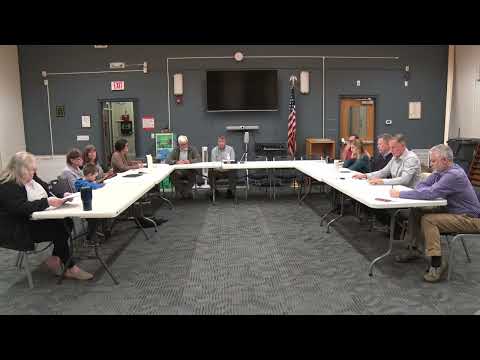
Valerie Moreno, superintendent of Andover Elementary School, told the Board of Finance at a joint charter meeting that the school faces budget pressure from enrollment increases, required minimum spending rules and a large expected increase in health insurance costs.
Moreno said the town’s required minimum budget calculation (referred to in the meeting as the state “ED 12” minimum budget requirement) and the school’s enrollment growth — particularly in pre-kindergarten — mean the district cannot treat a one-size-fits-all spending target the same as the town’s. “This is a town budget. It’s everybody,” Moreno said, arguing the Board of Education must be able to answer specific questions about its line items and be present for budget hearings.
Why it matters: Moreno warned that the combination of contractual salary obligations, a large expected jump in consortium health premiums and minimum-state spending rules will consume much of any baseline increase and leave little room for additional reductions without legal and funding consequences.
Moreno detailed three primary drivers the board should factor into its 2026 planning: contractual salary increases, health insurance costs paid through a multi-jurisdiction insurance consortium, and state-required minimum budget treatment tied to enrollment. “We can anticipate 16 and a half percent increase this year for the consortium,” Moreno said. She explained that because the school carries a larger share of employees on insurance than the town, the same percentage increase in premiums produces a much larger percentage effect on the school’s budget than on the town’s.
She also described the state’s minimum budget requirement (ED 12) as a binding floor: unless a district experiences a documented, significant decline in students or a school closure, the local education budget cannot be reduced below the previous year’s base under the ED 12 calculation without risking state funding. Moreno pointed to the town’s current state education funding (ECS) and said that the town’s ECS allocation “is held harmless” for the coming year at about $2,004,000, which supports the district’s revenue assumptions.
On enrollment, Moreno said the district gained roughly 40 kindergarten–sixth-grade students over a six‑year span and an even larger number when pre-K enrollment is included; she noted the October 1 enrollment count is what the state uses for calculations. That growth, plus contractual pay increases and insurance pressure, led her to forecast that meeting a 1.5% expenditure-limit target would be “wholly unreasonable” for the school. “We can’t do it based on our contractual obligations,” a board member said in response to Moreno’s presentation.
Class staffing was another budget driver discussed. Moreno said the district plans to add a second sixth-grade teacher next year because current and projected class sizes and student needs make splitting the class necessary; she described how the district has used flexible spaces and intervention groupings this year to manage class sizes but said that is not a sustainable substitute for staffing when needs rise.
The superintendent also described the district’s relationship to a municipal insurance consortium. The school participates under the town’s membership and thus cannot procure insurance independently. Moreno asked for stronger town representation at the consortium’s meetings, saying the consortium’s votes are cast by the participating entities and that the school’s share of premium increases will be material to the district budget.
The meeting closed the school discussion with board members and the superintendent agreeing to provide enrollment and cost details at upcoming working sessions so the Board of Finance and the Board of Selectmen can factor the district’s constraints into town-level spending targets.
The Board of Finance scheduled follow-up budget working meetings in February and March before the public hearing tentatively planned for April.