Get Full Government Meeting Transcripts, Videos, & Alerts Forever!
Get email alerts on the Legislative Procedure topic
No spam. Unsubscribe anytime.
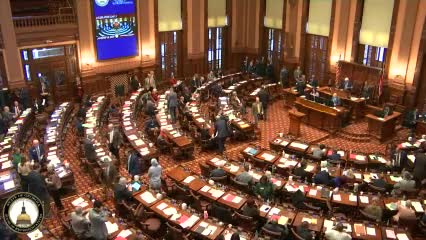
House adopts order of business; clerks read dozens of bills in first and second reading
Summary
The Georgia House of Representatives adopted a resolution establishing the day's order of business without objection and the clerk read a lengthy list of first- and second-reading bills and several resolutions; no floor debate or recorded roll-call votes on those bills were recorded in the transcript.
The Georgia House of Representatives on Jan. 15 adopted a resolution establishing the day’s order of business without objection, then the clerk read dozens of bills in first and second reading as part of the morning routine.
The adopted resolution set the chamber’s agenda for early business, including unanimous-consent items, introductions, first readings and second readings. After the clerk completed the readings, members proceeded to morning orders and recognitions.
House leaders said the readings were routine. Chairman Tarver told members his committee had read the prior day’s journal and found it “to be correct.” The clerk then read first readers (House Bills 34–58) and second readers (including House Bills 1–33 and multiple House resolutions), with titles and sponsoring members announced but without floor debate on the measures during the session recorded in the transcript.
Why it matters: the reading of bills is the formal step that places measures on the chamber’s calendar for later consideration; many of the items read reference amendments to the Official Code of Georgia Annotated across health, education, judiciary and other subjects. The transcript does not record substantive floor debate or recorded roll-call votes on the bills themselves during this sitting.
Details: - The clerk announced first reading for House Bills 34 through 58, including bills on professions and businesses (HB 34), substitutes for absent/disqualified district attorneys (HB 35), guardianship (HB 36), education employment conditions (HB 37), needs-based financial aid (HB 38), technology fees for magistrate/probate courts (HB 39, HB 33), elections (HB 40), conditional discharge for controlled-substance possession (HB 41), and numerous others (titles as read by the clerk). - The clerk proceeded to second reading for bills and resolutions including House Bills 1–33 and multiple resolutions (House Resolutions 6–13 among those read aloud). The clerk read titles and committee references; the transcript does not record detailed debate on those items during this session.
Votes at a glance: - Resolution establishing order of business for the day — adopted (no objection). Source: clerk reading and the speaker’s call for objections. - Reading and confirmation of prior legislative day journal — confirmed (chair reported journal correct; chair heard no objection). - Adoption of privilege resolutions (a package of recognitions read later in the day, including proclamations and retirements) — adopted (no objection). - Motion to adjourn by the Majority Leader — approved by voice vote.
What the transcript does not show: recorded roll-call tallies or recorded final passage votes on the individual bills read during first or second reading; committee referrals and future calendaring were not detailed in the excerpts.
The clerk completed the first-reading and second-reading announcements and the House moved on to morning orders, recognitions and member announcements before adjourning.