Get Full Government Meeting Transcripts, Videos, & Alerts Forever!
Get email alerts on the Marriage Equality topic
No spam. Unsubscribe anytime.
House Votes to Remove Constitutional Language Banning Recognition of Same‑Sex Marriage
Summary
House Joint Resolution 9, which would strike language from the state constitution that forbids recognition of unions approximating marriage and replace it with a non-discrimination provision on the issuance of marriage licenses, passed the House 58–35 with 2 abstentions.
The Virginia House of Delegates on Tuesday agreed to House Joint Resolution 9 by a recorded vote of 58 ayes, 35 noes and 2 abstentions. The resolution would remove a clause in the state constitution adopted in 2006 that barred the Commonwealth from recognizing relationships that "approximate" marriage and would replace it with language guaranteeing that the Commonwealth shall not deny the issuance of a marriage license on the basis of sex, gender or race.
Sponsor Delegate Mark Sickles (Fairfax) and other backers said the change is necessary to preserve the legal status of marriages recognized under federal precedent and to protect families from potential future court decisions that could reverse Obergefell v. Hodges. "The Commonwealth shall not deny the issuance of a marriage license to adult persons seeking a lawful marriage on the basis of sex, gender, or race of such persons," the sponsor read on the floor while explaining the substitute text.
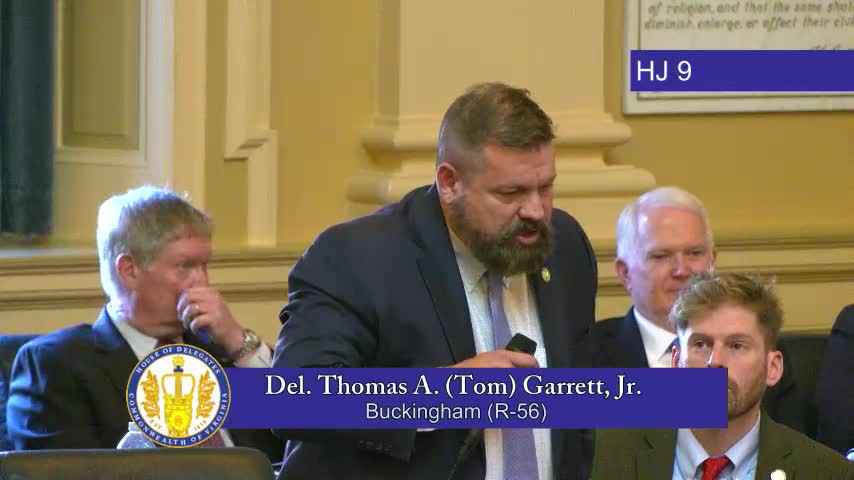
Opponents raised questions about conscience protections for religious officiants and whether removing a specific statutory safeguard from the introduced draft could have unintended legal consequences. During debate, several members asked whether clergy or other officiants could be compelled to perform ceremonies against their beliefs; the sponsor and other legislators said existing statutory and constitutional protections for religious exercise remain and that the bill was not intended to force anyone to perform a marriage against their conscience.
After votes on the committee substitute and floor consideration, the clerk recorded Ayes 58, Noes 35, Abstentions 2 and the resolution was agreed to by the House. The resolution was presented with a committee substitute earlier in the day and that substitute was adopted by the chamber before the final vote.
Speakers on both sides emphasized family, legal certainty and religious liberty in their remarks, and members noted that the measure is intended to preserve legal protections for families if federal precedent changes.