Get Full Government Meeting Transcripts, Videos, & Alerts Forever!
Get email alerts on the School Safety topic
No spam. Unsubscribe anytime.
House panel advances bill to require bleeding-control kits and training in schools
Summary
A House subcommittee approved Delegate Clark’s substitute to require at least two trained staff in each school building and bleeding-control kits, sending the bill to appropriations after a 6–2 vote.
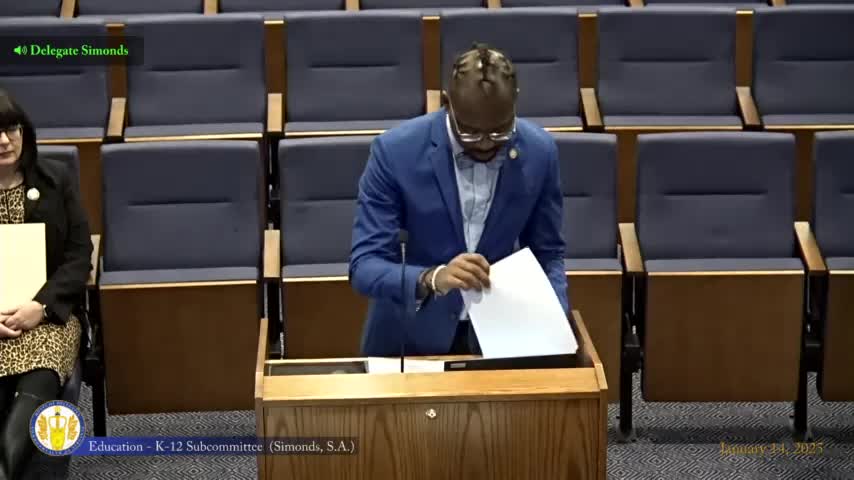
A Virginia House K-12 Education Subcommittee on Jan. 15 voted to report House Bill 1700 to appropriations after adopting a substitute that would require at least two staff members in each public school building — one of whom may be a school resource officer — to receive training and have access to bleeding-control kits.
The substitute replaces broader language that had applied training to “every school board employee.” The bill’s sponsor, Delegate Clark, said the requirement is intended to reduce deaths from uncontrolled bleeding following severe trauma and modeled the change on measures used by the American College of Surgeons’ Stop the Bleed campaign.
Why it matters: Trauma surgeons and emergency responders told the subcommittee uncontrolled bleeding is a leading preventable cause of death after injury and can be fatal within minutes. Supporters argued that placing both kits and short, hands‑on training in schools bridges the gap between injury and first-responder arrival.
What the substitute requires: The attorney for the subcommittee read the substitute into the record. It requires “at least two staff members in each school building, one of whom may be a school resource officer, to receive appropriate training in the use of the bleeding-control kit, including the proper application of pressure techniques, dressings, bandages and tourniquets to control and stop bleeding.” The substitute also directs that the bill, if reported, be forwarded to appropriations for funding consideration.
Support and testimony: Dr. Michael Abutanos, a trauma surgeon and state chair for the Committee on Trauma for the American College of Surgeons, told the panel he has treated many students who arrived at the trauma center having bled to death in the field and said stopping bleeding quickly increases survival. Paramedic and trainer Greg Nyman and Shane Riddle of the Virginia Education Association also testified in favor, describing training already delivered to school staff and students in parts of the commonwealth. Supporters said Stop the Bleed sessions typically run about 60–90 minutes and emphasize direct pressure, wound packing and tourniquet use.
Opposition and concerns: Some members questioned whether existing first-aid and CPR training in divisions already covers tourniquet use. Delegate Wagner and one other member argued tourniquet and bleeding-control techniques are already part of some first-aid instruction and expressed concern about duplicative mandates and administrative tracking for divisions.
Vote and next steps: The subcommittee moved the substitute and voted to report the bill to appropriations; the motion passed 6–2. The bill will go to the House Appropriations Committee for funding review.
Ending: Backers asked appropriators to include funding for kits and training so local divisions would not bear an unfunded mandate. The bill’s language allows one trained staff member to be a school resource officer, leaving implementation details and funding to further committee work and the appropriations process.