Get Full Government Meeting Transcripts, Videos, & Alerts Forever!
Get email alerts on the Judiciary Retirement topic
No spam. Unsubscribe anytime.
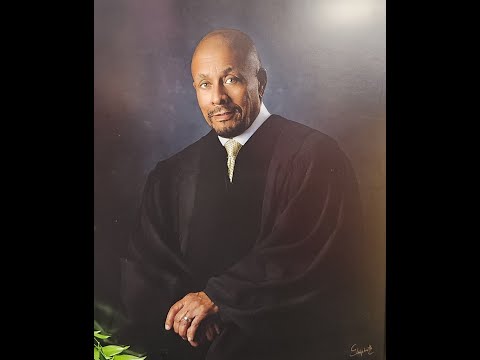
Bexar County honors Judge Andrew W. Carruthers at retirement and portrait unveiling
Summary
Judge Andrew W. Carruthers, Bexar County criminal magistrate for 35 years, was honored Jan. 15 with speeches, a portrait unveiling and proclamations recognizing his leadership on competency and mental‑health dockets.
Judge Andrew W. Carruthers, the longtime criminal magistrate for Bexar County, was honored Jan. 15 at a retirement celebration and portrait unveiling in the county courthouse.
The event, organized by Judge Stephanie Boyd of the 187th District Court, drew local judges, elected officials, law‑enforcement members and community groups. Presenters read proclamations and delivered remarks that highlighted Carruthers’s 35 years on the bench, his role in creating and running specialty magistrate dockets for competency and sanity matters, and innovations that reduced prisoner transport and expanded remote testimony.
The commissioners court presented a proclamation signed Jan. 15, 2025, and a plaque given by the district attorney’s office listed Carruthers’s service dates as Nov. 16, 1989, to Jan. 31, 2025. A U.S. congressional recognition and flags that had flown over the U.S. and Texas capitols were also offered to Carruthers during the ceremony.
Speakers repeatedly described Carruthers as a statewide leader on competency, sanity and restoration proceedings. A representative for the City of San Antonio read a citation noting that he helped implement video conferencing for competency and sanity evaluations, a change credited with reducing the cost and time associated with prisoner transport and with allowing doctors and witnesses to appear remotely. Commissioner Tommy Calvert cited the magistrate court’s volume, saying Carruthers heard “between 30 to 50 cases daily,” and described the cumulative scale of that workload over decades.
Several presenters recalled Carruthers’s early work as a defense attorney, his role in statewide training and consultations on forensic mental‑health law, and his willingness to mentor younger lawyers and staff. The Center for Health Care Services, the county’s local mental‑health authority, noted repeated collaboration with Carruthers on inpatient, outpatient and jail‑based competency restoration programs.
Carruthers spoke near the end of the program, thanking colleagues, staff and family. He singled out long‑time members of his courtroom team, including his coordinator, Angela Martin Del Campo, and court reporter Roxanne Pena, and said, “I’ve enjoyed this job.” He closed with, “I love you all,” before the formal portrait unveiling.
The ceremony included prayers, civic and faith‑based presentations, and gifts from local bar associations and community groups. Organizers announced a reception across the street following the program.
No formal motions, votes or policy actions were taken at the event; it was a ceremonial recognition and social gathering honoring Carruthers’s retirement.