Get Full Government Meeting Transcripts, Videos, & Alerts Forever!
Get email alerts on the Water Lead topic
No spam. Unsubscribe anytime.
Kalispell council directs staff to place lead service-line SRF financing on agenda after staff presentation
Summary
Council heard a Public Works presentation on the EPALead and Copper Rule Improvements, inventory counts, and two funding options; staff will bring a draft resolution for an SRF (State Revolving Fund) loan to next weeks agenda for council action.
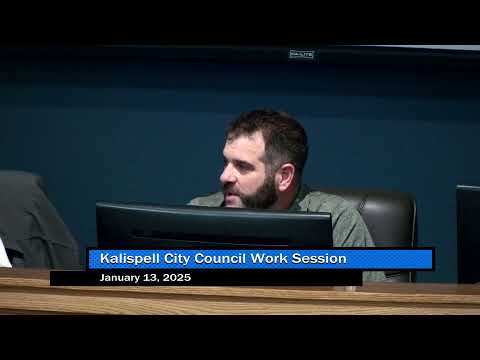
Mayor Mary Johnson called the City of Kalispells work session to order on Jan. 13 and opened discussion of the new federal Lead and Copper Rule Improvements (LCRI) and options to fund required service-line replacements.
Susie Turner, Kalispells director of public works, said the EPA has adopted the LCRI and laid out an implementation schedule that requires utilities to complete inventories, validate records and begin a 10-year compliance period in the fall of 2027. "With the new rule officially adopted, we now have better direction on its implementation schedule," Turner said.
The rule will require utilities to finish a service-line inventory, perform two-point validation checks, and start more frequent monitoring that in Kalispells case will require sampling 60 sites every six months beginning in 2028. Turner warned that the rule lowers the action level to 10 parts per billion and that exceeding that level will force either corrosion-control treatment (orthophosphate injection) or replacement of all lead and galvanized-required-replacement lines within five years.
Turner walked council through Kalispells current inventory counts: 27 known street-side lead service lines, eight building-side lead lines, eight full main-to-house lead runs, 57 galvanized required-replacement (GRR) building-side lines, and about 483 service lines still listed as "unknown." She said the new rule requires a 2-point inspection validation and estimated the city will need roughly 180 potholes to complete validation by 2034; staff said they believe they can complete about 108 of those potholes in-house.
To pay for replacements, Turner presented two options: (1) use State Revolving Fund (SRF) financing and accept a loan estimated at $2,000,000 with approximately 60% forgiveness and the remaining 40% repaid at about 1.5% interest, or (2) keep the current city regulation that places maintenance responsibility on property owners and pursue a mix of customer-managed or city-administered replacement programs (deferred-payment plans, customer-managed construction, or leaving replacement to the property owner). "The rule is very silent on who's responsible to pay for it," Turner said.
Councilors debated tradeoffs: some members, citing immediate protection of children and residents and the federal forgiveness, advocated option 1. Councilor Hunter said, "I'm I'm I'm solidly on on option 1." Other members worried about precedent, interior plumbing remaining a source of exposure, and the staff workload of administering deferred-payment plans. Staff noted that if the city uses SRF funds it must replace service lines from the main to the house (including the portion inside the right-of-way) and that some property owners could still refuse access to private property; in those cases the city would document attempts and report to the state as required by the rule.
There was no final vote; city staff and multiple councilors agreed to put a draft resolution for the SRF financing path on the council agenda for the next regular meeting for formal consideration. City Manager Chad Russell summarized the next step: "Well, it sounds like we have enough to put it on the agenda with, you know, that as the initial one up for vote, and council can make any discussion choices related to that."