Get Full Government Meeting Transcripts, Videos, & Alerts Forever!
Get email alerts on the Healthy Buildings Ordinance topic
No spam. Unsubscribe anytime.
Residents, advocates urge Evanston to pass Healthy Buildings Ordinance to secure $10.4 million DOE grant
Summary
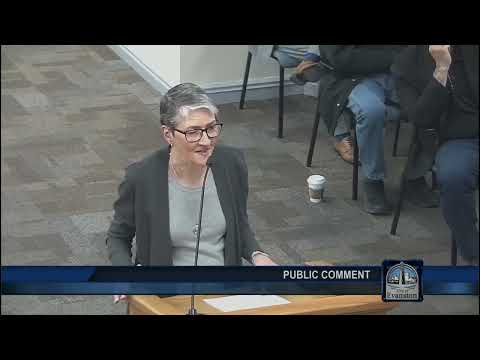
Two public commenters at an Evanston Administration and Public Works Committee meeting urged committee members to approve the Healthy Buildings Ordinance, citing greenhouse-gas reductions, cost savings from electrification and a $10,400,000 Department of Energy grant that supporters say requires quick passage.
At an Evanston Administration and Public Works Committee meeting, two public commenters urged the committee to pass the proposed Healthy Buildings Ordinance and highlighted a related U.S. Department of Energy grant worth $10,400,000.
The ordinance, speakers said, would begin planning a long-term transition from gas to cleaner, electrified heat in large buildings and include an equity-focused accountability board to guide detailed rulemaking. "CUB supports the Healthy Buildings Ordinance," Martie Klevs said, identifying themself as "an Evanston resident in Ward 4 and a volunteer board member with the Citizens Utility Board or CUB." Klevs added: "By focusing on our largest buildings, we will get more bang for our buck in terms of greenhouse gas emissions."
Paula Scholl, a Ward 9 resident and chair of the building electrification working group, told the committee the ordinance is linked to a $10,400,000 Department of Energy grant. "The grant and the healthy buildings ordinance will help, assist all buildings and in particular equity focus or equity challenged buildings, with finding, financing, securing funding," Scholl said, and urged the committee to pass the ordinance "without delay in its current form in order to make sure that we get those grant funds."
Speakers framed the ordinance as both a climate and consumer-cost issue. Klevs criticized recent gas utility rate activity, saying Nicor had proposed a roughly $309,000,000 rate increase and that Nicor "has increased gas bills by a staggering $724,000,000 since 2018." Those figures were presented by Klevs as evidence that long-term planning for electrification and protections for vulnerable residents are needed.
Scholl said the DOE grant would fund planning, financing assistance and, for the most equity-challenged buildings, initial technology and planning costs, and would finance an accountability board to focus on equity in rulemaking. Both commenters said they plan to speak again at the full City Council meeting and urged prompt action by councilors.
No committee action on the ordinance was recorded in the committee meeting transcript; the comments were made during the committee's public-comment period before several items moved to the full City Council for consideration.