Get Full Government Meeting Transcripts, Videos, & Alerts Forever!
Get email alerts on the Building Performance Standards topic
No spam. Unsubscribe anytime.
Council introduces Healthy Buildings Ordinance, citing emissions goals and federal grant
Summary
The Evanston City Council introduced and approved the Healthy Buildings Ordinance (HBO) after months of staff and public engagement. The ordinance would set building performance standards for large buildings and creates an implementation process tied to a $10.4 million Department of Energy grant.
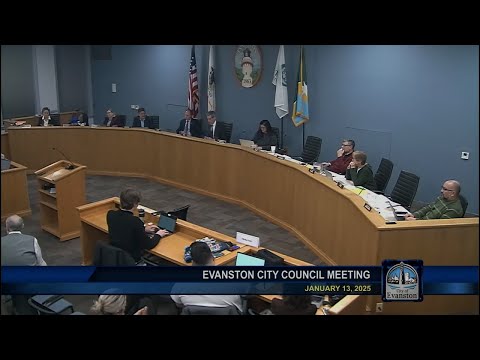
Evanston’s City Council on Jan. 13 introduced and voted to approve a proposed Healthy Buildings Ordinance that would require large buildings in the city to reduce energy use, eliminate on-site fossil fuel combustion and transition to renewable electricity over a multi‑decade timetable.
The ordinance targets buildings of about 20,000 square feet and larger — roughly 500 properties identified by staff — and sets a framework of interim performance targets that would be strengthened every five years through 2050. City sustainability staff and the ordinance’s sponsors said the law is intended to advance Evanston’s Climate Action and Resilience Plan (CARP) and was crafted to include equity and alternative‑compliance processes for special cases.
The ordinance’s backers said it is both legally defensible and financially supported in part by a newly awarded U.S. Department of Energy (DOE) grant of about $10.4 million to help implement the law. “HBO has a high emissions reduction impact, eliminating almost half of our community‑wide carbon emissions by 2050,” said Cara Pratt, Evanston’s sustainability and resilience manager, during the council discussion.
Why it matters: Buildings are the largest local source of Evanston greenhouse gas emissions. Proponents argued the ordinance is necessary to meet city climate commitments, to reduce building operating costs over time through energy efficiency, and to make use of federal funding available now. Opponents and some building representatives cautioned that upfront retrofit costs can be high and pressed for clear, funded pathways so owners and tenants are not unfairly burdened.
Key details - Coverage: Buildings roughly 20,000 sq. ft. and larger (staff estimate: ~500 properties). The city’s own facilities would be subject to a comparable standard at a lower threshold for internal accountability. - Metrics: The draft ordinance establishes three final goals — reduced energy intensity, elimination of on‑site fossil fuel combustion, and 100% renewable electricity procurement — with interim targets to be set every five years beginning in 2030. - Flexibility: A formal rule‑making and public process is built into the ordinance. Property owners may apply for alternative compliance for narrowly defined reasons (for example, critical backup generation for hospitals or equipment reaching end of useful life). - Implementation funding: Staff said the DOE grant will fund audits and help create a financing marketplace; staff also identified Cook County C‑PACE, utility incentives, and other grant programs as part of an expected toolbox to reduce upfront cost exposure for owners.
What supporters said: Dozens of public speakers — including residents, environmental groups, students and building performance professionals — urged prompt adoption. Jack Jordan of Climate Action said the ordinance is essential to meet CARP goals and warned delays can perpetuate harms: “To delay in a time of crisis is not a neutral action,” he said during public comment.
What opponents said: Representatives from Nicor Gas and several property‑management organizations urged more time or changes, arguing conversion costs and tenant relocation risks should be addressed in greater detail. The Clean Energy Choice Coalition said legal risk has arisen in other municipalities around electrification mandates and urged a balanced approach tied to grid planning.
Council action and next steps: Council member Harris moved introduction and approval; Council member Reid seconded. The council voted 8–0 to introduce and approve the ordinance (roll call recorded). Staff said a rule‑making process and establishment of two new advisory bodies (a technical committee and an accountability board) will follow to set interim targets, compliance pathways and other technical rules before the first compliance deadlines.
Ending note: Staff and community groups told the council they will hold additional public office hours and roundtables in late January to reach building managers and affected stakeholders; the DOE grant funding and technical assistance will begin to flow only after staff finalizes the implementation plan in the coming months.