
South Bend council adopts 2026 fiscal plan amid warnings about statewide tax changes
Get AI-powered insights, summaries, and transcripts
Subscribe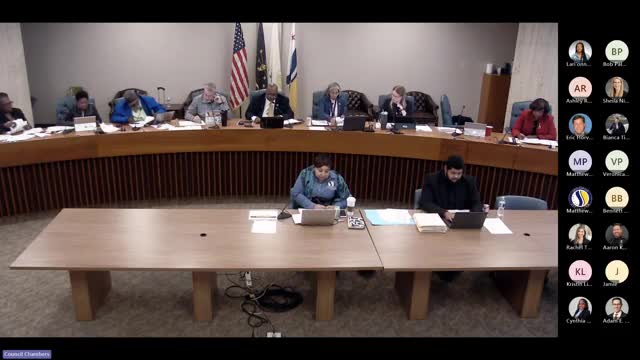
Summary
The Common Council approved the city’s 2026 budget after committee review and public hearings. Council members and staff praised the process while flagging the fiscal uncertainty created by Indiana’s Senate Bill 1 and the need for departmental cuts and contingency planning for 2027–28.
The South Bend Common Council on Monday adopted the city’s 2026 fiscal plan, approving substitute Bill 56‑25 after committee review and public hearings.
Kyle Willis, city controller, and members of the council’s Personnel and Finance Committee described a process of multiple public hearings and department reviews. Committee Chair Sheila Nitzgotsky thanked staff and residents for their input and said the budget reflected extensive work across departments. “There was a lot of hearings. I believe we heard over 15 public hearings,” Nitzgotsky said during committee remarks.
Council members repeatedly cited uncertainty tied to recent state legislation. Several members referred to Indiana’s Senate Bill 1 as a driver of future revenue pressure and urged caution. Council Member White said difficult personnel and program decisions had been necessary to prepare for future years; others noted the council had asked departments for roughly 5% cuts in planning for 2027.
Willis and council leaders said the city aimed to reduce internal costs first before proposing service cuts. Willis told the council the finance team and department directors compiled the budget and responded to numerous public questions posted online.
A roll call on third reading recorded nine ayes and the ordinance was adopted. Council members and staff said they would continue monitoring state developments and departmental budgets as more guidance arrives from state sources.
Procedural note: the council accepted a substitute version of the bill earlier in the meeting before moving the ordinance forward; committee and council votes followed the substitution and public hearing sequence required by state law.