Get Full Government Meeting Transcripts, Videos, & Alerts Forever!
Get email alerts on the Clean Ports Grant topic
No spam. Unsubscribe anytime.
Louisiana awarded $3M EPA Clean Ports planning grant; universities to baseline emissions and resilience
Summary
The Office of Multimodal Commerce and university partners will use a $3 million planning grant from the U.S. Environmental Protection Agency to inventory port energy use and emissions, advise ports on resilience and cleaner operations, and prepare ports for potential larger implementation funding.
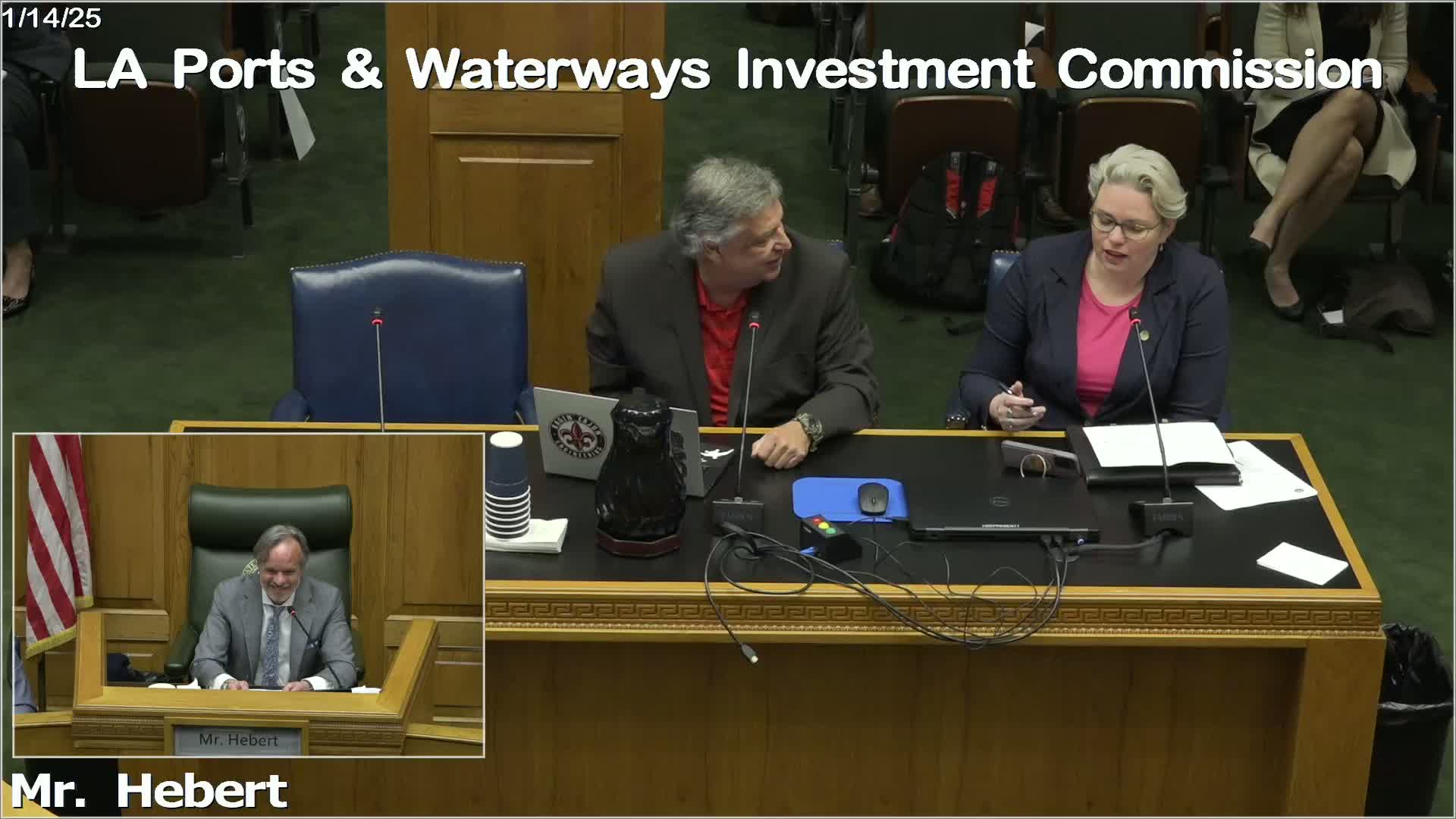
Molly Burgoyne of the Office of Multimodal Commerce told the commission that Louisiana’s Clean Ports planning grant—awarded by the U.S. Environmental Protection Agency—covers $3 million over three years and will fund a statewide baseline of port energy and emissions, resilience assessments and pilot planning. “The planning grant is structured to set you up to get an implementation grant,” Burgoyne said, explaining the grant’s role and that final award paperwork was signed at EPA though an official award email was still pending at the time of the meeting.
Why it matters: several commissioners and port representatives said a baseline inventory will be required for ports to qualify for future federal implementation grants and to make ports more competitive in markets that weigh shipping‑chain emissions. Burgoyne said the planning grant will not be a regulatory audit or a state enforcement action; instead, the plan is to work with each port to prepare voluntary, port‑specific implementation plans and to advise on technologies and funding.
Scope and partners: the Office of Multimodal Commerce will work with DOTD’s Louisiana Transportation Research Center (LTRC), University of Louisiana Energy Institute (Dr. Zappia/Mark Zappi referenced), and other university partners to perform emissions inventories, energy audits, resiliency assessments (including distributed power and battery storage), and economic analyses. Burgoyne said the implementation grants previously sought by the state were larger—she referenced statewide implementation proposals in the hundreds of millions—but only the planning grant was awarded at this stage.
Commission and next steps: commissioners asked the team to coordinate with DEQ, LED and other state entities once contracts are finalized and to share project lists that overlap with ports’ submitted implementation projects. The commission’s resiliency and sustainability task force, which will be co‑chaired by a university energy expert, will coordinate with the Clean Ports project and with LED and DOTD programmatic efforts.
Ending: Burgoyne and university staff said they will provide the commission with the project PowerPoint and requested ports’ participation in the advisory and review panels as the planning work begins.