Get Full Government Meeting Transcripts, Videos, & Alerts Forever!
Get email alerts on the Homelessness Encampments topic
No spam. Unsubscribe anytime.
Alamogordo commissioners table encampment ordinance after wide-ranging public safety debate
Summary
After public comment and testimony from the fire department about fires linked to encampments, the Alamogordo City Commission voted 6-0 to table a proposed ordinance that would tighten rules on public and private camping for 30 days to gather more public input and refine language.
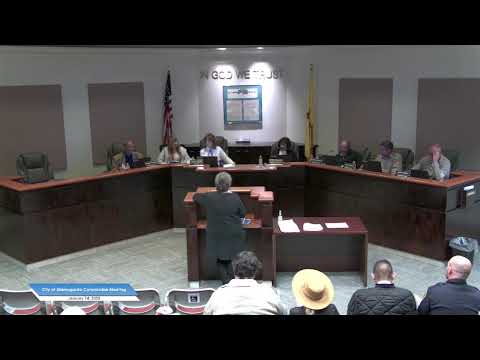
The Alamogordo City Commission on Tuesday voted 6-0 to table a proposed ordinance that would revise rules on public and private camping, after extended public comment and testimony from fire officials that highlighted fire and safety risks linked to encampments.
The ordinance, listed as item 4 on the agenda, drew several public speakers and discussion from commissioners and staff. The commission agreed to pause consideration for roughly 30 days to solicit additional community feedback and to examine concerns about enforcement, private-property impacts and criminal penalties.
Why it matters: supporters of the ordinance cited repeated unsafe fires and hostile interactions that endanger first responders and property; opponents said the measure risks criminalizing people experiencing homelessness and could overload courts and the county jail without adding shelter capacity or social services.
During public comment, Kelvin Holly, who said he owns property in the affected neighborhood, urged swift action on nuisance houses and encampments, saying they had become “trap houses” and were “not safe for the community.” Derek Washington, another resident, echoed Holly’s call for quicker remedies and said drug activity and transient use had damaged neighborhood safety.
Jacob Justice, identified in the meeting as a resident, told commissioners, “This ordinance does nothing but criminalize homelessness in Alamogordo. It overburdens police, and it obfuscates what people can do on their own private property.” Courtney McCarrie Squires, speaking for community groups including 100% Otero Housing, asked commissioners to pull the item from the consent agenda and to revise the ordinance with nonprofit and community input.
Alamogordo Fire Department lieutenant William Skaggs presented incident data to the commission and said the department had documented a notable number of fire responses linked to encampments. “From November 1, 2023 to January 3, 2025, I linked 45 incidents that Alamogordo Fire Department responded to,” Skaggs said. “Eleven of these fires were deliberate acts of arson.” Skaggs said many incidents involved attempts to cook or stay warm unsafely, fires at vacant properties, and hostile interactions with responders; several incidents led to high property losses and threatened community safety.
A representative of the municipal prosecutor’s office told the commission that judges commonly permit community service in lieu of fines and that the office regularly recommends that option during sentencing. The prosecutor said community service hours are deducted toward fines and that the practice is used “quite often.” Commissioners discussed whether community service could be built into any enforcement regime to reduce the burden of monetary fines on people who cannot pay.
Commission debate focused on three themes: (1) public safety risks and repeated responses by fire and police; (2) whether the city has legal authority and practical means to remove encampments on private property when owners cannot be located; and (3) how to avoid criminalizing people who lack housing while preserving public safety and protecting staff and residents. Mayor Pro Tem Sharon McDonald and other commissioners described hearing strong, often conflicting input from constituents and community groups.
Commissioner Josh Bridal moved to table the ordinance; Commissioner Mark Tapley seconded. The motion to table passed 6-0. The commission asked staff to gather public comments and return the item for further consideration within about 30 days so that revisions could be drafted with stakeholder input.
The vote and next steps: the commission’s action was procedural (to table) rather than a final decision on the ordinance’s substance. Staff and community members will have the opportunity to submit suggested revisions and data to address enforcement, property-owner notification and alternatives to fines.
Community context: speakers repeatedly cited local organizations such as 100% Otero and compared approaches in Las Cruces, including Camp Hope, as models for housing-first solutions. Commissioners said limited local shelter capacity, liability, and program costs constrained immediate options.
The commission’s exchange underscored tension between emergency responders seeking tools to reduce dangerous incidents and advocates worried about criminal penalties and enforcement that may not connect people to housing or services. The item will return for further consideration after additional public input and staff recommendations.