Get Full Government Meeting Transcripts, Videos, & Alerts Forever!
Get email alerts on the Economic Development topic
No spam. Unsubscribe anytime.
Milton council pauses vote, orders review of CRA façade grants after push to end program
Summary
Councilman moved to end the downtown business façade grant program and instead prioritize public infrastructure; the motion drew debate and was sent to a committee/work session for staff to return with options and budget detail.
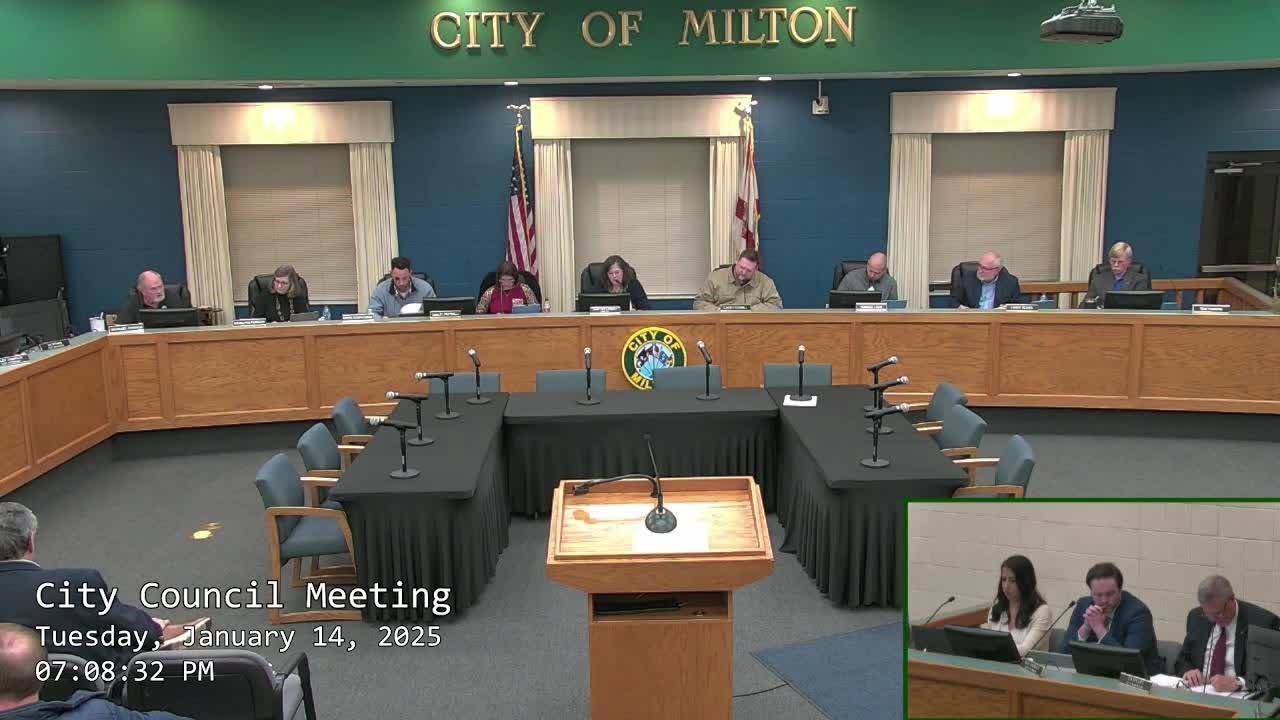
Councilman Matthew Cusack introduced a motion to end the City of Milton's business façade grant program and reallocate the Community Redevelopment Area (CRA) funds to public infrastructure such as sidewalks, lighting and an amphitheater. The motion drew extended discussion, but it did not receive a second and the council instead directed staff to prepare options for a committee discussion later this month.
Cusack said the current pattern of repeat recipients benefited private enterprises rather than the public and suggested the CRA dollars be used for sidewalks, lighting and other improvements "that benefit the citizens of Milton." He told colleagues he would move to abolish the program immediately but acknowledged the two current applicants met eligibility requirements under existing rules.
City staff and other council members pushed back that the CRA and tax increment financing (TIF) structure is intended in part to eliminate slum and blight and to leverage private investment. A city finance/CRA representative told the council the current façade program has historically leveraged roughly $8 in private investment for every $1 of grant money and that the typical payback to the TIF fund through increased ad valorem taxes occurs within five to seven years. Staff also noted that CRA funds can be legally used for a range of public improvements but that any reallocation should be studied and planned before reversing an established program.
By the end of the discussion the council agreed to send the topic to the committee/work-session process for a fuller review. Staff said they would provide a brief, user-friendly summary of what CRA/TIF funds may be used for, examples of allowable projects, and the specific budgets now dedicated to façade grants (staff reported a typical funding split includes both CRA and general revenue dollars but asked the council to let staff present the exact figures at the committee meeting). Councilman Cusack and staff confirmed the two current façade applications remain eligible under current criteria and will proceed while the council studies future policy changes.
The council did not vote to abolish the program; rather, members asked staff for a follow-up presentation and to place the issue on a committee agenda so the full council can decide after reviewing legal constraints and funding choices.