Get Full Government Meeting Transcripts, Videos, & Alerts Forever!
Get email alerts on the Judiciary topic
No spam. Unsubscribe anytime.
Idaho chief justice asks Legislature for four new judges and pay hikes to address heavy caseloads
Summary
Idaho’s chief justice told the House on Jan. 15 that heavy workloads, declining applicants and high turnover are straining trial courts and asked legislators to fund four new judges and boost judicial pay to about $200,000 to improve recruitment and retention.
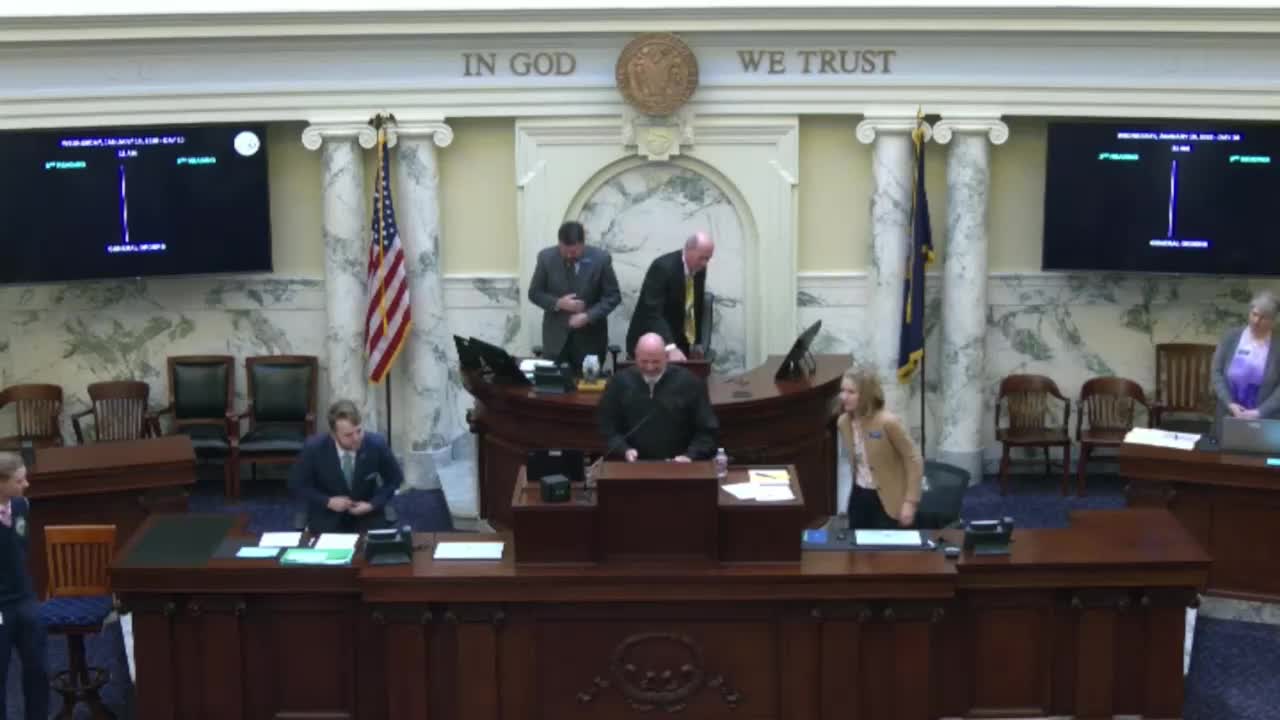
Boise — Chief Justice (name not specified), addressing the Idaho House of Representatives on Jan. 15, told lawmakers the state’s trial courts face rising caseloads, recruitment shortfalls and retention problems and requested funding for four new judges and higher judicial salaries.
The chief justice told members that magistrate and district judges carry heavy and varied dockets — from arraignments, warrants and juvenile matters to complex felony and civil litigation — and described examples of extreme workloads and travel demands. “On their busiest day during this week, one judge can hold hearings in as many as 124 different cases,” the chief justice said, and cited a district judge who closed 424 criminal and 198 civil cases in 2024.
The chief justice said those workloads and declining applicant pools threaten the courts’ ability to operate efficiently and impartially. “Just five years ago, there were, on average, 11 applicants for a district judge position. Last fiscal year, that average dropped to 4.6,” the chief justice told the House. To respond, the Supreme Court requests funding for four new judges across counties with the heaviest strain and a salary increase for trial-court judges to “closer to $200,000 annually” to make judicial service more competitive with private practice.
Why this matters: The chief justice framed the requests as needed to preserve timely access to justice across Idaho, noting the judicial branch represents roughly 1% of the general fund and arguing targeted investments will address scheduling bottlenecks, reduce reliance on visiting judges, and stabilize the bench.
Details and context
The chief justice described that magistrate judges handle a broad range of matters — criminal arraignments, child protection, shelter care, probate and traffic cases — and said some travel frequently to cover neighboring counties. He highlighted Twin Falls, Bonneville and Kootenai counties as examples where visiting judges or cross-coverage have become routinized and said those arrangements are now “untenable” because visiting judges are effectively spending large portions of their time away from their home counties.
The chief justice also emphasized the role of treatment courts and the public-safety benefits they provide: he said about 613 Idahoans graduated from treatment courts in the last fiscal year and noted studies showing treatment-court graduates are significantly less likely to reoffend.
On compensation, the chief justice said Idaho ranks 48th out of 53 states and territories for district judge salaries and argued that the pay gap with private practice discourages experienced attorneys from applying for the bench or prompts judges to return to private practice after retirement. He proposed both a near-term salary increase for trial judges and consideration of future changes by an independent citizens’ committee appointed by the executive and legislative branches, with final changes subject to legislative review.
What the court asked for
- Funding for four new judges targeted to counties with high workloads (counties named in the address: Twin Falls, Bonneville, Kootenai). - Increasing trial-court salaries to about $200,000 annually to improve recruitment and retention. - Consideration of an independent, citizen-based committee to recommend future judicial compensation adjustments, modeled on the committee that recommends legislative salaries.
Limitations and next steps
The chief justice repeatedly noted that judges are elected officials and that compensation ultimately involves the legislative and executive branches. He also emphasized that the judiciary's budget is a small share of the general fund and that the court aims to be a prudent steward of its resources. The address closed with an appeal for legislative support to maintain a strong, independent judiciary.
Ending
The House received the remarks and returned to the calendar; members thanked the chief justice and invited collaboration on solutions going into the session.