Get Full Government Meeting Transcripts, Videos, & Alerts Forever!
Get email alerts on the Judiciary Funding And Workload topic
No spam. Unsubscribe anytime.
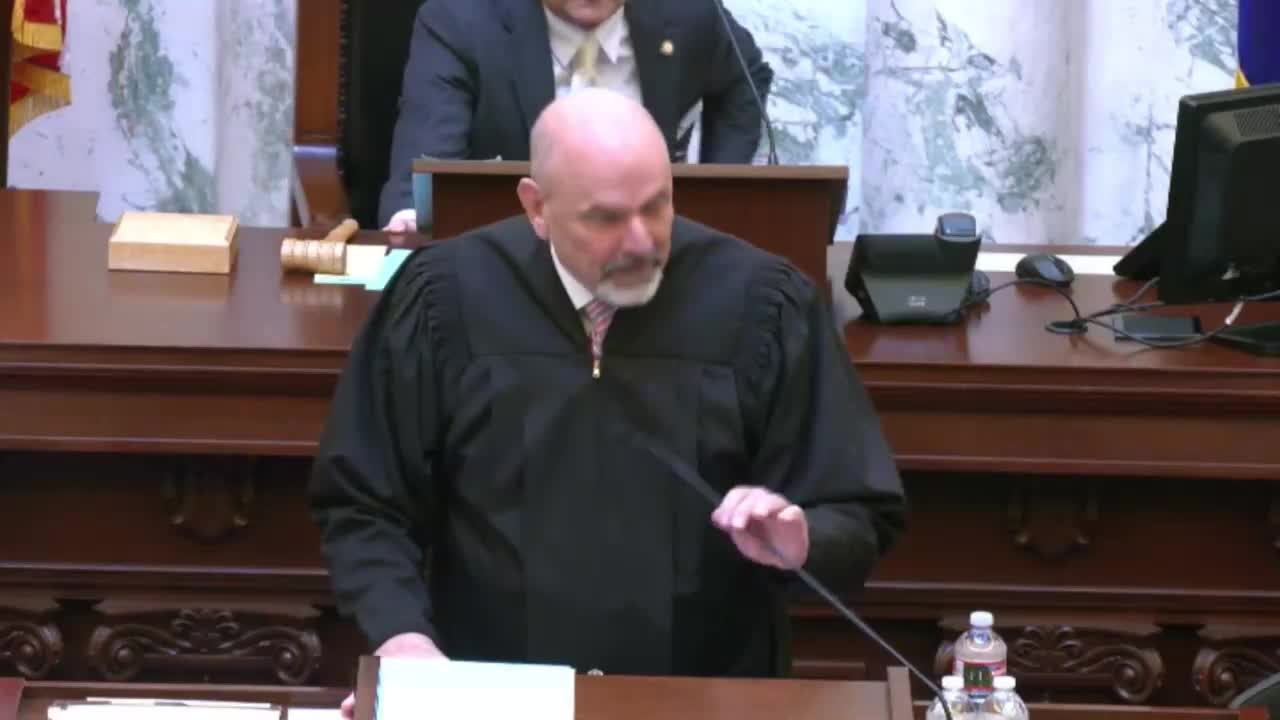
Chief Justice tells Idaho Senate judges need pay boost, four new judges to ease heavy caseloads
Summary
The chief justice delivered the State of the Judiciary, detailing heavy trial-court workloads, recruiting and retention challenges and requesting funding for four new judges and a move toward $200,000 trial-court salaries to improve recruitment and retention.
The Chief Justice of the Idaho Supreme Court delivered the annual State of the Judiciary address to the Idaho State Senate on Jan. 15, outlining heavy trial-court workloads, declining applicant pools for judgeships and a request for additional funding and higher salaries.
The address asked the Legislature to fund four new judges across counties with acute backlogs and to consider increasing trial-court judge pay to about $200,000 annually. "We're requesting funding for 4 new judges across these counties," the Chief Justice said, and urged that judicial compensation be made more competitive to retain and recruit qualified candidates.
Why it matters: the chief justice said mounting caseloads and a shrinking number of applicants threaten timely access to justice. Magistrate and district judges, the address said, carry heavy day-to-day dockets that include criminal arraignments, juvenile matters, civil trials and complex felony cases; magistrate judges may handle dozens of hearings in a single week. The chief justice noted that Idaho's judicial branch budget accounts for roughly 1% of the state's general fund and that Idaho ranks 48th out of 53 states and territories in district-judge pay.
The address laid out specific workload and workforce indicators. The chief justice said Idaho has about 150 judges, more than half of whom preside over at least one treatment court; in the most recent fiscal year, 613 people graduated from treatment courts. Recruitment has declined: the average number of applicants for district-judge openings fell from about 11 five years ago to 4.6 last fiscal year, and fewer private-practice civil attorneys are applying for judgeships, the chief justice said.
The chief justice described how judges travel between counties to cover caseloads, citing examples in Twin Falls, Kootenai and Bonneville counties where visiting judges and intercounty coverage have become common. The address said some current arrangements have become "untenable" and reduce effectiveness, and asked the Legislature to fund the requested judgeships to restore stability.
On compensation, the chief justice recommended moving judicial salaries closer to $200,000 for trial-court judges and proposed that future salary reviews be handled by an independent committee with executive and legislative appointees and with subsequent review by the Legislature, similar to the committee that sets legislative salaries. "To halt these trends, the supreme court proposes increasing judicial salaries to closer to $200,000 annually for trial court judges," the chief justice said.
The chief justice framed the requests as necessary to maintain an independent, experienced bench able to decide life, liberty and property matters promptly and impartially. The address urged senators to consider the proposals as part of the budgeting and legislative process.
The Senate granted unanimous consent to "order the state of the judiciary address spread upon the pages of the senate journal," a routine step that records the address in the official journal.