Get Full Government Meeting Transcripts, Videos, & Alerts Forever!
Get email alerts on the Police Department Budget topic
No spam. Unsubscribe anytime.
Central reviews $3.95 million preliminary budget, 47‑person plan for full‑time police department
Summary
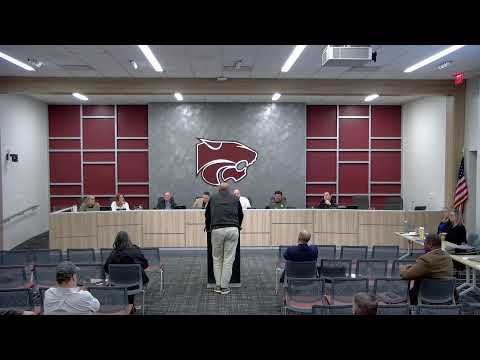
City of Central officials on an agenda item discussed a preliminary budget and organizational chart for a proposed full‑time Central Police Department that would include 47 paid positions and nine part‑time employees.
City of Central officials on an agenda item discussed a preliminary budget and organizational chart for a proposed full‑time Central Police Department that would include 47 paid positions and nine part‑time employees.
Officer Dauthier, presenting the draft, said the proposal “envisions a full time police department with 47 paid employees.” He described pay steps for officers starting at $19.99 an hour, with an 11‑step schedule that reaches about $26.86 an hour at the top step, and listed senior salaries of $95,000 for the chief and $78,000 for the assistant chief. The spreadsheet presented shows a step‑1 annual base for patrol officers of about $41,579 (2,080 hours) and notes a state POST supplemental pay of $600 per month (about $7,200 a year) for post‑certified officers — a supplement the presenter said would not be paid by the city.
The presentation estimated salaries and benefits for the proposed staffing structure at about $3,950,000 annually. Officer Dauthier and other speakers said equipment, vehicles, fuel, training and other operating costs were not fully estimated in the spreadsheet and could add several million dollars more; one presenter used a working example that, when added, could put total first‑year costs in a range the meeting described as roughly $6.9 million to about $8 million depending on assumptions about equipment and startup purchases.
Council members and law enforcement advisers questioned details of shift scheduling, overtime and how part‑time positions would function if the department were fully independent. The draft assumes 12‑hour shifts for uniform patrol and suggested several approaches to keep officers’ average paid hours to 40 per week (for example, giving a “short day” every two weeks rather than paying overtime). A staff member explained that if the city pays hourly employees, time over 40 hours per week would generally be overtime at time‑and‑a‑half.
Overtime and incentive estimates were discussed as provisional. The presenter described an overtime estimate of $250,000 based on an assumption that 37 full‑time hourly employees would receive up to about 200 hours per year in holiday and miscellaneous overtime (13 holidays × 12 hours = 156 holiday hours, plus about 44 hours of other overtime). The spreadsheet averages long‑term pay at a midpoint (step 7) and multiplies by the assumed hours to reach the overtime projection.
Several law‑enforcement veterans advised the council that the 47‑position plan appeared to be a minimum and urged adding full‑time officers rather than relying on part‑time staff: “I would rather you, when you put your final thing together, y'all plan for being on your own,” said a sheriff’s‑office representative, arguing that Central would not be able to rely on other agencies for routine coverage if it becomes a standalone department.
Speakers also addressed benefits and legacy costs. Presenters said the spreadsheet assumes the city would pay 100% of full‑time employees’ employee‑only health, vision and dental premiums as a placeholder; retirees’ legacy costs were noted as a separate budget question not fully captured in the draft. Panelists with experience at other agencies described a wide range of employer contributions to insurance and retirement and cautioned that those choices materially affect long‑term costs.
The meeting included a short discussion about court processing if Central establishes its own full‑time police department. Resident Wade Evans suggested a mayor’s court could handle many municipal citations and warned against relying on citation revenue as a primary funding source, citing a nearby town that reduced ticketing and later saw revenue fall.
Council members asked staff to continue refining the figures and to return with additional detail on operating costs, legacy benefits and alternatives to a conventional model. The mayor encouraged the council to explore nontraditional structures and technology as part of the city’s approach to delivering public‑safety services.
No formal action was taken on the budget or the organizational chart; the discussion will continue at future meetings and staff was asked to bring additional information, including comparisons with the sheriff’s office, to the next session.