Get Full Government Meeting Transcripts, Videos, & Alerts Forever!
Get email alerts on the State Legislature Leadership topic
No spam. Unsubscribe anytime.
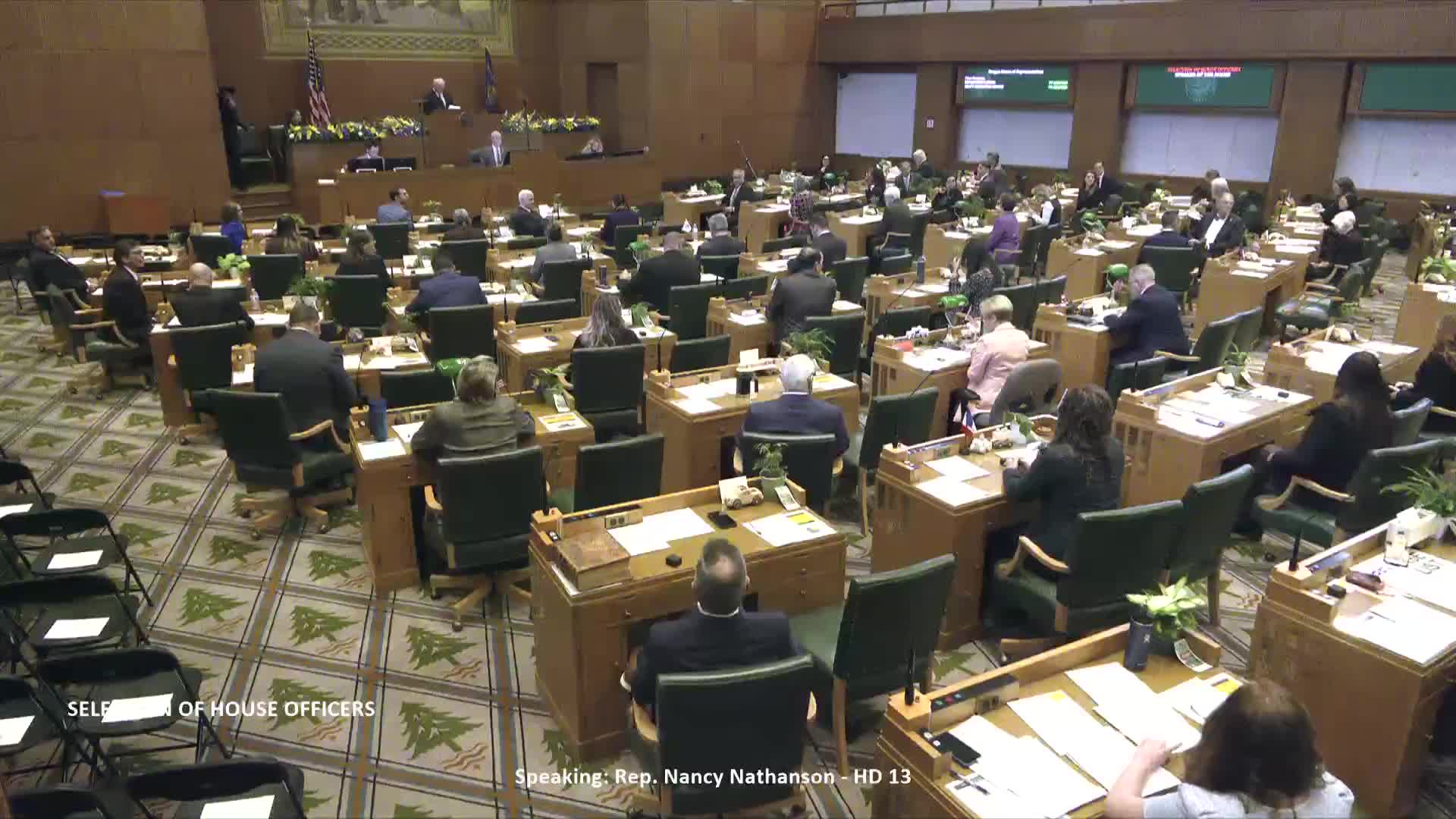
Julie Fahey elected speaker of Oregon House; emphasizes affordability, health care and oversight
Summary
The Oregon House of Representatives elected Julie Fahey as speaker during its organizational session. Fahey took the oath of office, outlined session priorities including housing and Medicaid financing, and urged lawmakers to put constituents first.
Julie Fahey was elected speaker of the Oregon House of Representatives during the chamber’s organizational session and took the oath of office administered by Chief Justice Megan A. Flynn of the Oregon Supreme Court.
Fahey, who was nominated by Representative Paul Nathanson, told colleagues she was “honored to have been selected to lead this chamber” and said the session will focus on affordability, housing, health care and ensuring state agencies are accountable. “This session will be about ensuring that our state and local government are delivering on the promises that we make to Oregonians,” Fahey said.
Why it matters: The speaker controls floor procedure, committee referrals and much of the House’s agenda-setting. Fahey opened her remarks by stressing a practical approach to the legislature’s work and framed the session around housing production, renewing Medicaid financing, transportation funding and K–12 student outcomes.
Key details: Fahey said 1 in 3 Oregonians are covered under the Oregon Health Plan and argued renewing Medicaid financing is important both to protect access and to support providers. She also called for a transportation package that addresses maintenance, seismic resilience and multimodal options. Fahey praised bipartisan work on legislative oversight and named a bipartisan group led by Representative Ben Bowman and Representative Kim Wallen as part of that effort.
Process and formalities: The organizational session began with Timothy Sikarek, the chief clerk, calling members to their seats in compliance with Article IV, Section 10 of the Oregon Constitution and Oregon Revised Statute 171.010. Earlier in the session the House elected Representative David Gomberg as temporary speaker by acclamation to preside over organizational business; Gomberg later was elected speaker pro tempore.
What’s next: Fahey asked members to “get to work” on legislative priorities she listed, and the chamber proceeded to organize committees, adopt House rules and conduct first readings of bills for the 2025 regular session.