Get Full Government Meeting Transcripts, Videos, & Alerts Forever!
Get email alerts on the Mental Health Addiction topic
No spam. Unsubscribe anytime.
Kotek seeks expanded treatment beds, workforce funding to address mental health and addiction
Summary
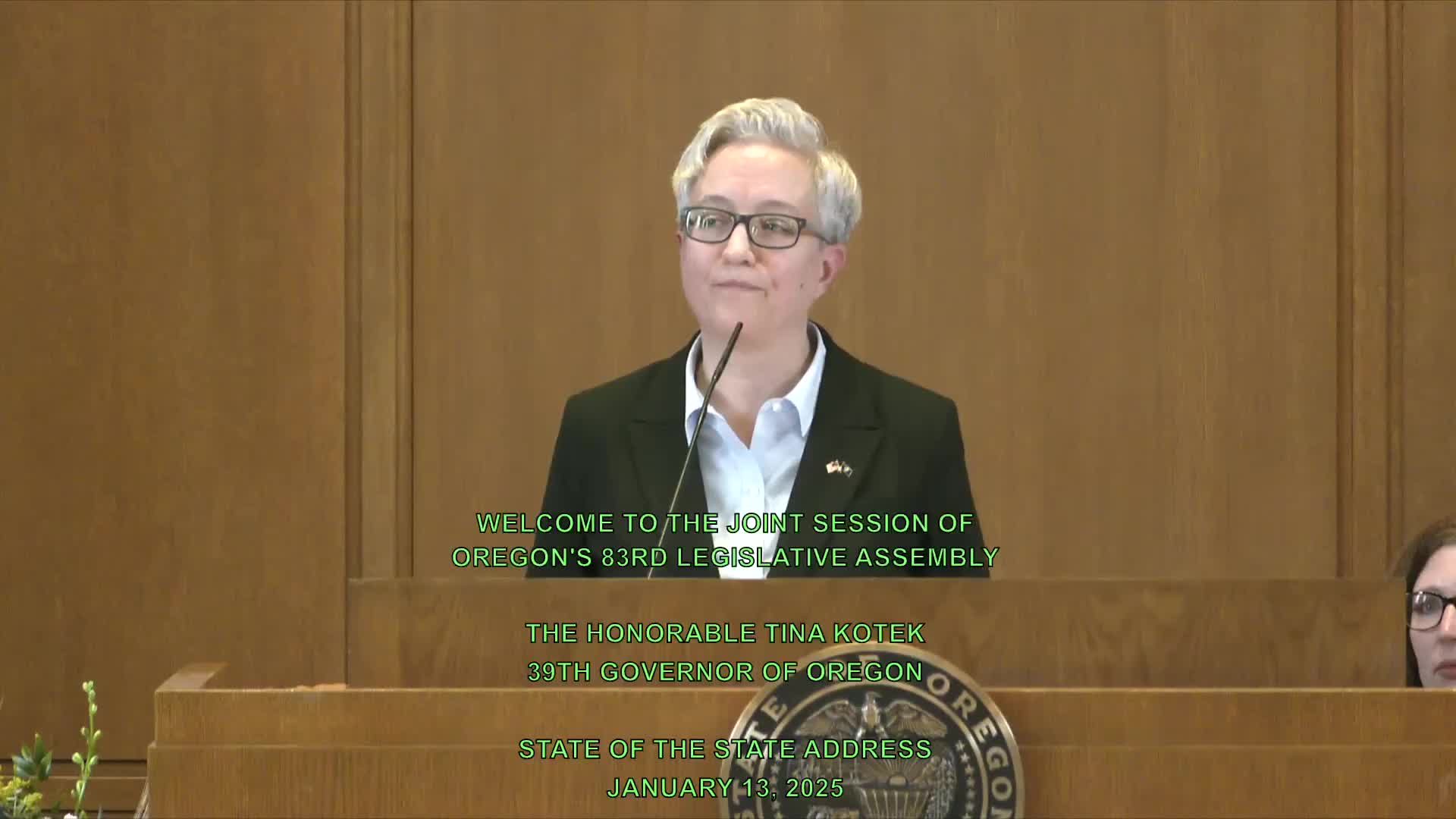
Governor Tina Kotek proposed targets and funding to expand behavioral health capacity, reduce Oregon State Hospital backlogs and strengthen the provider pipeline during the State of the State address.
Gov. Tina Kotek, governor of Oregon, told lawmakers the state must expand treatment capacity and strengthen the behavioral-health workforce to meet growing needs tied to homelessness, serious mental illness and substance use.
Kotek cited a target to add 465 new treatment beds by the end of 2026, a public dashboard to track progress, and steps taken to reduce licensing backlogs for counselors and social workers. She said the administration has implemented changes lawmakers requested to refine measure 110 responses and is supporting evidence-based deflection programs statewide.
To expand capacity and workforce retention, Kotek recommended $90,000,000 to add treatment beds and $50,000,000 to bolster the provider pipeline and stabilize worker retention. She framed these as a dual strategy: increase treatment capacity and strengthen the workforce that provides care.
Kotek also raised the strain on Oregon State Hospital beds caused by “aid and assist” patients who are housed to restore competency for court proceedings; she said most current patients are at the hospital to gain competency to assist in their defense. The governor noted population data she cited: nearly three in four individuals at Oregon State Hospital for aid-and-assist treatment were homeless or in shelter at the time of arrest, and six in 10 were diagnosed with schizophrenia or another psychotic disorder. She said these patterns create a backlog and argued for more community options and civil-commitment criteria changes to increase access to care without compromising legal processes.
Why it matters: Kotek linked mental-health capacity to both public safety and the ability to reduce pressure on long-term hospital beds. She asked the legislature to treat her recommended mental-health investments as a baseline and to consider raising that funding during the budget process.
Next steps: The governor directed agencies to propose an “intensive permanent supportive housing” model to better serve people with serious mental illness and asked lawmakers to fund both facility capacity and workforce development during the upcoming budget process.