Get Full Government Meeting Transcripts, Videos, & Alerts Forever!
Get email alerts on the Parks And Recreation topic
No spam. Unsubscribe anytime.
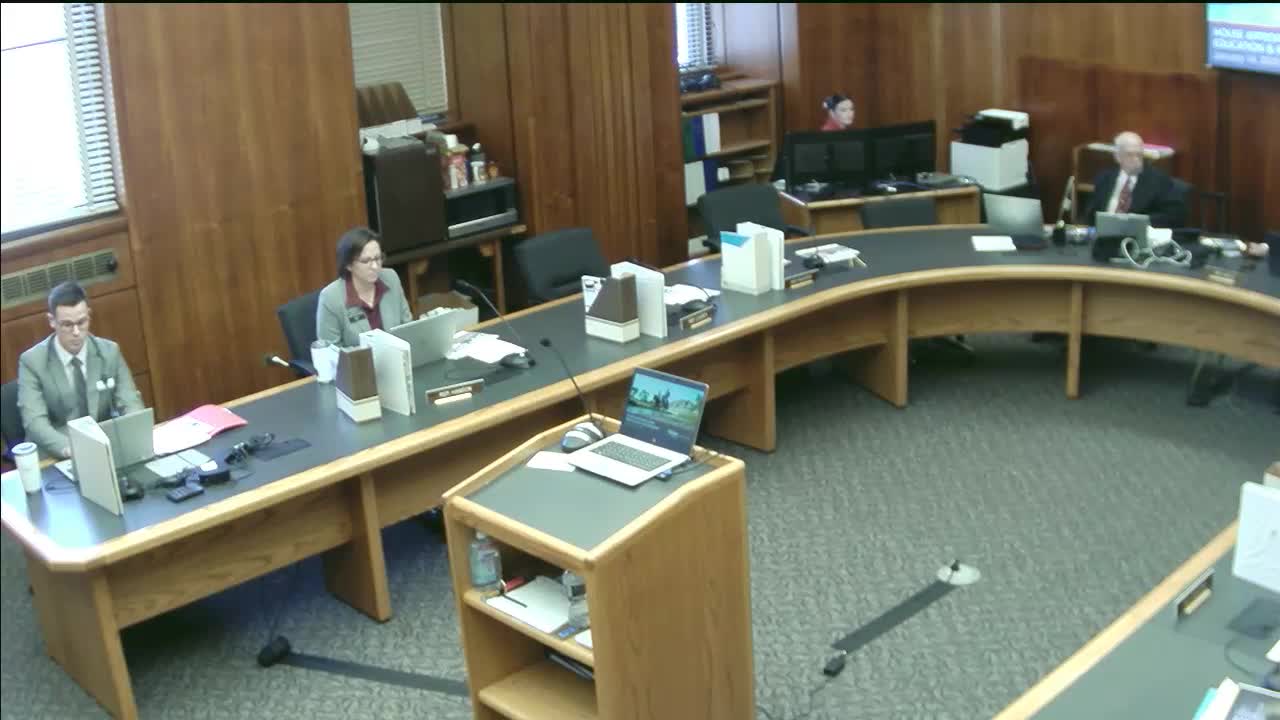
Parks and Recreation Director outlines infrastructure, staffing and spending needs in House Bill 1019 hearing
Summary
Cody Schultz, director of North Dakota Parks and Recreation, told the Appropriations - Education and Environment Division on Tuesday that House Bill 1019 includes technical and budget language to govern the agency—s use of recent appropriations and that Parks and Rec will seek additional targeted funding and carryover authority in the governor—s budget.
Cody Schultz, director of North Dakota Parks and Recreation, told the Appropriations - Education and Environment Division on Tuesday that House Bill 1019 includes technical and budget language to govern the agency—s use of recent appropriations and that Parks and Rec will seek additional targeted funding and carryover authority in the governor—s budget.
Schultz said the agency manages about 21,000 acres across 15 properties, nearly 1,400 campsites and more than 300 buildings, and recorded more than 1.2 million visitors in 2024. "Our mission is to enrich generations through experiences that connect people and places," Schultz said, adding that outdoor recreation contributed about $1.6 billion to North Dakota's economy in 2023 and that state parks contributed $154 million in a 2020 NDSU study.
Why it matters: committee members pressed Schultz on how the agency will spend one-time appropriations, carry federal grants into the next biennium and address a backlog of deferred maintenance estimated at about $55 million today (from a 2020 estimate of $74 million, with roughly $28 million appropriated since). Deferred maintenance and short construction seasons mean delays can cause lost overnight stays and revenue, Schultz said.
Key details and recent actions: Schultz described $27.9 million in capital and deferred-maintenance funding from a 2021 special session (ARPA $17.9 million) and 2023 SIF funds ($10.0 million). He told the committee the agency had spent roughly $9.5 million of that pot by the end of 2024 and expects to spend all ARPA dollars by December 2025. The agency also received specific appropriations including $6 million for state, county and tribal park grants (dollar-for-dollar matching requirement) and funds targeted to Pembina Gorge construction; Schultz said Pembina—s appropriation had a federal match and that work is on schedule.
Permitting and federal-lands limits: Schultz raised recurring delays tied to projects on Army Corps of Engineers property, especially at Lake Sakakawea State Park. "We have a contract and have since January of 2024 to construct a new concession building ... and just about three weeks ago we finally got approval to move on that. So we lost the entire construction season," Schultz said, describing how environmental reviews and sequential real-estate approvals lengthen timelines.
Staffing and operations: Schultz said Parks and Rec relies heavily on seasonal employees and year-round temporary staff. He reported a 15.4% turnover rate among FTE positions over the biennium and about 30% turnover among year-round temp staff. The agency targeted 373 seasonal hires for 2024 but filled 86% (51 positions went unfilled); Schultz said technology (keypad locks, online rentals) and equipment (autonomous mowers) are being evaluated to reduce labor needs.
Foundation and outside funding: Schultz said the North Dakota State Park Foundation was incorporated in June 2023 and received its 501(c)(3) determination in August 2024; once a board is seated in consultation with the governor, the foundation would help pursue private and foundation funds. He noted the agency is authorized to receive donations by law and that private donors often prefer to give to nonprofits rather than state agencies.
Grants, fees and other funds: Schultz summarized agency revenue lines: approximately $7.2 million in Parks and Recreation Fund fee revenue (cabins, campsites, vehicle passes) biennium-to-date; nearly $1 million in the snowmobile fund and about $922,000 in the OHV fund (both split with DOT); and about $2 million in the state parks concession fund. He also discussed a $70 million line of credit for the Theodore Roosevelt Presidential Library with the Bank of North Dakota; as of the hearing the loan had been signed but not drawn.
Planned projects and priorities: Schultz highlighted Pembina Gorge State Park (groundbreaking held May 31; initial buildout planned for 49 modern sites, five primitive sites and six cabins), major work at Lake Sakakawea, Rough Rider State Park (utility redo and campsite expansion), and planning for Lake Metogochi infrastructure ahead of the International Peace Gardens— centennial. He said the agency plans to request continued funding for workforce, deferred maintenance, technology and local grant programs in Governor Armstrong—s budget address.
Committee follow-up and carryover requests: committee members asked about unspent grants (for example a locally administered grant noted by Representative Martinson) and whether the agency is seeking carryover authority to extend grant periods. Schultz said carryover authority will be requested and that agency staff would provide project-level plans and spending timelines on outstanding grants.
Quotes from other speakers: Jeff Endovino, business services chief, told the committee that of $2 million in Land and Water Conservation Fund money for Pembina Gorge construction the agency has spent about $1.4 million of the federal funds and a like amount from SIF allocations for the project to date.
The hearing closed after roughly one hour and House Bill 1019 remained before the committee as staff and legislators prepare for the governor's budget address and follow-up questions.