Get Full Government Meeting Transcripts, Videos, & Alerts Forever!
Get email alerts on the Kratom Scheduling topic
No spam. Unsubscribe anytime.
Committee recommends ‘do not pass’ on bill to place kratom on Schedule I; some members call for regulation instead
Summary
After extended debate, the House Judiciary Committee recommended a do‑not‑pass on a bill to classify kratom as a Schedule I controlled substance, 9–3 with one member absent, while several members urged development of regulatory alternatives.
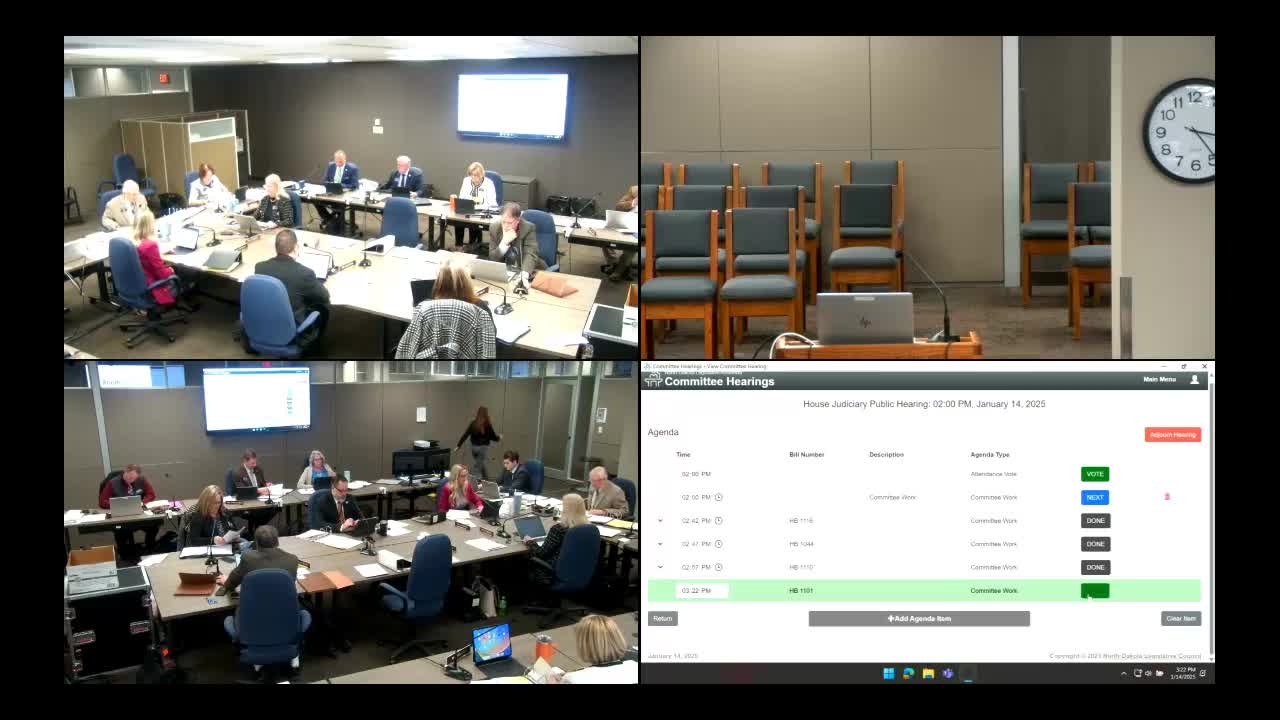
The House Judiciary Committee voted to recommend a “do not pass” on House Bill 1101, which would add kratom and a related compound to Schedule I of controlled substances. The committee recorded a 9–3 vote in favor of the do‑not‑pass recommendation, with one member absent.
Representative Vetter moved the do‑not‑pass recommendation; Representative Henderson seconded the motion. Supporters of the do‑not‑pass argued that existing testimony did not establish sufficient evidence that kratom should be placed on Schedule I, noted that many users report medical benefits, and urged a regulatory approach similar to laws adopted in other states. Opponents pointed to testimony from a grieving parent and a nurse who cited addiction concerns and expressed support for scheduling, and several members said they would prefer to defer to the state Board of Pharmacy’s recommendation.
Representative Johnston told the committee he was drafting separate legislation to regulate kratom similar to protection‑and‑safety regimes adopted in about 13 other states. Representative McLeod said he supported scheduling because of documented risks to liver health and addiction potential; Representative Johnson relayed a constituent’s account calling kratom “transformative” for certain medical conditions. The committee took a roll call vote; the do‑not‑pass motion carried 9–3 with one member absent. Representative Twite agreed to carry the bill.
Committee members said the choice to recommend do not pass reflected concerns about criminalizing many current users without a regulatory framework in place. Several speakers urged the committee to consider a consumer‑protection approach instead of immediate scheduling.