Get Full Government Meeting Transcripts, Videos, & Alerts Forever!
Get email alerts on the Budget Transparency topic
No spam. Unsubscribe anytime.
Board debates creating community budget advisory committee; no formal action taken
Summary
Directors debated a proposal to form a districtwide community budget advisory committee to increase transparency and equity in resource allocation. Directors were split on whether existing committees already provide similar public input; staff committed to more frequent finance updates to the board.
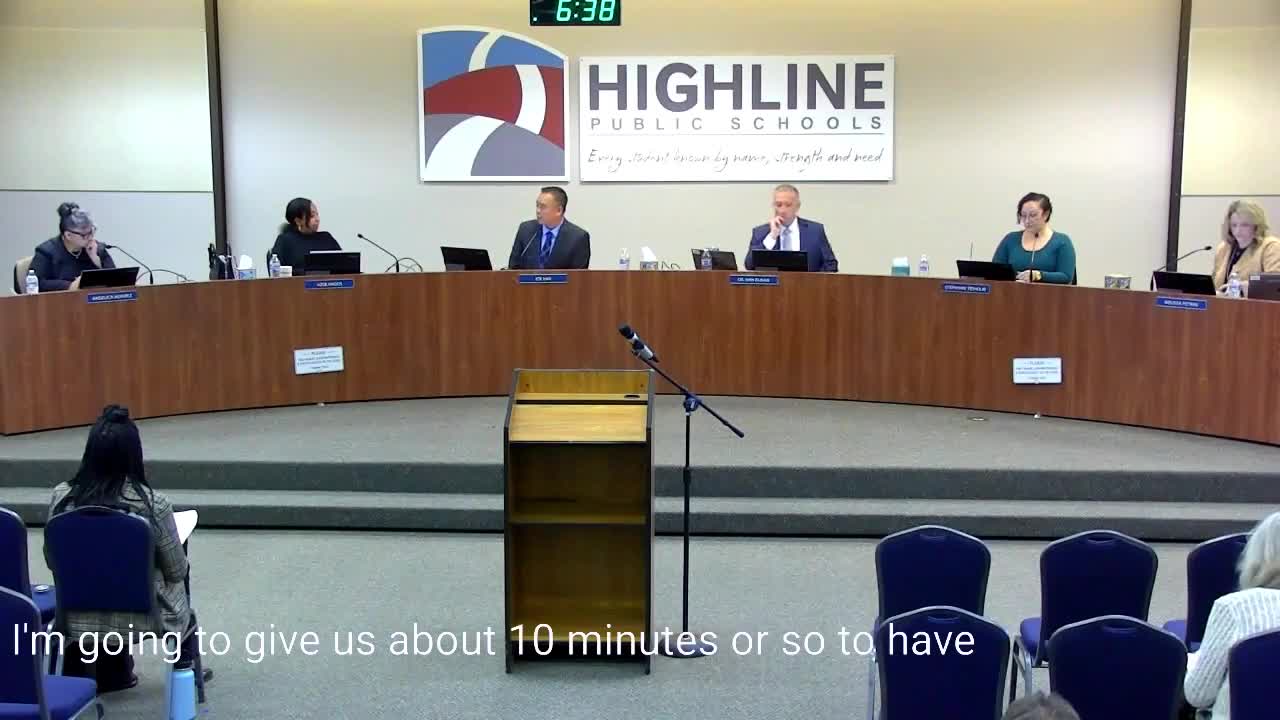
The Highline School District Board of Directors spent roughly an hour on Jan. 8 discussing a proposal to form a community budget advisory committee to provide sustained, community‑level review of the district's budget and resource allocation.
Director Hagos proposed an advisory panel composed of diverse stakeholders — students, families, staff, city leaders and other community members — to apply an equity lens to the district's roughly $405,000,000 budget and improve transparency and public buy‑in for levies and bonds. "If we're thinking about resource allocation with an equity lens, what better than letting the voice of the people speak to us?" Hagos said.
Nut graf: The idea prompted disagreement about duplication and efficacy. Several directors and staff pointed to existing structures — the Capital Projects Advisory Committee, Capital Projects Oversight Committee, the Family Action Committee (FAC), CPAC and regular budget presentations — that already solicit community feedback during the year. Some directors urged that the FAC and other standing groups already provide ongoing, trained input; others said those bodies are appointment‑based and do not provide the broad, open review Hagos sought.
During discussion, Director Petrini said the public typically receives the comprehensive budget very close to the public hearing and that the district's 30‑minute hearing before a vote provides little time for meaningful feedback. She said a standing community budget committee or a reworked timeline for hearings could give the public adequate time to review and comment. Director Petrini recounted serving on a Normandy Park citizen budget committee that met weekly and produced an advisory report to the city council as an example of a process that helped regain voter trust after a failed levy.
Staff and other directors noted the district's finance team will begin monthly updates to the board to increase transparency and earlier engagement in the budget development timeline. Board members also said training is required for public committee members because of the technical complexity of K‑12 budgets; one director said some districts require about a year of training for budget advisory committee members.
Ending: No formal motion was made to create a new committee; directors asked Director Hagos to share examples of other districts' advisory committees and for staff to continue monthly finance briefings. The discussion will continue at future meetings.