Get Full Government Meeting Transcripts, Videos, & Alerts Forever!
Snoqualmie Valley student services outlines preschool expansion, special‑education changes and mental‑health screening gains
Summary
District student services presented a districtwide update Jan. 9 that summarized preschool inclusion work, early‑literacy training, MTSS and referral process changes, homelessness and McKinney‑Vento spending, suicide‑prevention protocol revisions and a successful SBIRT screening push for 7th–8th graders.
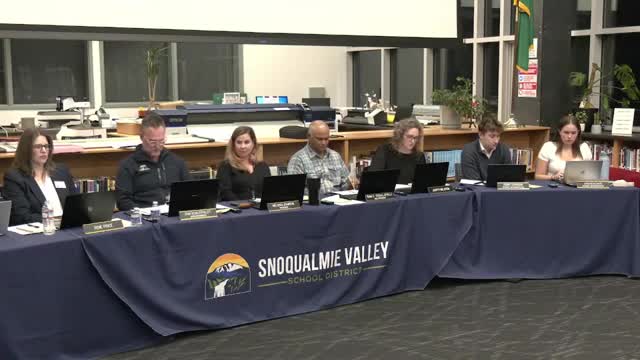
Snoqualmie Valley School District student services leaders on Jan. 9 told the Board of Directors they are expanding preschool services and early‑literacy training, strengthening the district’s referral and MTSS systems, and stepping up mental‑health screening and suicide‑prevention work.
The update, delivered by Executive Director Kim Mackie and program leads, summarized multiple initiatives the department said support the district strategic plan: a Preschool Inclusion Champion grant, preschool‑adapted LETRS training for early‑literacy, a Pathways to Excellence focus on high‑school transition planning, increased use of data in MTSS referrals, outreach for students experiencing homelessness under McKinney‑Vento, a county‑funded SBIRT screening pilot for middle schoolers, and a draft, districtwide suicide‑prevention protocol.
Why it matters: the presentation highlights services that influence students’ day‑to‑day access to general‑education classrooms, special‑education placement decisions, and post‑secondary planning. Leaders said several efforts address compliance and equity requirements (OSPI disproportionality reporting) while also producing immediate interventions — for example through SBIRT and McKinney‑Vento funds.
Mackie opened the presentation by saying student services supports district goals even when work is not directly in classrooms: “we definitely play a part and support the schools in implementing their school improvement plans and then the overall strategic plan,” she said. Program leads then described more than a half dozen initiatives and related data points.
Preschool and early literacy: the district…
Already have an account? Log in
Subscribe to keep reading
Unlock the rest of this article — and every article on Citizen Portal.
- Unlimited articles
- AI-powered breakdowns of topics, speakers, decisions, and budgets
- Instant alerts when your location has a new meeting
- Follow topics and more locations
- 1,000 AI Insights / month, plus AI Chat