Get Full Government Meeting Transcripts, Videos, & Alerts Forever!
Get email alerts on the School Mental Health topic
No spam. Unsubscribe anytime.
Canyons School District outlines on-campus mental-health supports and screening nights
Summary
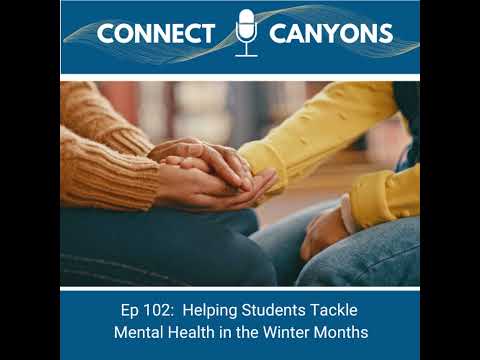
Canyons School District staff described in a Connect Canyons podcast the district’s mental-health resources for students, including a prevention specialist, the Youth Academy, a Canyons Family Center class on teen depression and an upcoming mental-health screening night at Union Middle School on Jan. 23.
Francis Cook, host of the Canyons School District podcast Connect Canyons, interviewed two district mental-health staff about services available to students and families, including an upcoming mental-health screening night at Union Middle School on Jan. 23 from 4 p.m. to about 7:30 p.m.
The episode opened by noting broader concern: "A new study found Americans see poor mental health as 1 of the biggest threats to public health," Cook said, and the guests described how the district is responding. Kelly Redican, prevention specialist for Canyons School District, said she oversees suicide and substance-abuse prevention efforts, the Canyons Family Center and the district’s mental-health screening nights. "The mental-health screener nights help us to identify students in a short term way where parents can kinda get an idea of where their students stand and what they're struggling with socially and emotionally," Redican said.
Sasha Fried, an educational therapist and school social worker who works with the district’s Youth Academy, described that program as providing individualized academic and social-emotional support for students who struggle in traditional school settings. "I work with a lot of kids who have struggled to succeed in the typical school environment," Fried said. She said Youth Academy staff provide individual and group counseling, case management and referrals for medication management or outside therapists to help students return to regular school when appropriate.
The podcast outlined specific supports available at each school: a student-support team typically made up of a school social worker, school counselor and school psychologist, local classes at the Canyons Family Center (including anxiety and anger-management courses) and a teen depression and suicidal-ideation class taught by district staff. Redican said families who attend screening nights complete a questionnaire and then meet with a screener to review a "Teris Metrics" survey and discuss follow-up options.
The guests described common signs of depression in students and guidance for parents. Fried said changes lasting longer than two weeks—falling grades, withdrawal from activities, marked sadness, or increased anger and irritability—warrant further attention. She advised parents to "regulate, relate, and then reason": first make sure a student is calm enough to talk, then validate the student’s feelings, then move to problem-solving.
Both staff members emphasized that schools can be an entry point for help and that the district can link families to community resources if they prefer services outside the school. Redican noted the district distributes packets of in-school and community resources at screening nights. The episode ended with contact information and an invitation to reach the district communications office by email at communications@canyonsdistrict.org for topic suggestions.
While the podcast described district services and practical signs and responses for parents, it did not announce new policies or provide legislative citations. It focused on available programs, how parents can access them and what staff say to look for when a student may be struggling.