Get Full Government Meeting Transcripts, Videos, & Alerts Forever!
Get email alerts on the Clean Buildings topic
No spam. Unsubscribe anytime.
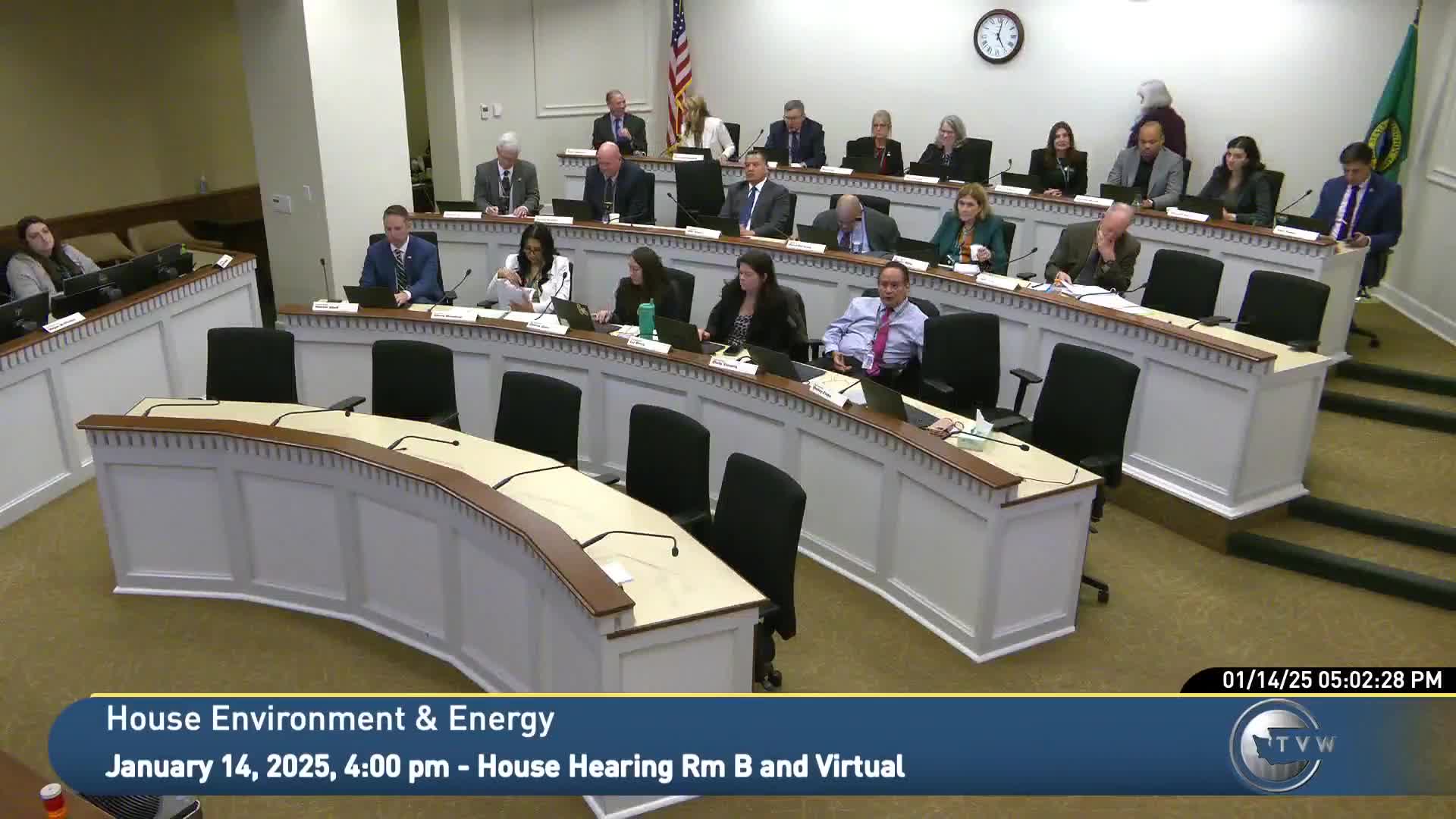
Commerce details Clean Buildings implementation, incentives and compliance timeline
Summary
Emily Salzberg of the Washington State Department of Commerce reviewed the Clean Buildings Performance Standard: who is covered, compliance timelines, incentive programs and a work‑group report that informed agency request legislation for exemptions, extensions and additional compliance pathways.
Emily Salzberg, managing director of the clean buildings unit at the Washington State Department of Commerce, presented the department’s status update on implementing the state’s Clean Buildings Performance Standard and summarized incentive programs and a recent work‑group assessment of Tier 1 compliance costs.
The Clean Buildings Performance Standard focuses on existing, large buildings to reduce greenhouse‑gas emissions from the built environment. The law covers existing buildings over 50,000 square feet (Tier 1); a 2022 statute added Tier 2 buildings (20,000–50,000 square feet and multifamily over 20,000). “We were the first state in the nation to pass a statewide building performance standard,” Salzberg said, describing the program’s benchmarking, operations and maintenance, and performance‑target pathways.
Scope, timing and incentives
- Commerce says the state has roughly 8,000 Tier‑1 buildings covered by the standard. The first cohort of buildings required to document compliance is due June 2026; about 1,600 buildings will be required for that cycle. - Compliance requirements include annual benchmarking (using EPA’s Portfolio Manager), an operations and maintenance program and an energy management plan; Tier‑1 buildings that exceed targets must invest to reduce energy use or follow an investment‑criteria pathway with phased implementation options. - The legislature funded several incentive programs: $75 million for an early‑adopter Tier‑1 incentive, $150 million for Tier‑2 incentives (launch expected July 2025), $15 million for energy audits of publicly owned buildings (about $12 million obligated to date) and a $45 million Clean Buildings Performance Grant program that Commerce began accepting applications for in 2025. - Commerce launched a DOE‑funded pilot to place and train fellows to assist building owners; the DOE awarded approximately $8 million to scale the model and train about 60 fellows statewide.
Findings from the work group
Commerce convened a 25‑member clean buildings work group to analyze Tier‑1 compliance costs and produce recommendations. The financial analysis found that a majority of covered buildings are already meeting their targets, and that lifetime benefits of measures generally exceed compliance costs. The work group recommended continued funding support, additional compliance flexibility (extensions, conditional compliance and phased implementation) and targeted exemptions for narrow cases (for example, where compliance would compromise national security). Salzberg said Commerce will advance agency request legislation reflecting those recommendations.
Questions raised by legislators touched on overlap with utility conservation obligations (initiative I‑937), impacts on vacant or leased buildings, potential property‑tax consequences of building improvements, and whether the standard requires investments that are not cost‑effective. Salzberg said the standard is structured to require only cost‑effective investments and that operations and maintenance alone can yield substantial utility savings (she cited average savings of about 15% on operating costs). Commerce staff said they will follow up with members on property‑tax concerns and other detailed fiscal impacts.
Ending
Salzberg paused for committee questions after summarizing Commerce’s implementation milestones: 131 early compliance or exemption applications received to date, emergency rulemaking to extend exemption timelines, district energy decarbonization planning rulemaking completed, and ongoing technical assistance for building owners.