
Bill would require prevailing‑wage floor for skilled journeypersons at high‑hazard facilities, proponents say
Get AI-powered insights, summaries, and transcripts
Subscribe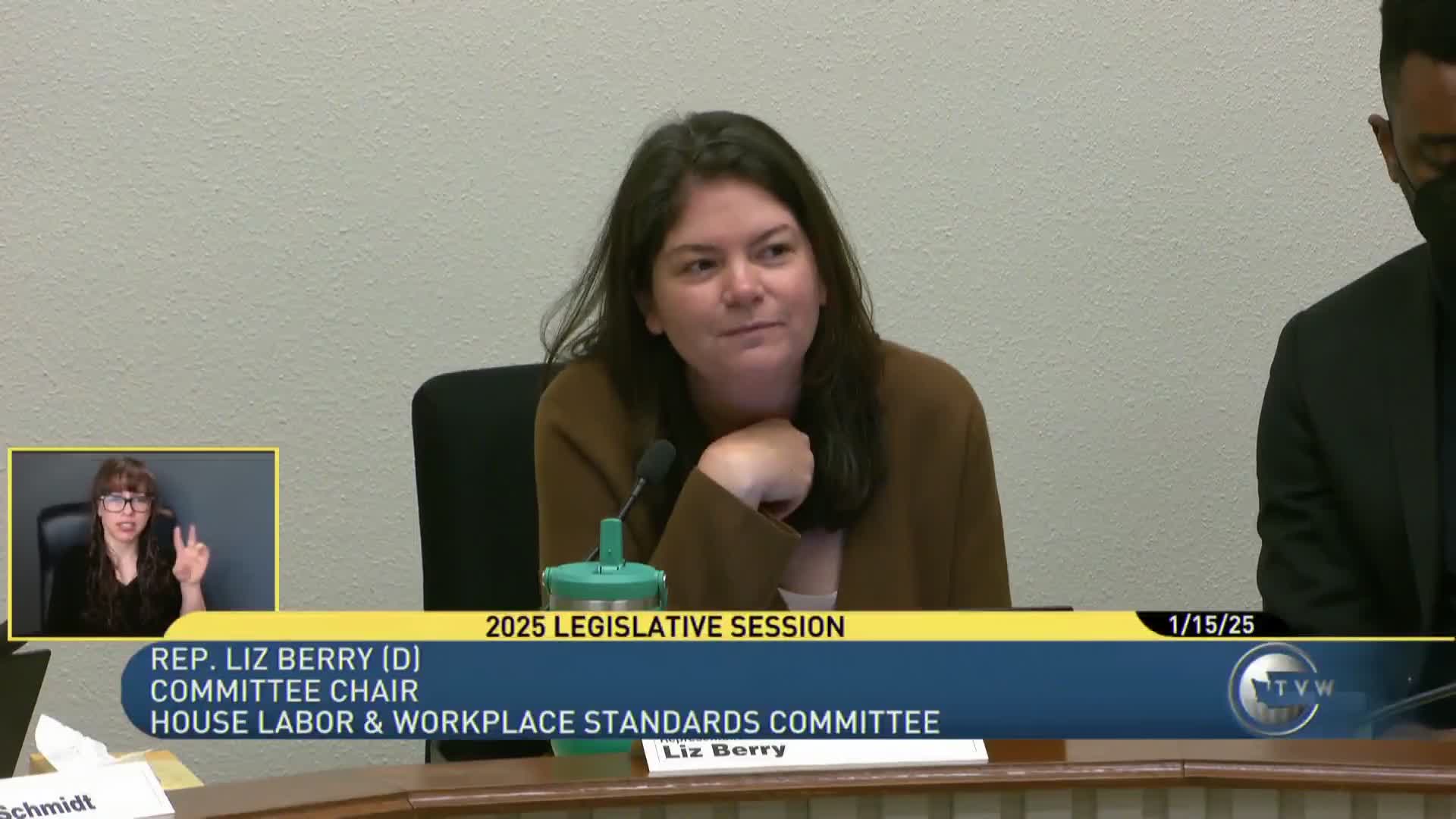
Summary
HB 1173 would require that skilled journeypersons at petroleum refineries and petrochemical manufacturing facilities be paid at least the prevailing wage in the applicable occupation and area rather than a 75th‑percentile OEWS figure.
House Bill 1173, which the Labor & Workplace Standards Committee heard, would require skilled journeypersons working under contracts at petroleum refineries and petrochemical manufacturing facilities—so‑called high‑hazard facilities—to be paid at least a rate consistent with the prevailing wage in the applicable occupation and geographic area rather than the 75th percentile from federal OEWS statistics, officials said in staff briefing.
Trade and labor witnesses told the committee the change is primarily technical and intended to resolve apprenticeship‑pay and classification problems created by the OEWS 75th‑percentile measure. Erin Fraser of the Washington State Building Trades said the OEWS design uses pooled three‑year federal survey data that does not align with state journey‑worker classifications; labor witnesses argued prevailing wage data better matches registered apprenticeship scopes and provides a more stable basis for enforcement. Todd Mitchell of Heat & Frost Local 7 and Mallory Davies of the Laborers’ district council urged the switch to prevent apprentices from being excluded from statutory protections and to avoid volatile year‑to‑year swings in the 75th‑percentile metric.
Opponents from the petroleum and contractor sectors urged the committee not to change the existing statutory framework. Rick Stump, vice president of InsulPacific Northwest, and Kerry Clemenson, a long‑time contractor, said the current system has functioned for several years and warned the bill would alter marketplace dynamics and could reduce opportunities for certain contractors. Greg Hannon of the Western States Petroleum Association said the bill would repeal the 75th‑percentile floor and a provision that does not require contractors to pay prevailing wage, departing from longstanding policy.
L&I staff told the committee they have used the OEWS‑based statute sparingly since 2019 and that the agency applies statewide averages when county‑level data are missing. Committee members asked how many refineries exist in the state; Department staff and witnesses placed the number at about five, largely in northwest Washington.
The committee closed the hearing after receiving testimony and invited written submissions from stakeholders who could not testify live.