
Fort McDowell recalls Orme Dam victory, highlights tribal voting‑rights history
Get AI-powered insights, summaries, and transcripts
Subscribe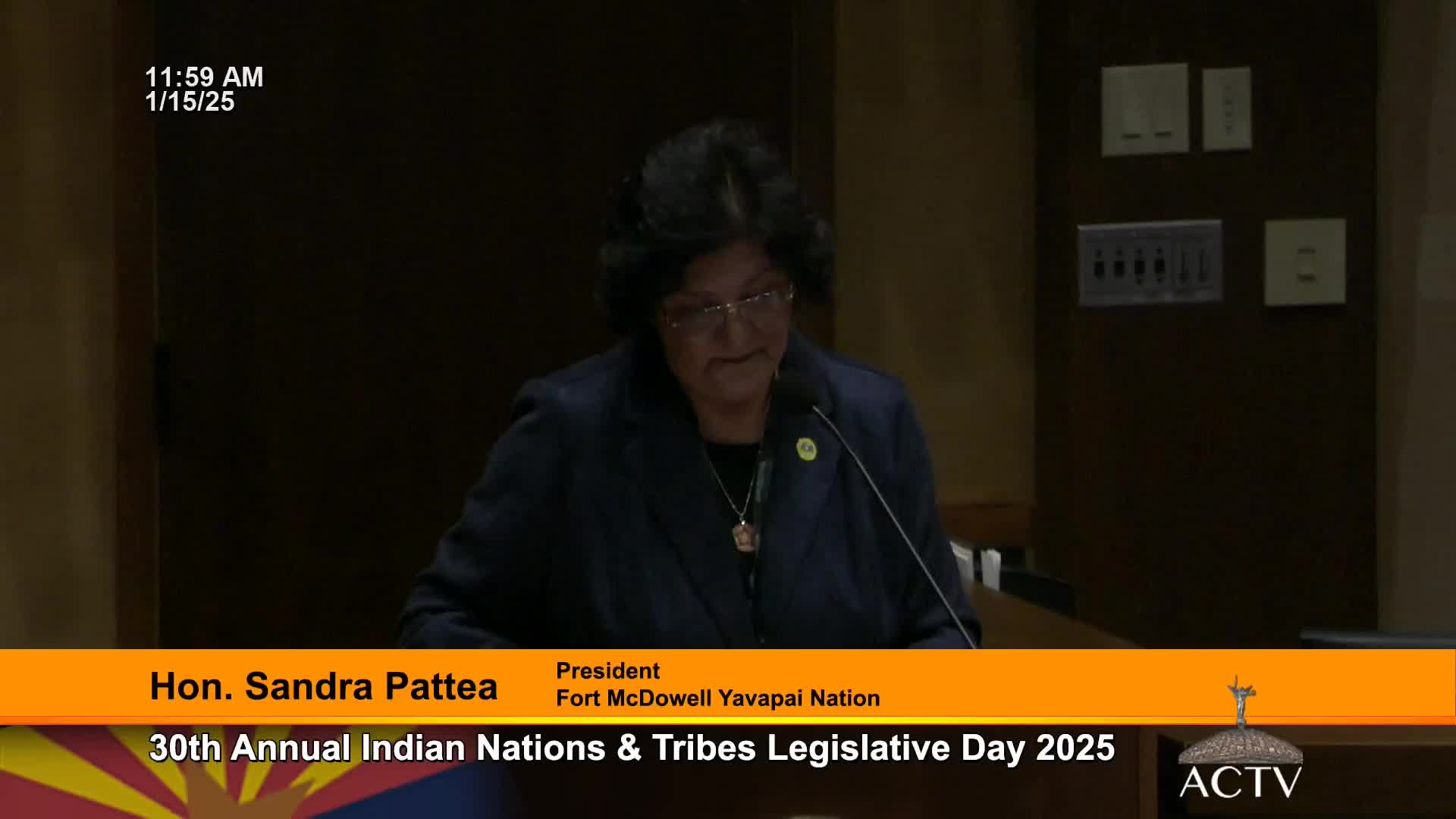
Summary
Fort McDowell Yavapai Nation President Sandra Patea recounted the community's successful 1981 campaign to stop the Orme Dam project and described the tribe's role in restoring Native voting rights in Arizona after the 1948 state supreme court ruling.
Sandra Patea, president of the Fort McDowell Yavapai Nation, recounted two historical milestones: the tribal victory that stopped the Orme Dam project and Fort McDowell tribal members' role in restoring Native voting rights in Arizona.
Patea described the Orme Dam fight as "one of the most defining moments in our tribal nation's history" and said the community organized a three‑day march to the state capitol in opposition. She recalled that on Nov. 12, 1981, Secretary of the Interior James Watt announced the Orme Dam would not be built and that the victory preserved tribal lands and identity.
Patea also told lawmakers that Fort McDowell tribal members Frank Harrison and Harry Austin challenged state law that had prevented Native Americans living on reservations from voting. "In 1948, the Arizona supreme court ruled in their favor striking down the ban on native Americans voting," she said, adding that the decision allowed Native Arizonans to participate fully in elections and set a precedent for other states.
Patea framed both the Orme Dam victory and the voting‑rights ruling as examples of tribal civic engagement and partnership with nontribal allies, and she urged continued dialogue and cooperation with state government.